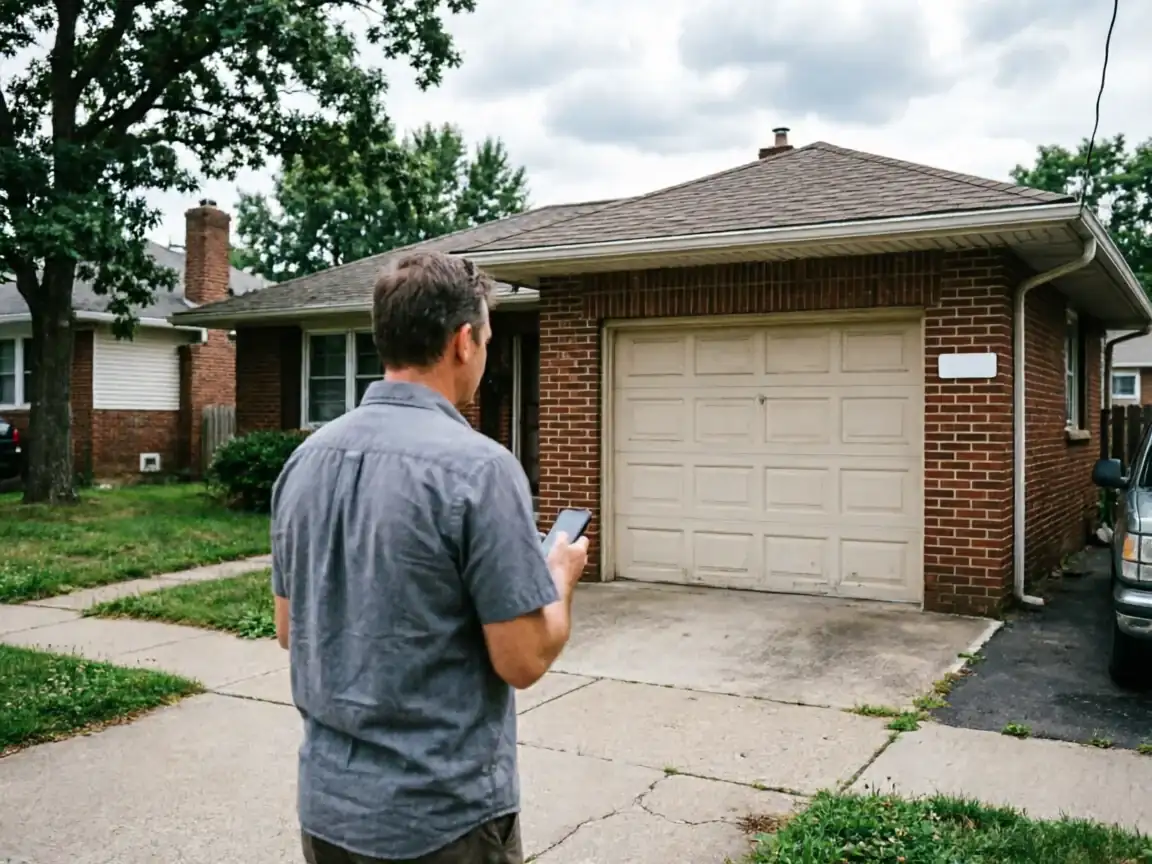
Why It Happens Here
The fault we see most in Romeoville isn't a snapped cable or a dead opener
It's a door that's jumped its track on one side, usually the side closest to the opener arm, so the panel hangs crooked instead of sliding flat. That happens because the roller has worked loose from the track channel, often after a bracket bolt backs out or the track itself flexes just enough to let the roller ride the lip instead of staying inside it.
Romeoville's housing stock runs newer than a lot of the area this company covers
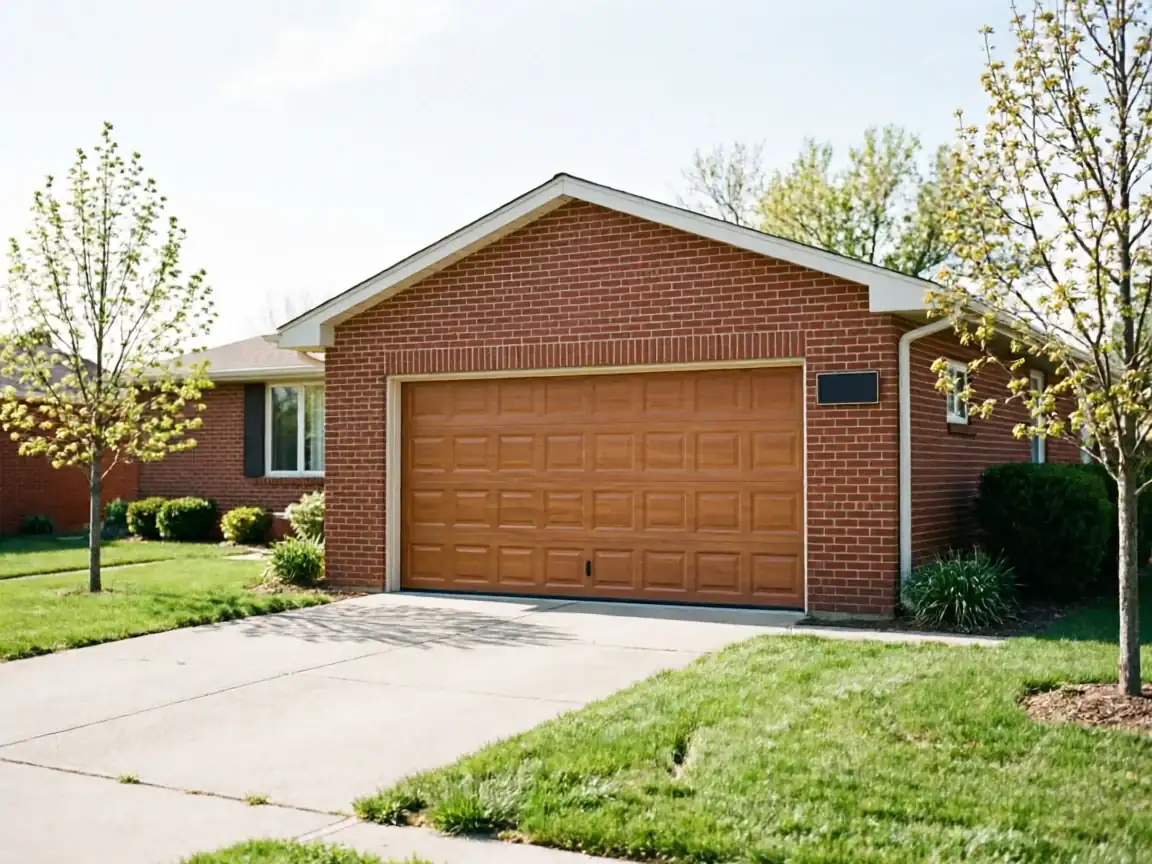
Median build year here is 1998, versus a 1938-2004 range with a median closer to 1970 across the wider service area. That matters for this fault specifically: homes built in this window were fitted with taller, wider double-car doors on longer track runs and lighter-gauge rail than the shorter single-bay setups common in older stock. Longer track flexes more, and with age the mounting brackets that hold it to the jamb loosen a hair at a time until one hard stop - a kid's bike, a car bumper, a gust catching the door mid-cycle - is enough to pop a roller clean off the rail.
The Symptom
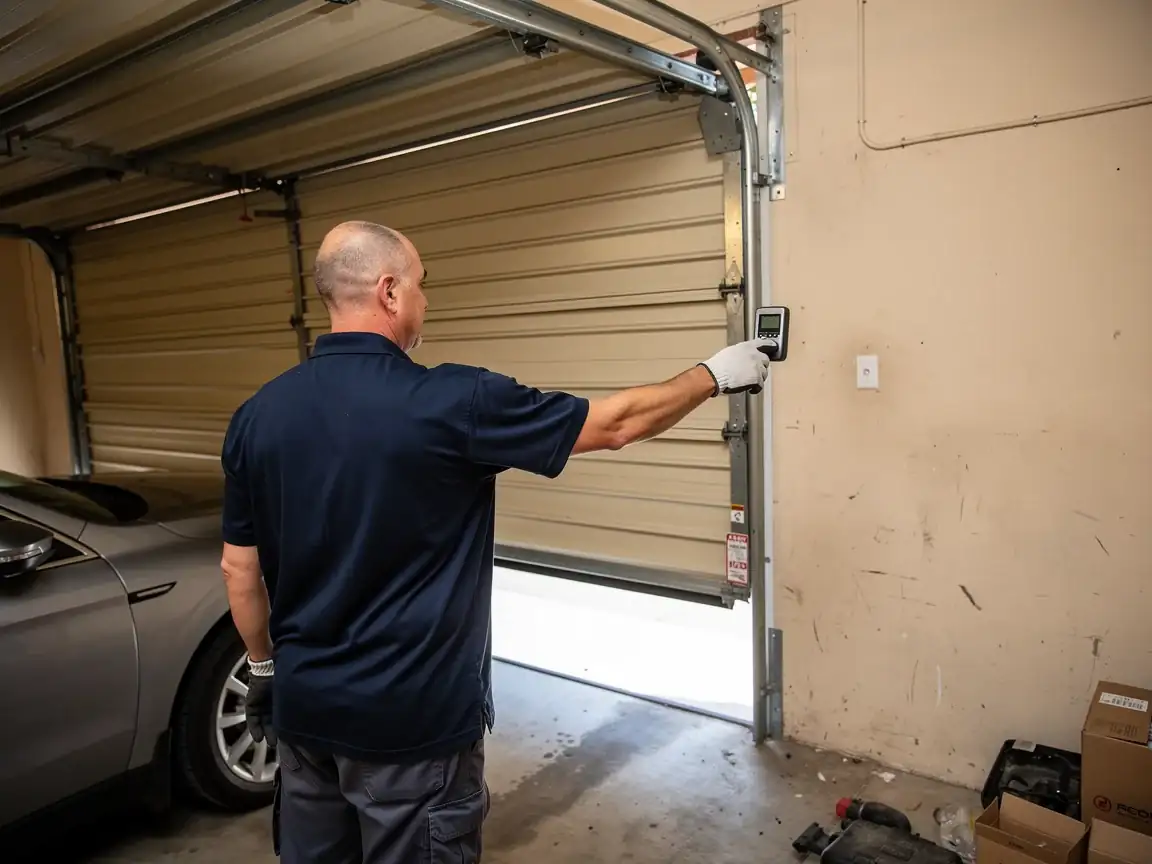
You'll usually notice it before you hear it. The door looks tilted, like one corner is a few inches lower than the other, and it won't close flush to the slab - there's a gap at one bottom corner that wasn't there last week. If you try to run the opener anyway, you'll hear a grinding or scraping sound as the roller drags against the outside of the track instead of rolling inside it.
Sometimes it's less obvious: the door runs fine until it's about halfway up, then jerks or stalls because the misaligned roller has caught on a bracket. Either way, this is not a door to force. Running the opener against a roller that's off the rail bends the track further and can pull the bracket out of the jamb stud entirely, which turns a twenty-minute fix into a bracket and track replacement.
What the Fix Involves
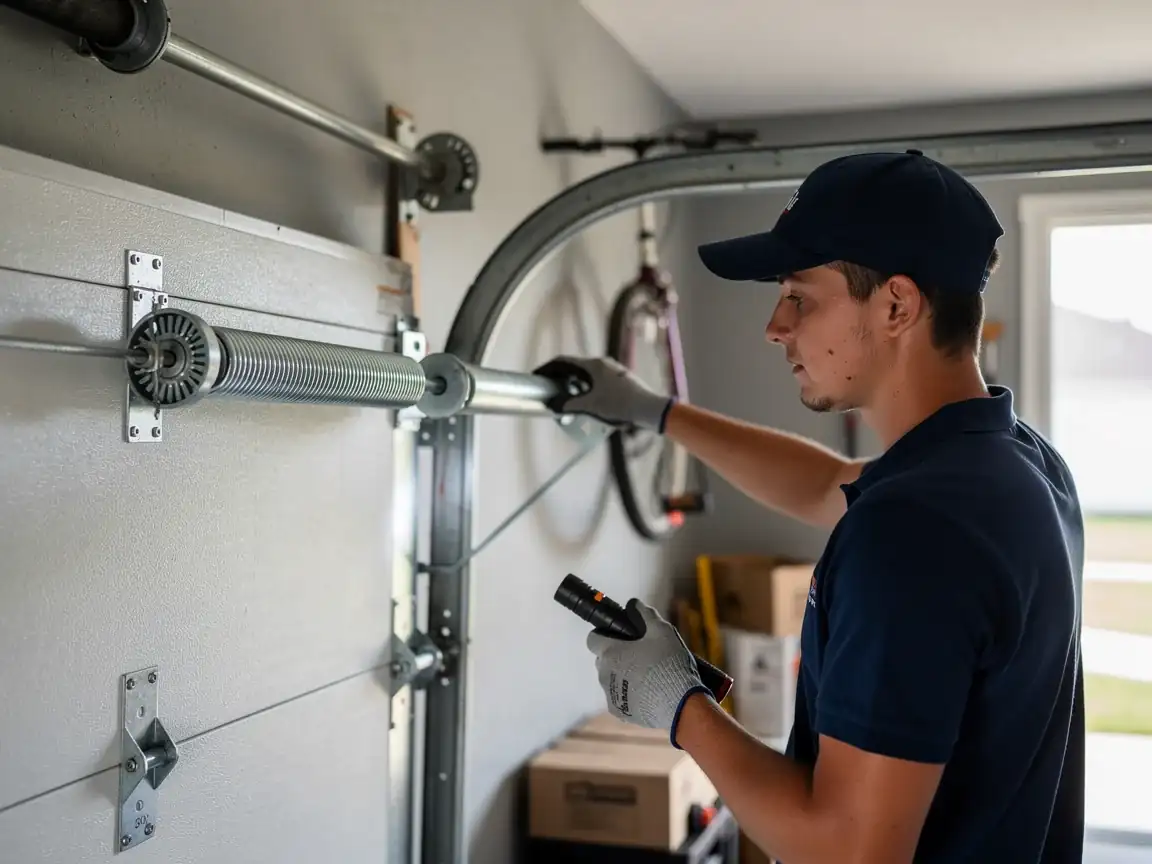
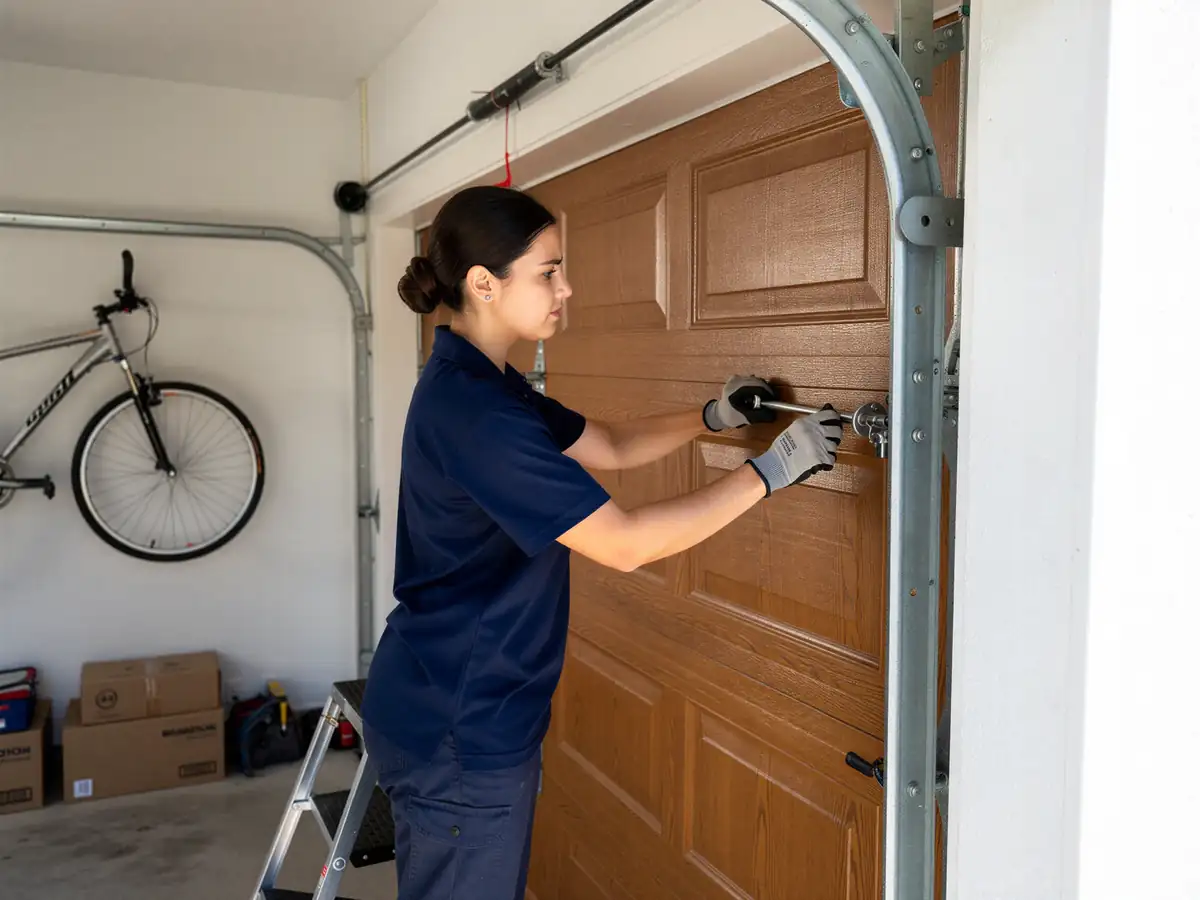
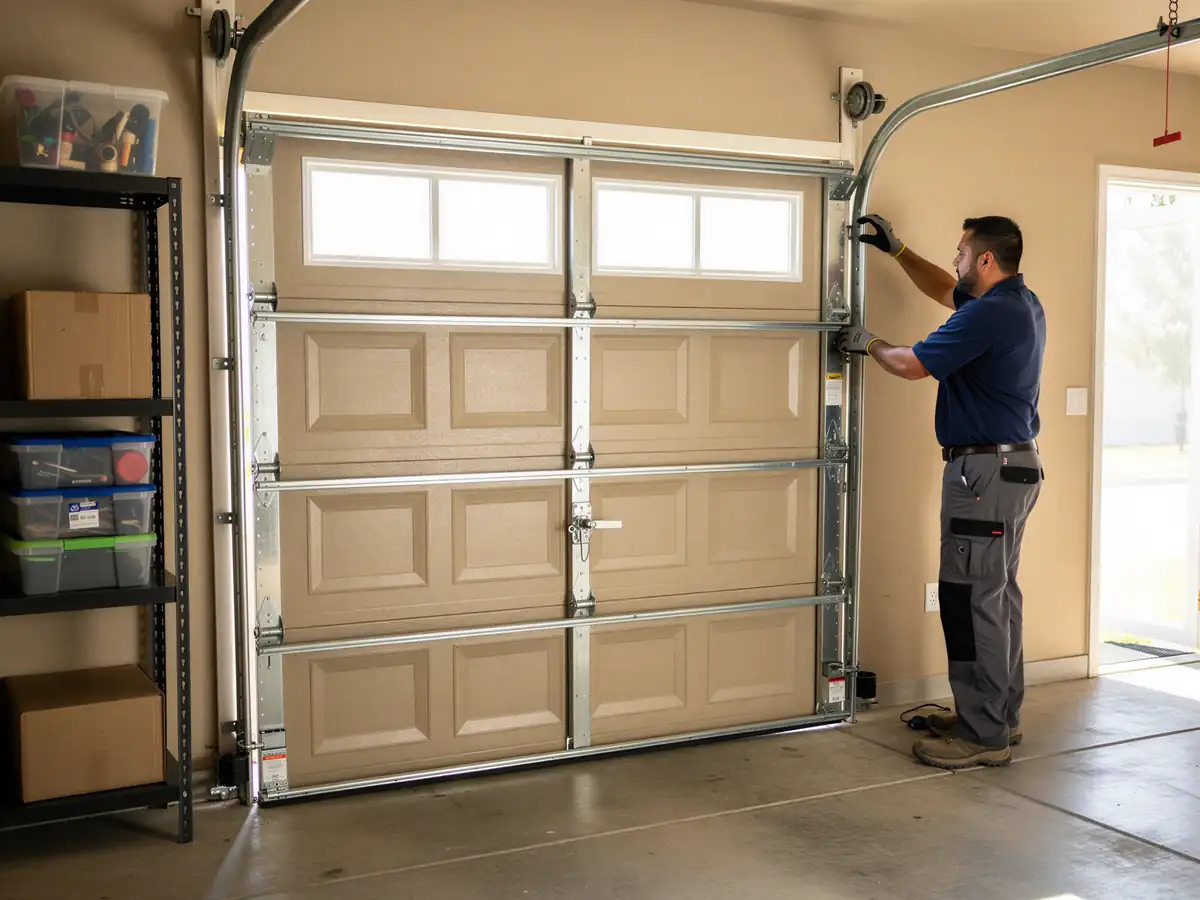
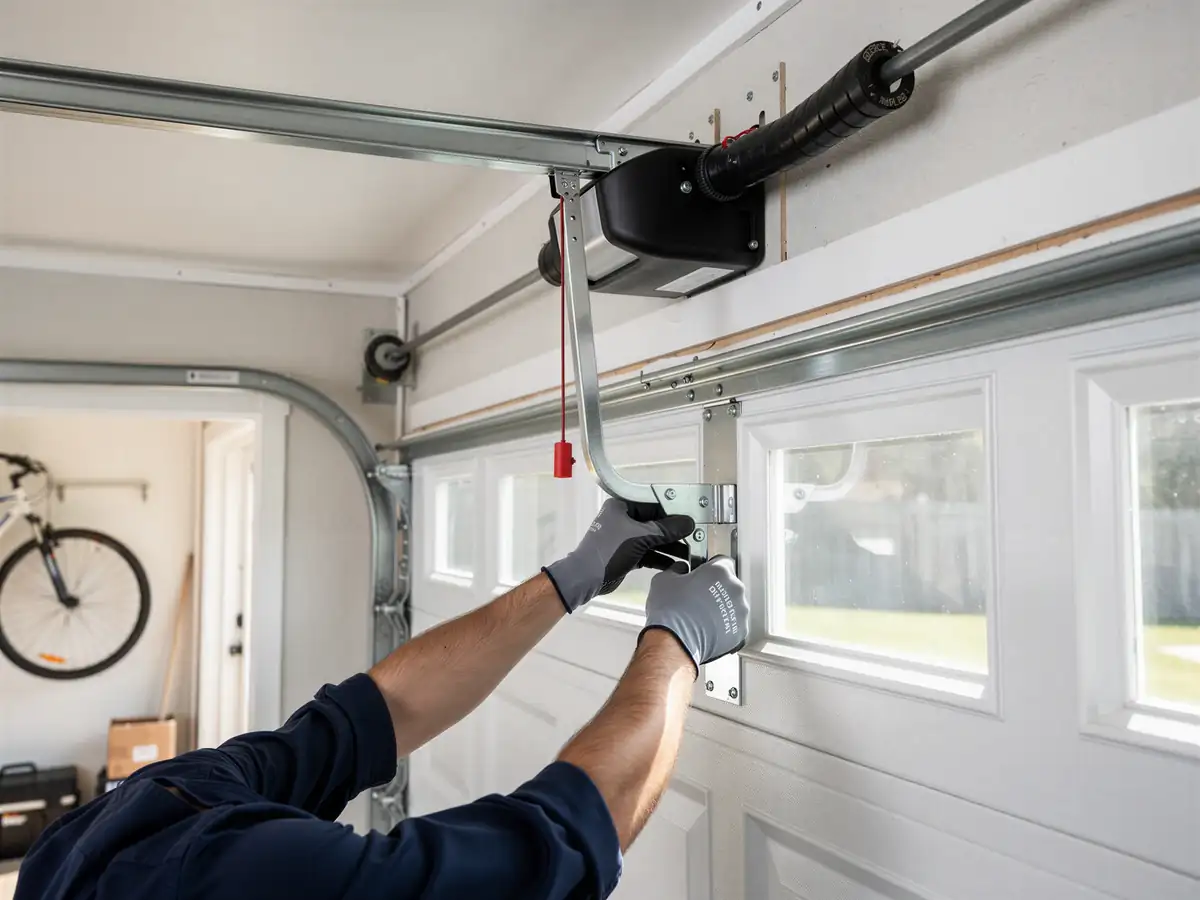
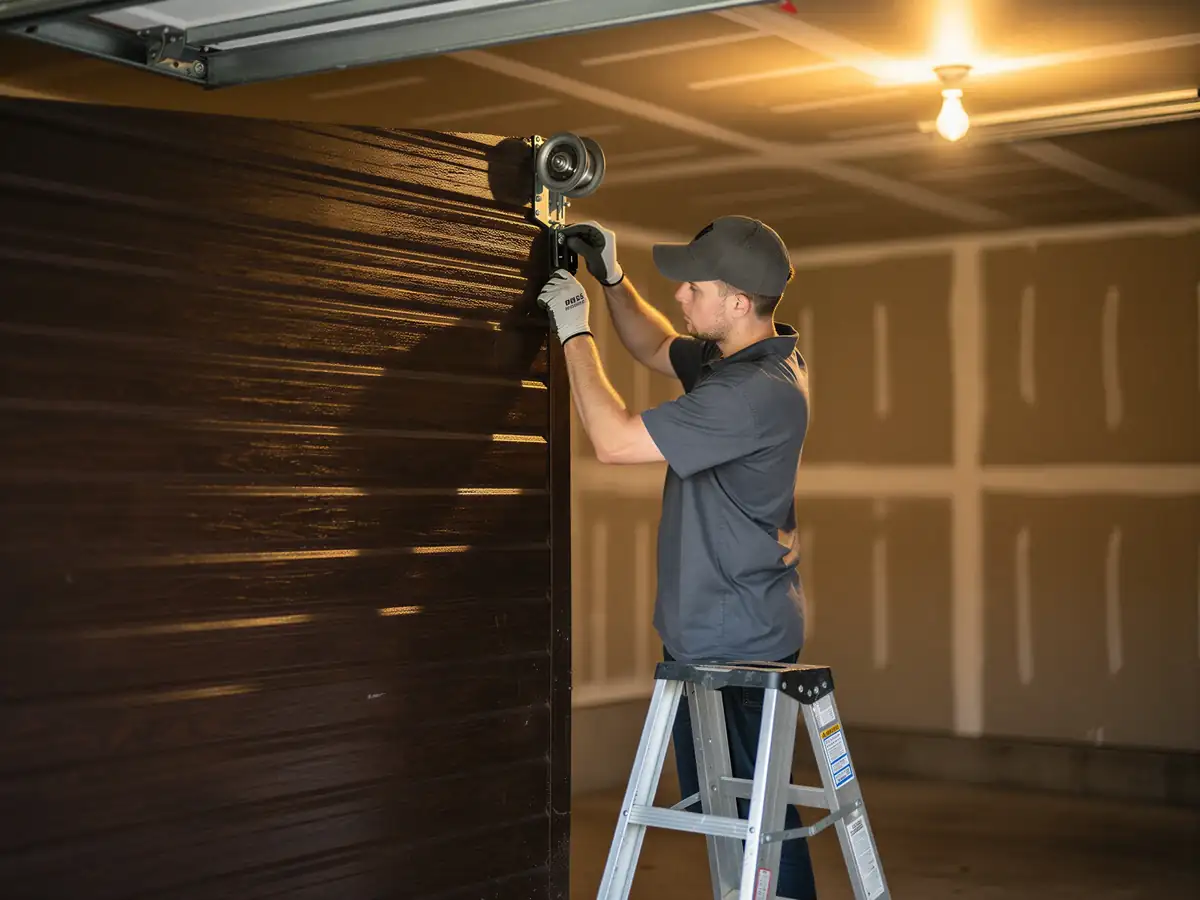
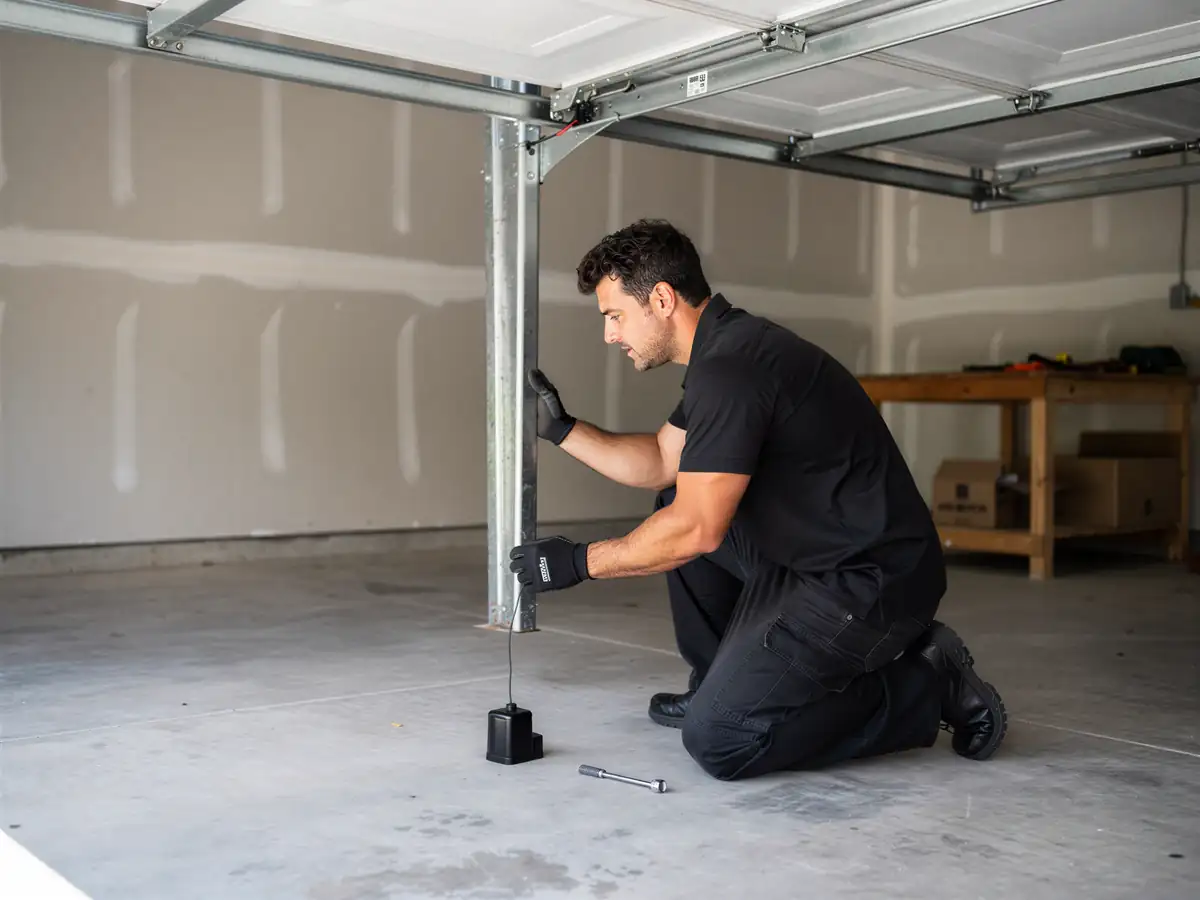
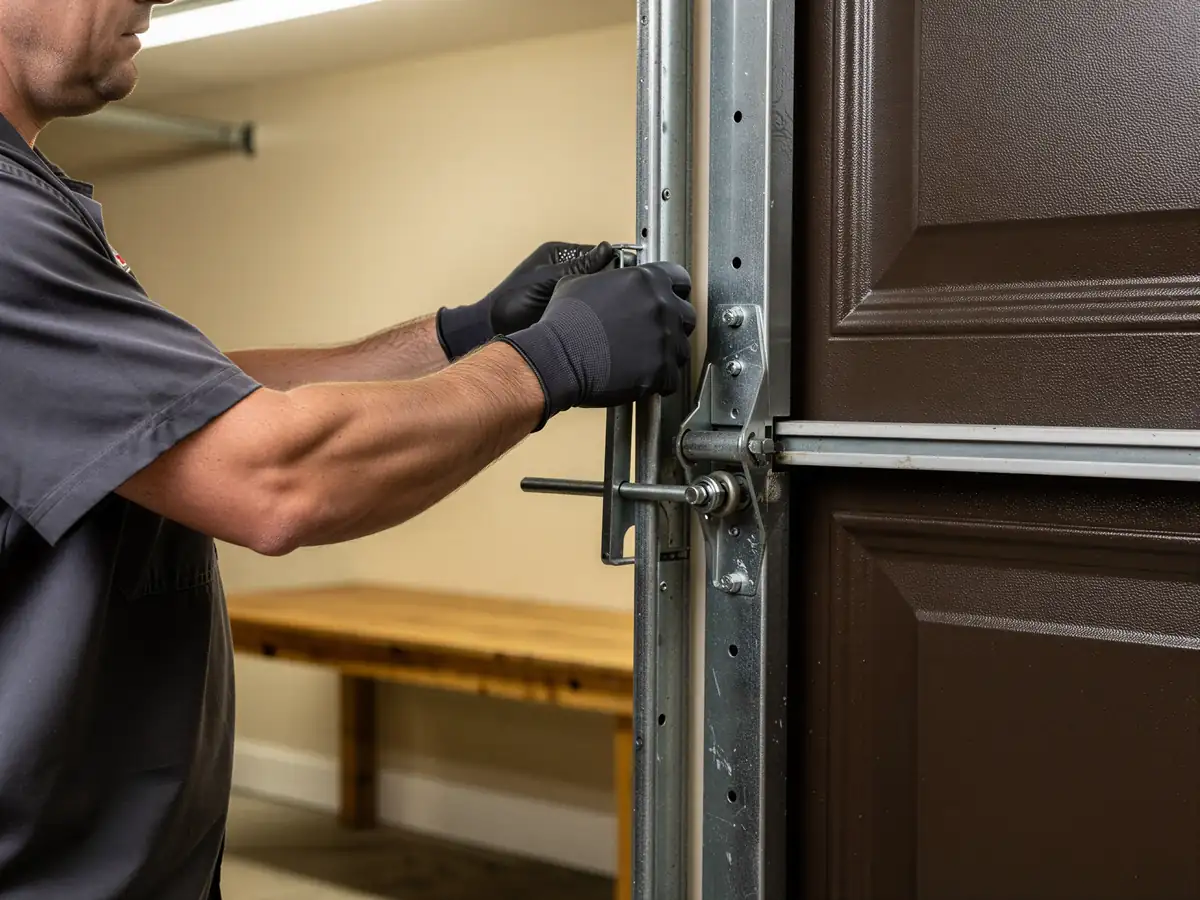
The repair starts with getting the door fully stopped and disconnected from the opener so nothing's under power while we work. From there it's a matter of walking the track back to true - loosening the jamb brackets, resetting the rail to plumb, and reseating the roller inside the channel before retightening everything to spec.
If the track itself is bent rather than just knocked loose, that section gets swapped rather than hammered straight; a track that's been bent and reshaped once will bend again at the same point. We also check the roller that came off - plastic and nylon rollers common on doors from this era wear a flat spot over time, and a worn roller is often what let the door jump in the first place, not just the impact that triggered it. Replacing a $15 roller now is cheaper than doing this call again in six months.
Stocked Parts
We carry the roller and bracket sizes that fit the double-car doors common on Romeoville's 1990s-2000s builds
Along with standard track sections in the lengths those taller door openings need. Jamb brackets and roller shafts are stock items too, since loose brackets are as often the root cause here as the roller itself.
The honest limitation
If the track on your door is a non-standard width - some wider three-car configurations use it - or the door is a custom size outside the usual builder-grade dimensions, that section may need to be ordered rather than pulled off the truck, which adds a day or two. We travel to Romeoville from Orland Park, about 13 miles out, so we plan the parts list before the drive rather than guessing on site.
- 13 miles