Why It Happens Here
The drive from Orland Park out to Romeoville runs about 13 miles each way
Long enough that a call here gets its own slot on the schedule rather than getting folded into a shorter local loop. That distance is worth mentioning because it changes how the day gets planned, not because it changes what's wrong with the door once the truck gets there.
- 13 miles
What's actually wrong tends to be different here than in the older parts of the service area
The wider territory we cover runs mostly 1960s and 70s housing stock, with homes going back as far as 1938. Romeoville skews newer - the median home here dates to 1998, and most of the neighborhood went up well after 1990. That means fewer original one-piece doors on side-mounted torsion hardware, and a lot more steel sectional doors paired with factory openers that are twenty-some years old now, not fifty. The failures we see trend toward opener electronics and sensor alignment drifting with age, rather than springs that were never sized right in the first place.
The cold-moderate climate band that covers the whole area still applies here the same as anywhere else we work
Temperature swings still fatigue torsion springs and stiffen weatherstripping. The hardware taking that punishment in Romeoville is just newer than what we're pulling out of the older towns closer to Orland Park.
The Symptom
On a newer door and opener setup like most of what's out in Romeoville, the complaint we hear is rarely "the door won't move at all." It's usually something more specific: the opener light blinks a set number of times and the door won't close, or it closes partway and reverses back up on its own, or the remote works from the driveway but not from inside the car.
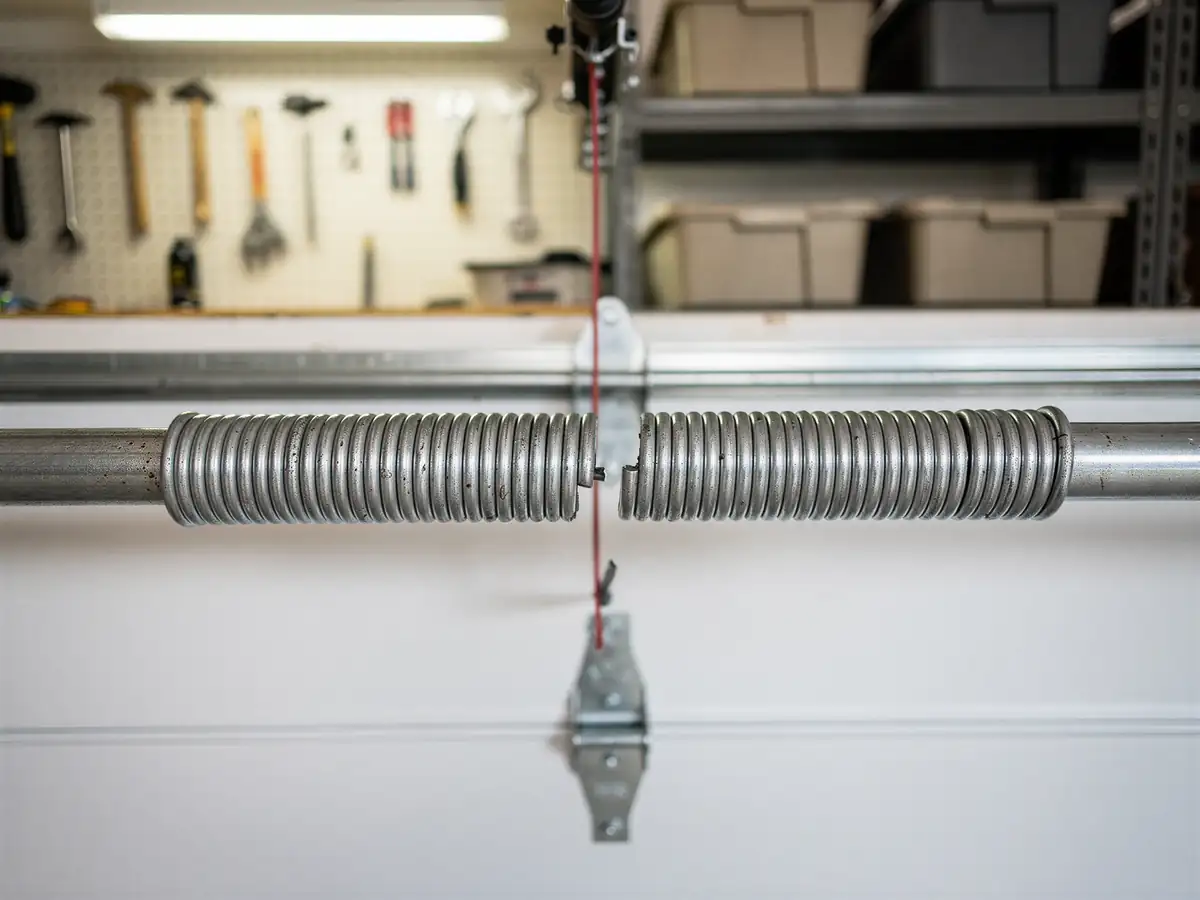
Those are symptoms of safety sensor misalignment or a travel limit that's drifted out of calibration - common on openers in the ten-to-twenty-year range, which is where a lot of Romeoville's stock sits given the 1998 median build year. Less often, we hear about a spring that's let go with a bang, usually on a heavier insulated steel door, since those carry more spring load than the lighter uninsulated doors from decades back.
What we don't see as much out here is the slow sag and rust-through on cable drums that shows up constantly on homes built before 1960. The newer the house, the more the problem lives in electronics and adjustment rather than in metal that's worn out from age.
What the Fix Involves
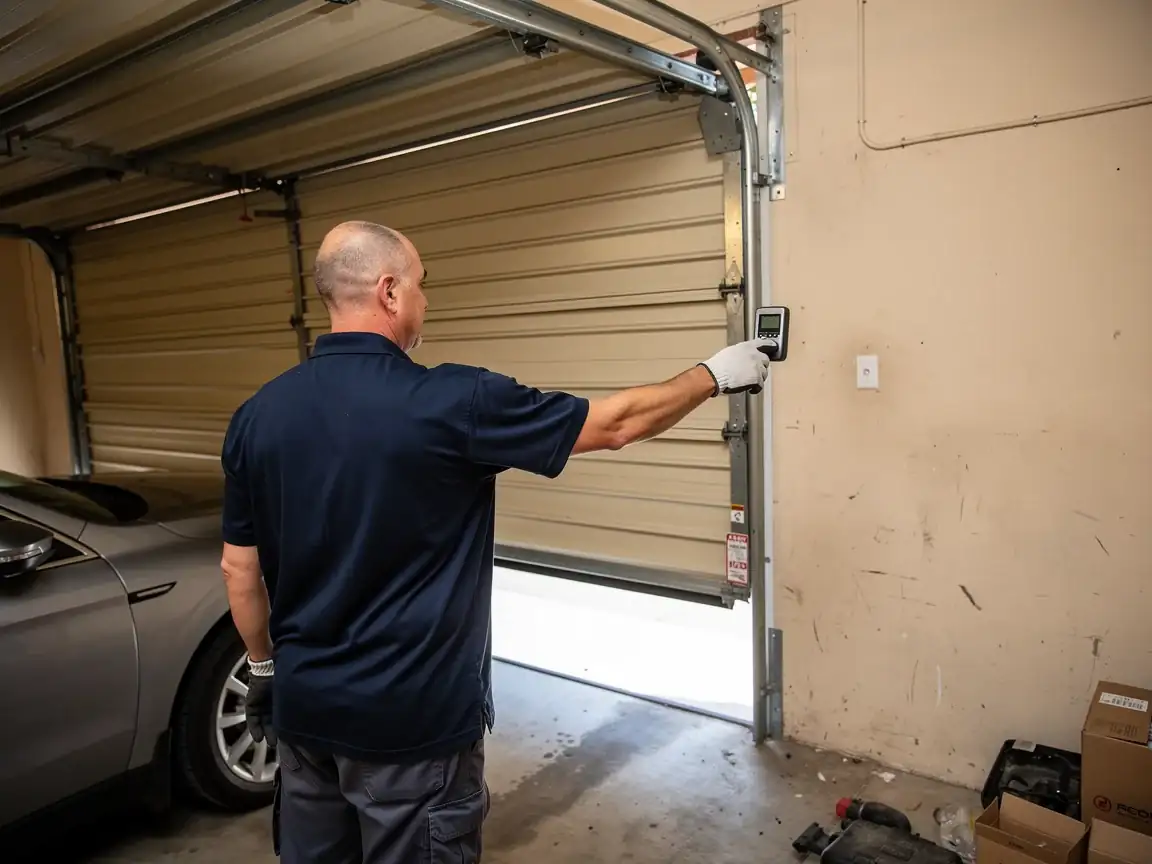
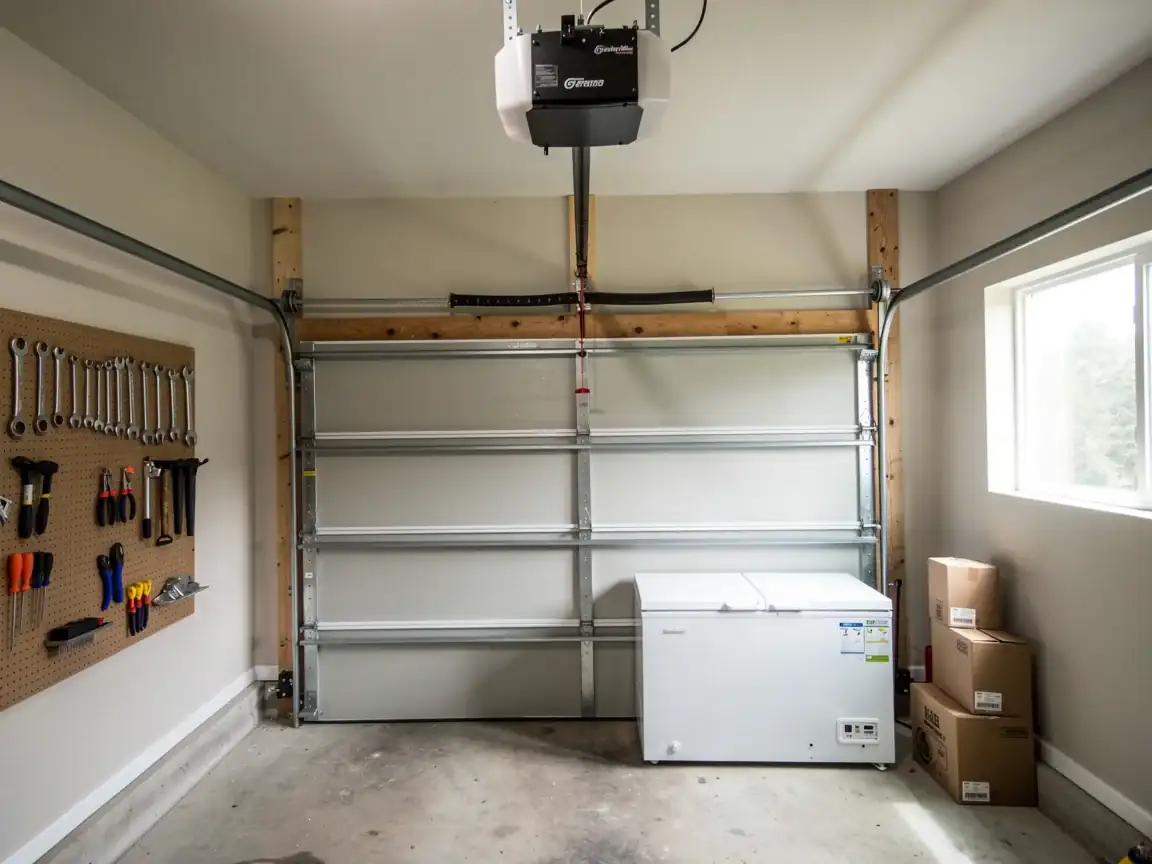
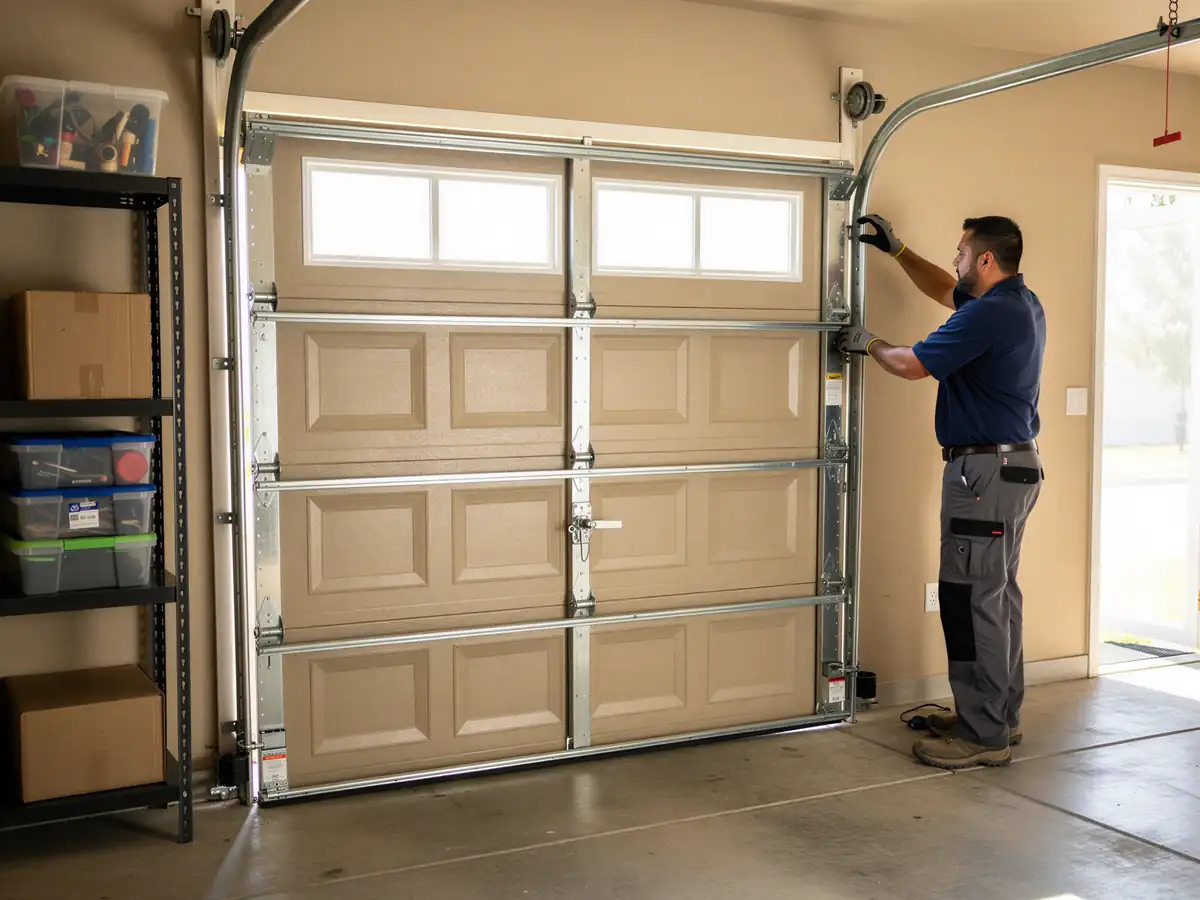
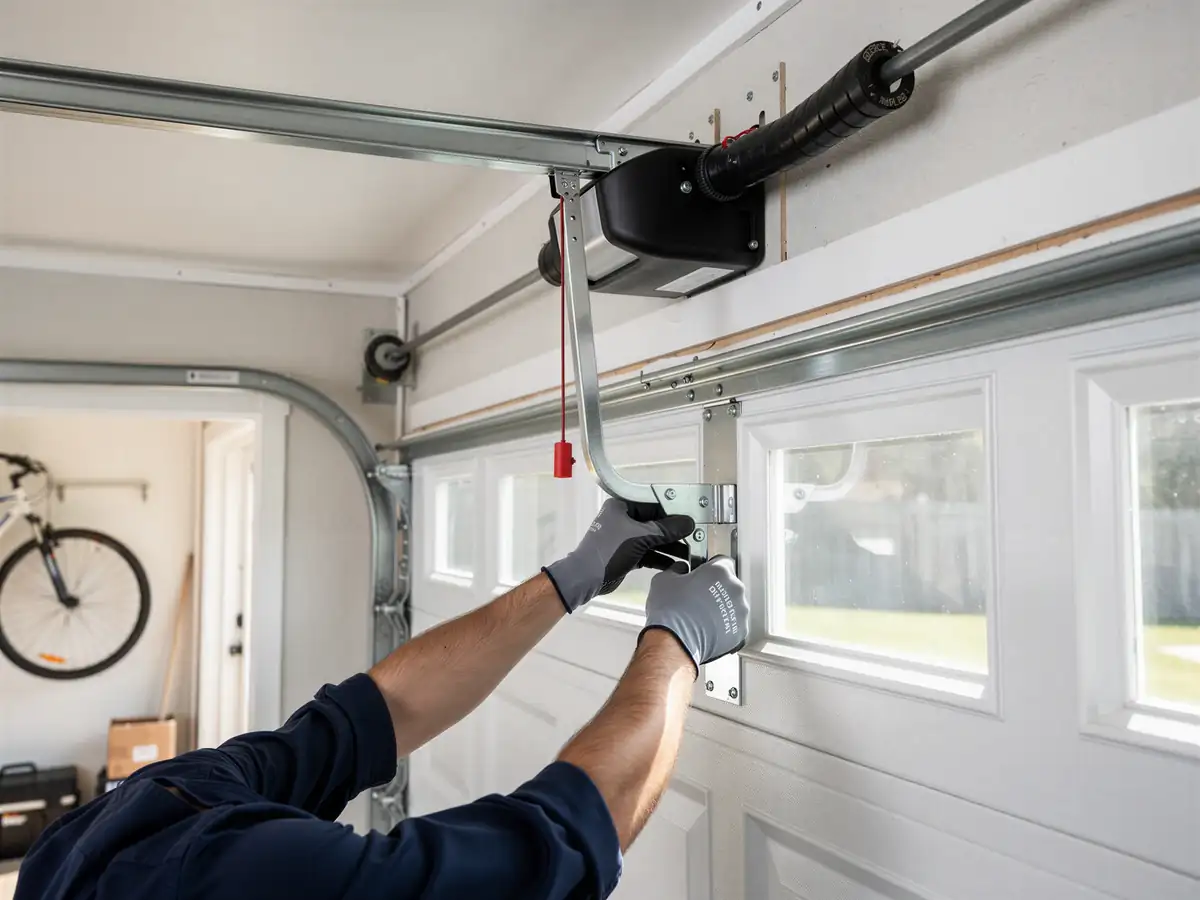
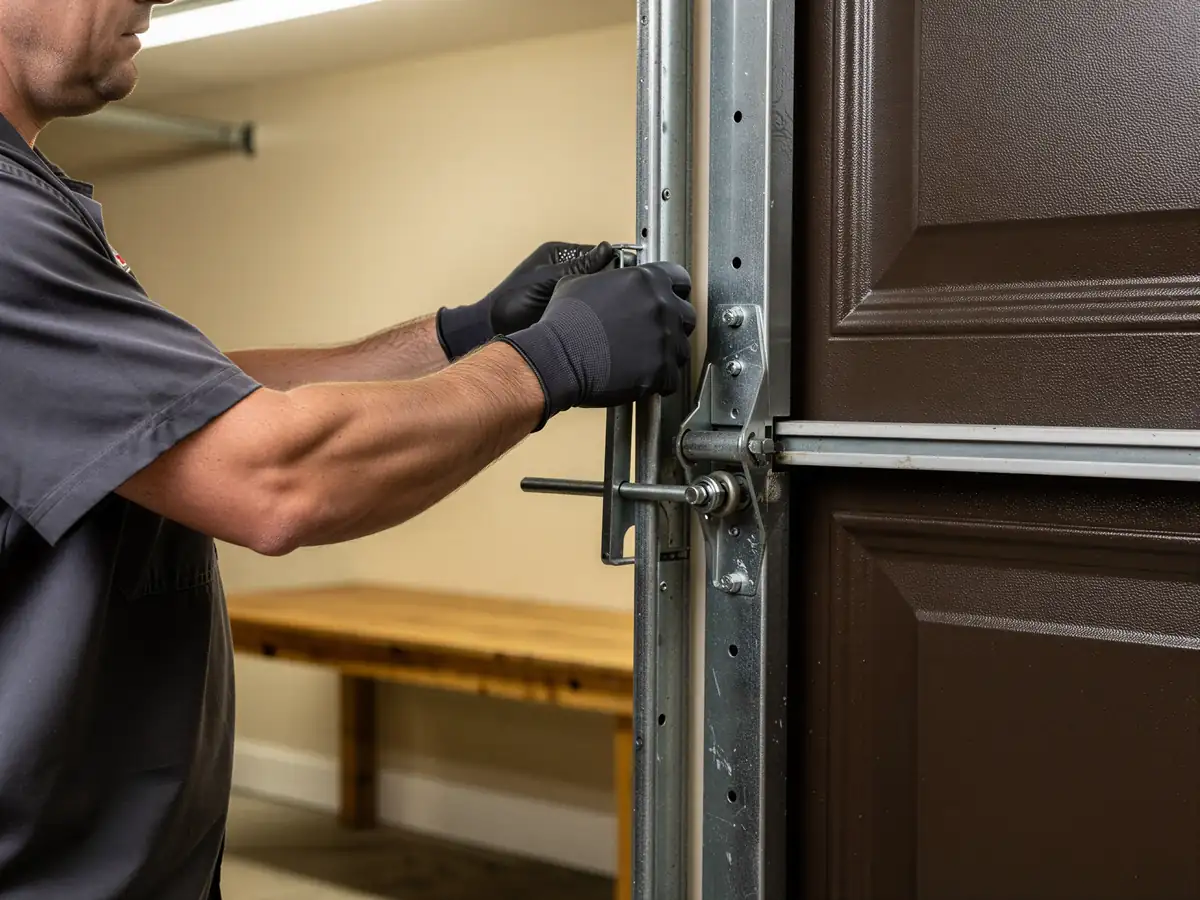
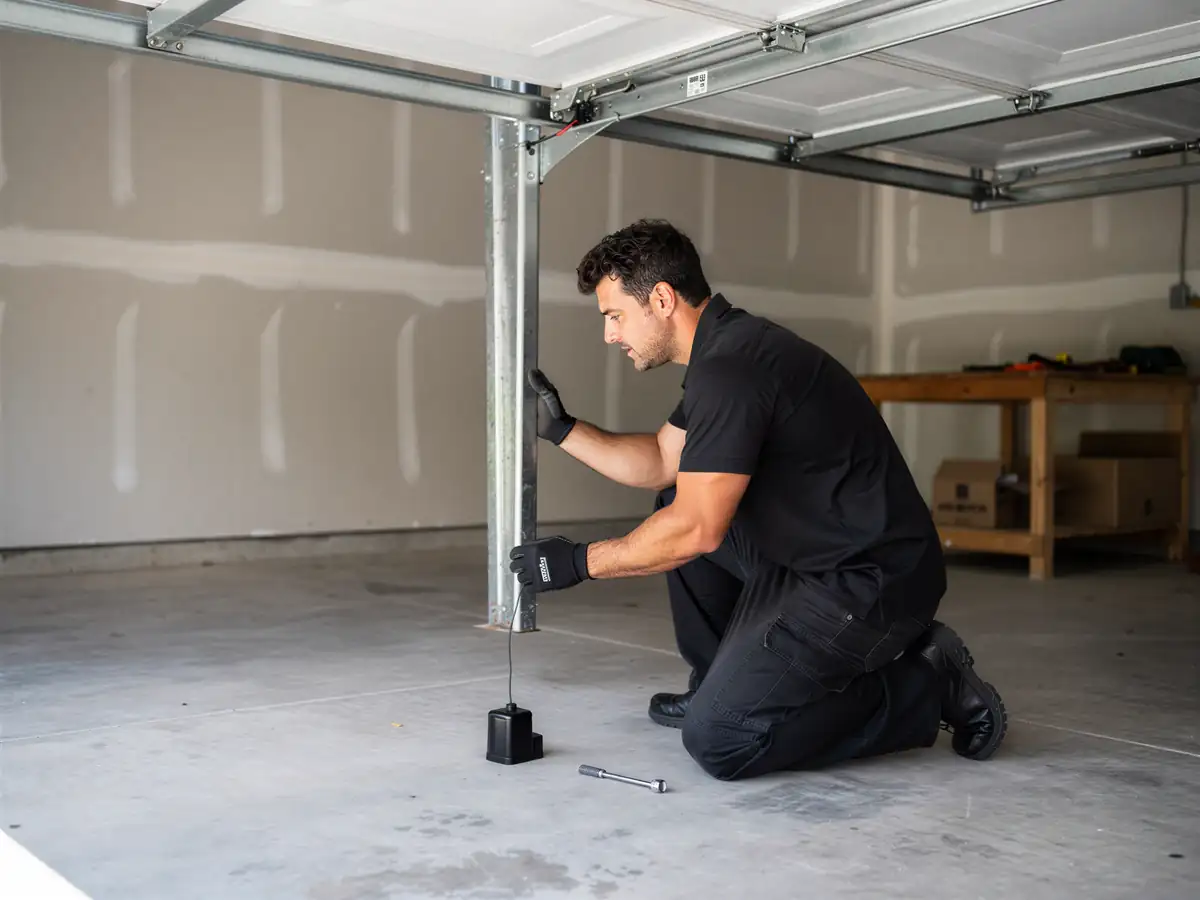
First step on a Romeoville call is confirming whether the fault is mechanical or electronic, because on a 1990s-or-newer door it's a real question either way. We check the safety sensor alignment at the base of the tracks, pull the logic board's error history if the opener supports it, and check the travel limit settings before touching a wrench.
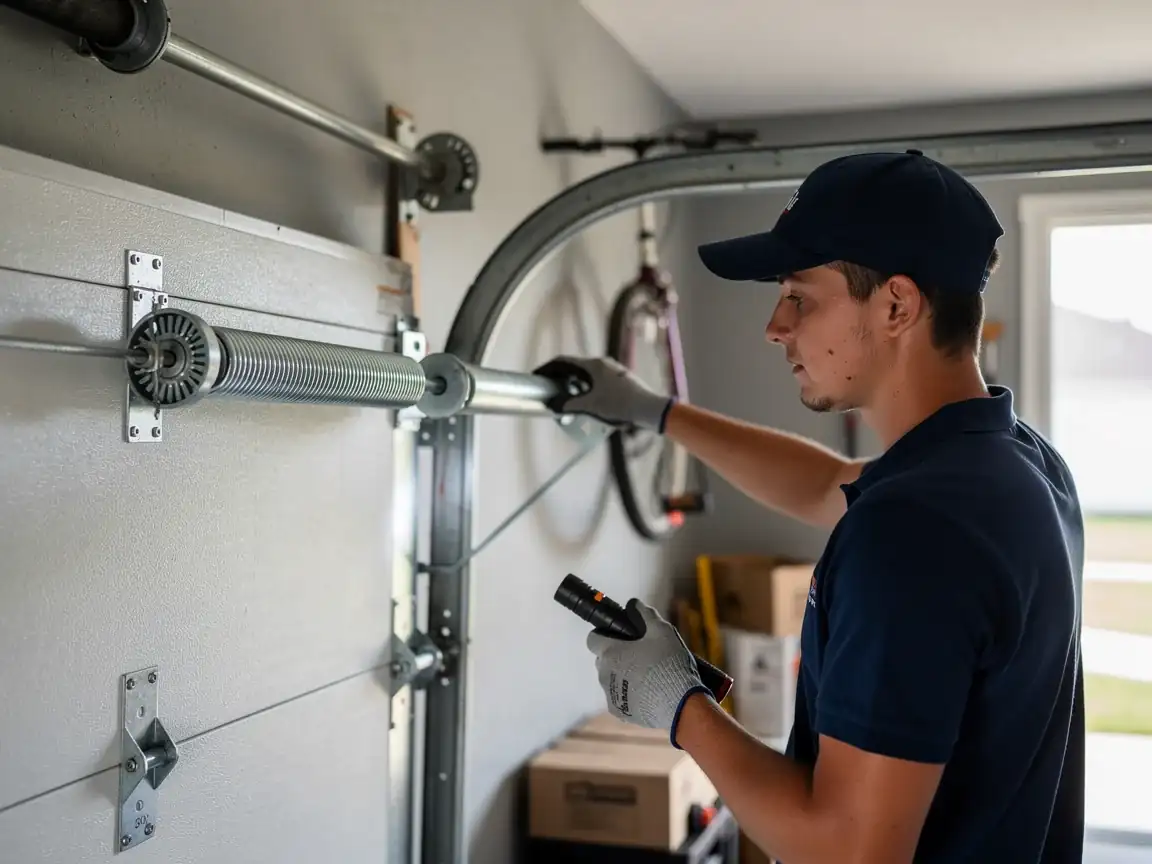
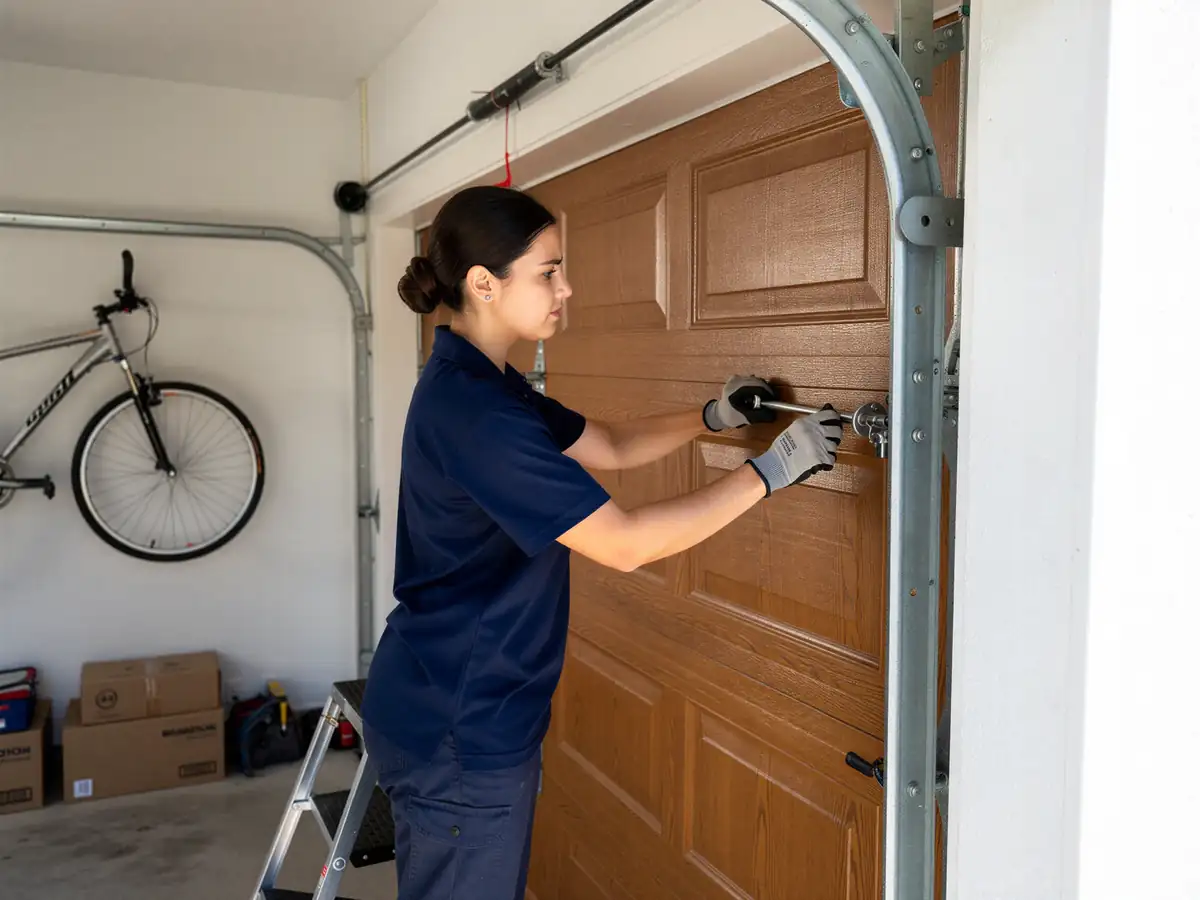
If it's a spring, we size the replacement to the actual door weight rather than swapping in whatever was there - insulated steel sectional doors common in this part of town carry more weight than the hollow doors found on older housing stock, and an undersized spring on a heavy door just means another failure in a year or two.
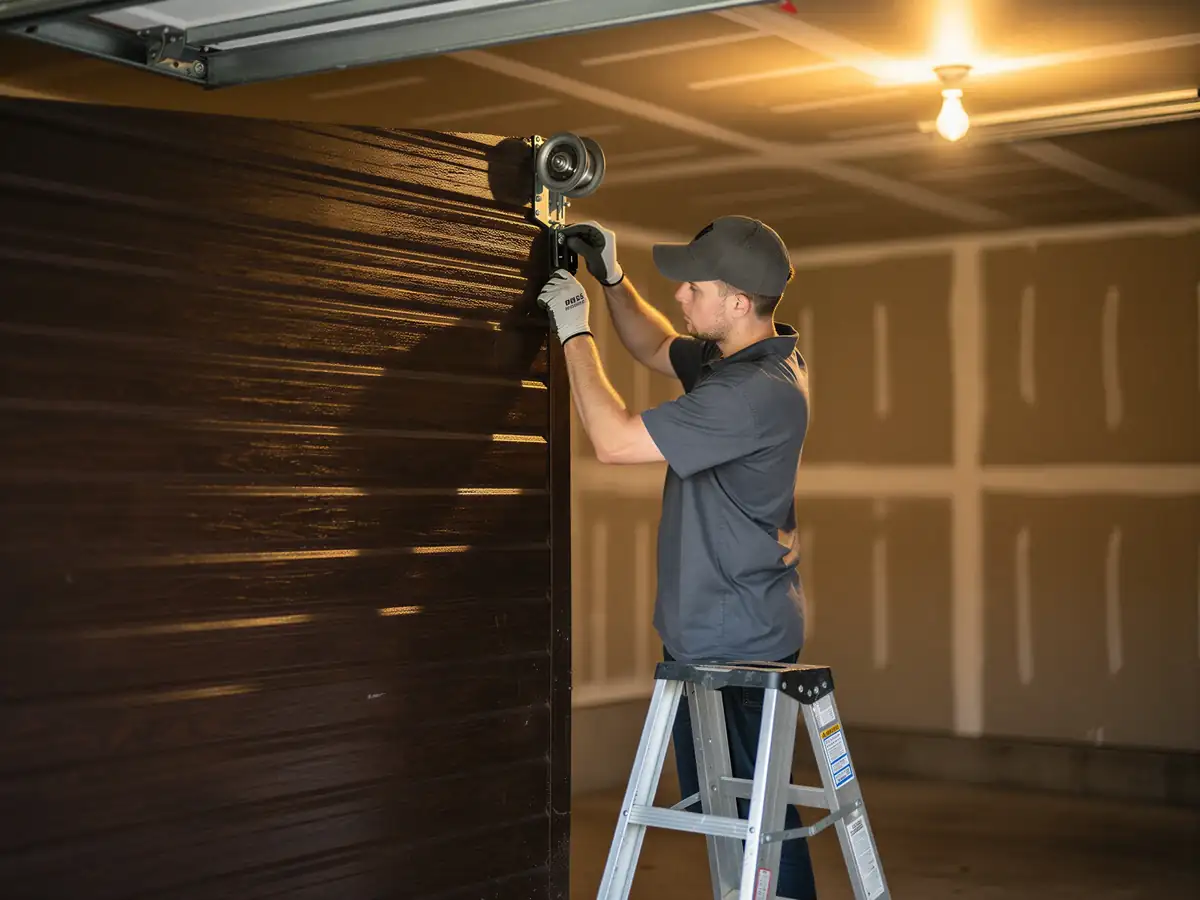
We also check the opener's drive type, since belt and chain drives wear differently and the gear and sprocket kit that fixes one won't fit the other. None of this takes special tools, but it does take knowing which generation of hardware you're standing in front of - and on a 1998-median neighborhood, that's almost always newer than the gear we're used to pulling parts for in the oldest sections of the territory.
Stocked Parts
The truck carries torsion springs in the sizes that match standard steel sectional doors
Which covers most of what's installed on Romeoville's newer housing stock - this isn't the older one-piece slab hardware that needs a special-order spring. We also carry safety sensor pairs, standard travel limit switches, and the belt and chain parts for the drive types most common on openers from the last twenty-some years.
Where we can't promise a same-visit fix is on proprietary circuit boards for certain opener brands
Some of those are back-ordered from the manufacturer and not something we keep six of on the truck. If a board needs replacing rather than resetting, that part may need to be ordered, and we'll say so rather than pretend otherwise.
Because the drive from Orland Park is part of every Romeoville job
We try to confirm the likely part needed over the phone before the truck heads out, based on what you're seeing and hearing from the door. It doesn't replace an in-person look, but on a 13-mile trip it cuts down on second visits for something we could have carried the first time.