Why It Happens Here
A door comes off its track for a handful of reasons
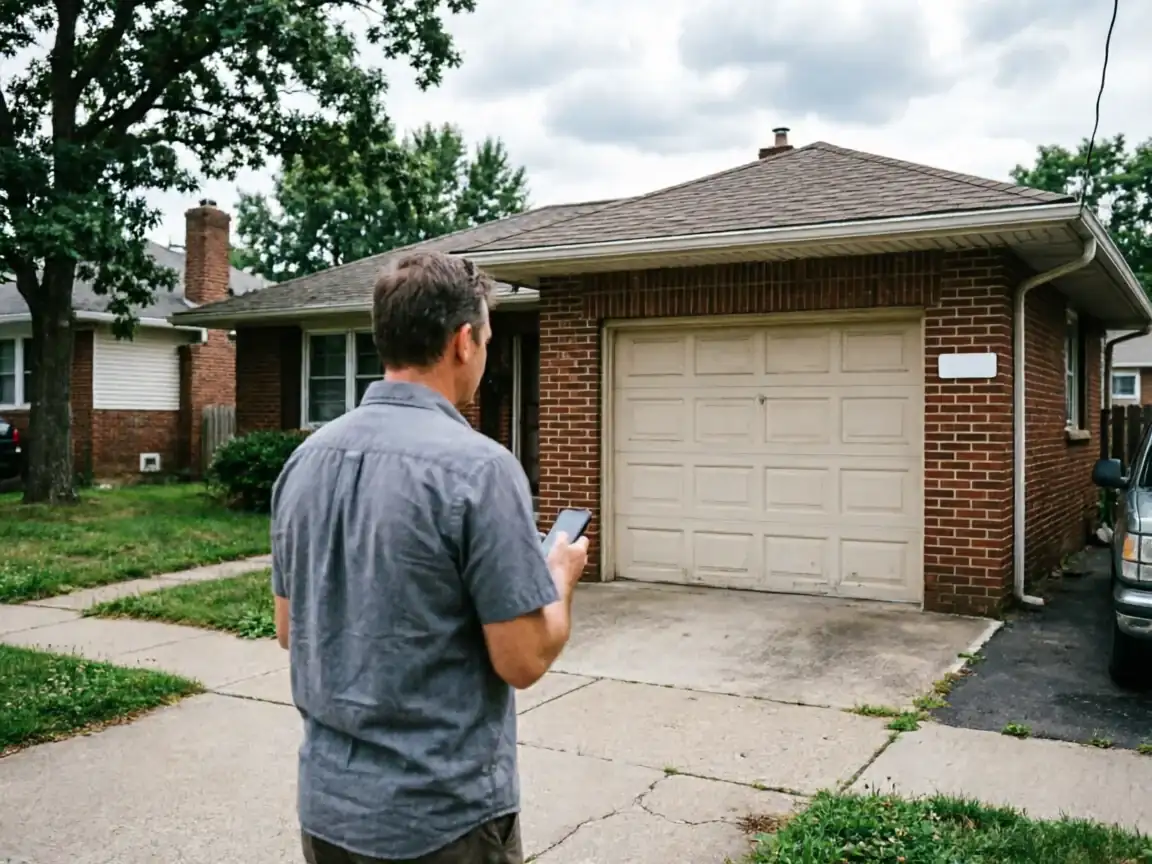
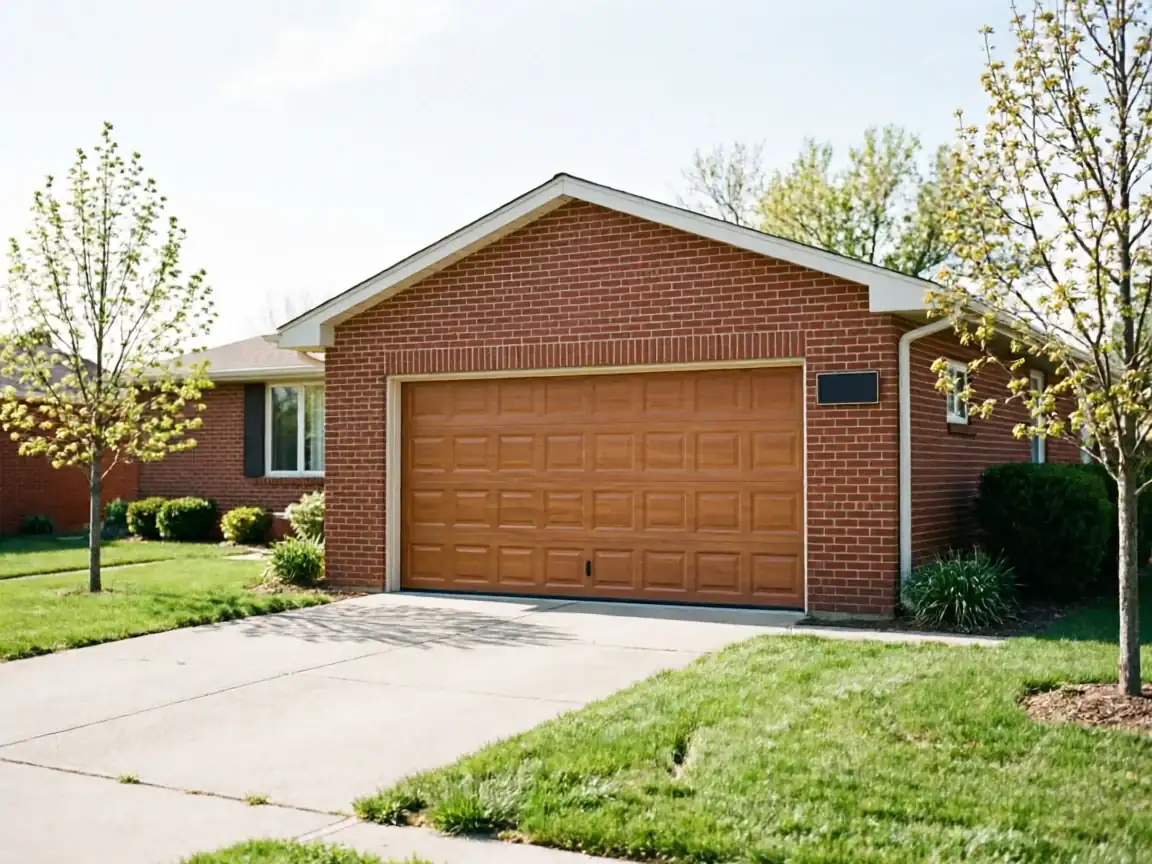
And in this part of the Chicago south suburbs the usual suspects are age and temperature. Housing across the service area was built mostly between 1938 and 2004, with the median year sitting around 1970, and most of the stock is 1960s and '70s construction. That means a lot of original steel tracks, bent brackets that have been re-shimmed more than once, and roller hardware nobody's touched since the door was installed.
Cold is the other half of it
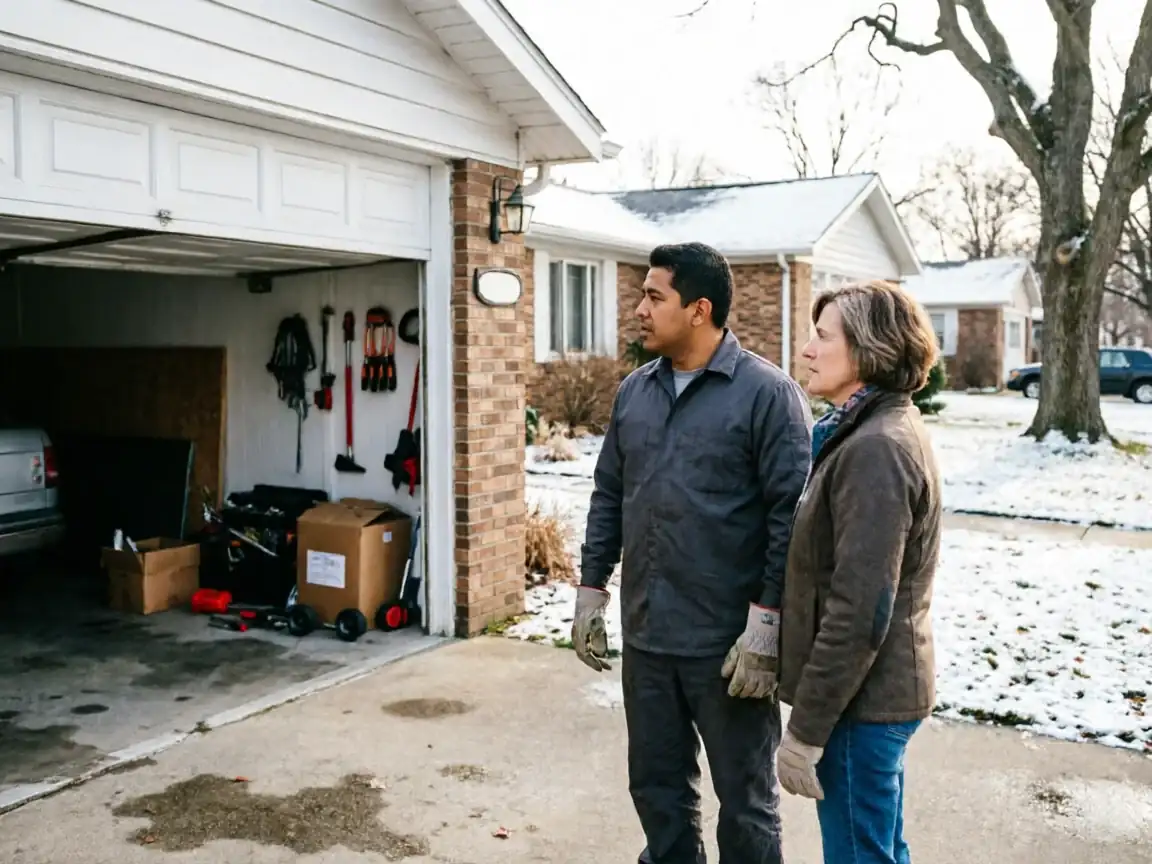
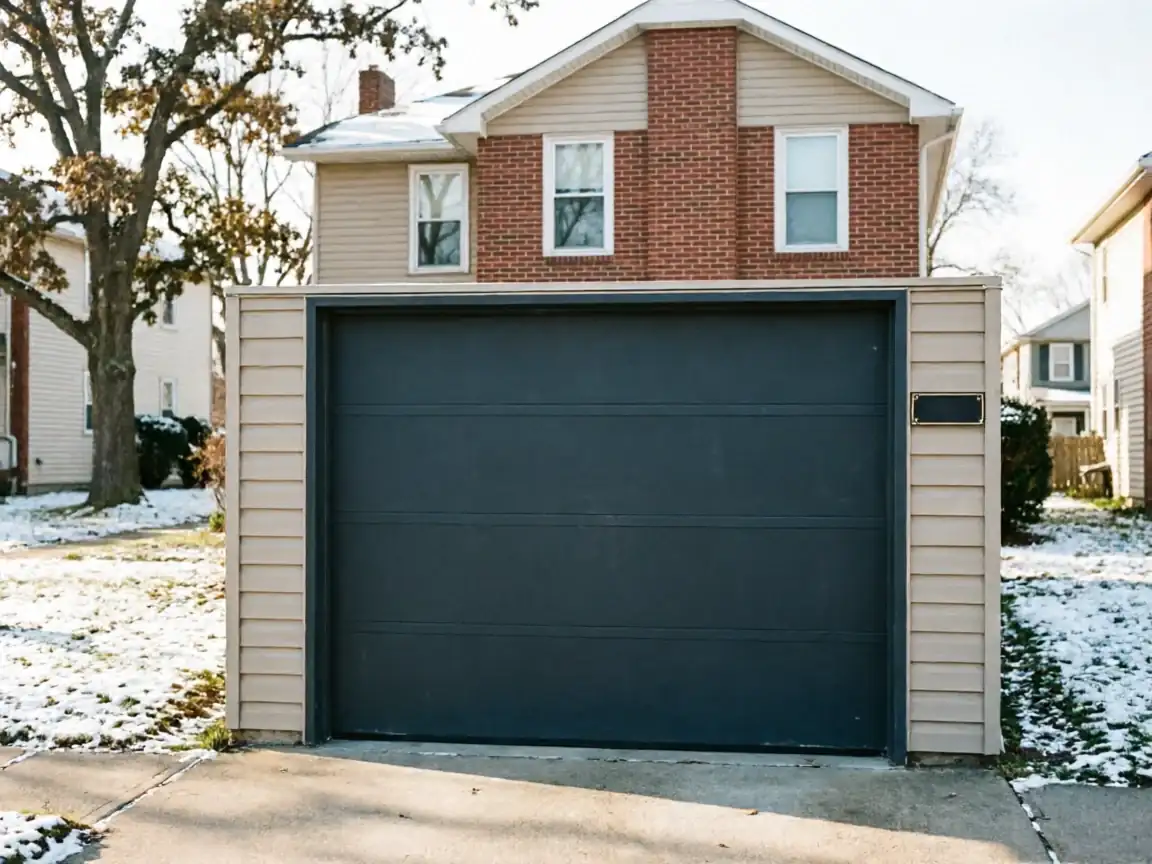
This area sits in a cold-moderate climate band, and that means real freeze-thaw cycling every winter. Steel track contracts when it's cold and expands when the garage warms up on a sunny afternoon, and over enough years that cycling works screws loose in the jamb and lets brackets creep out of plumb. A door that's been riding slightly misaligned for months will finally jump the track the first time a cable snags or a roller hits a worn spot. It's rarely one dramatic event - it's wear that finally gave.
How Long It Takes
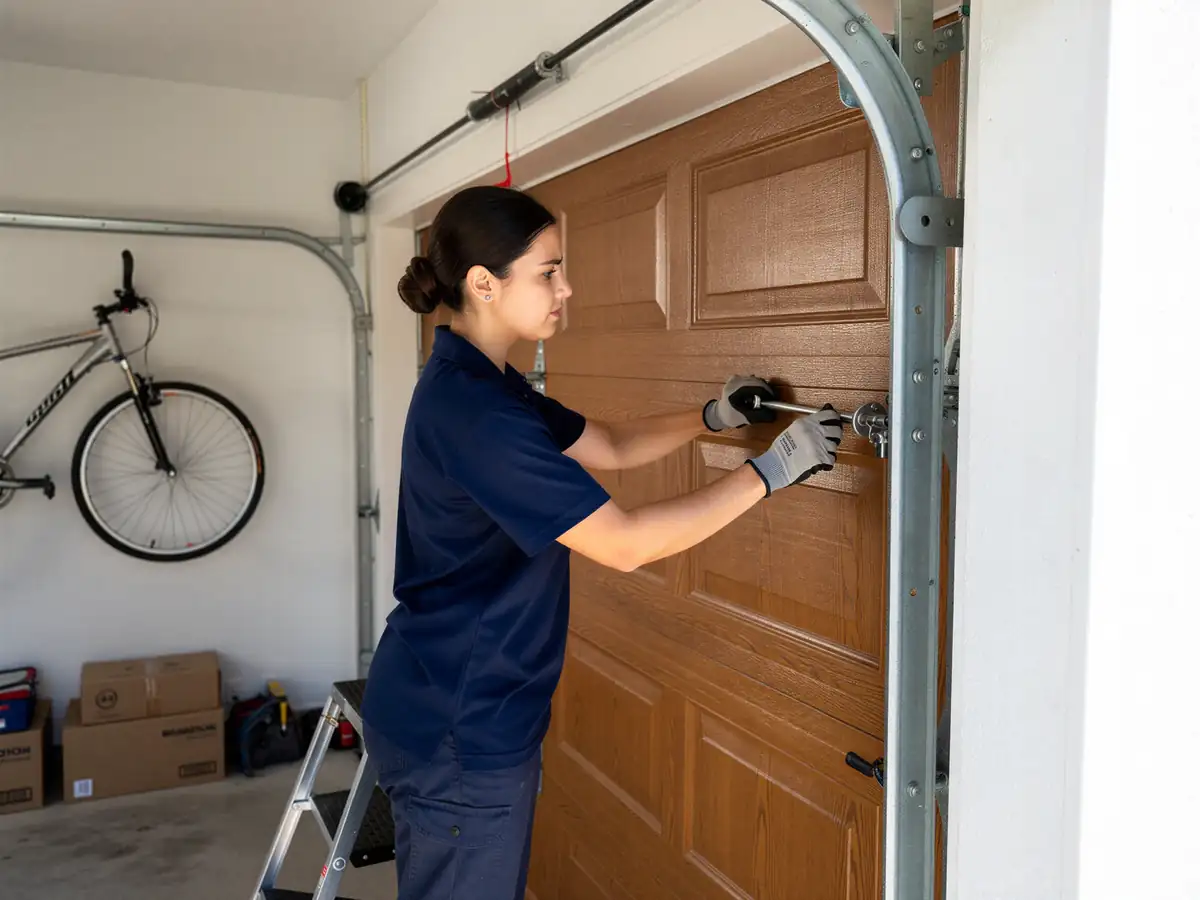
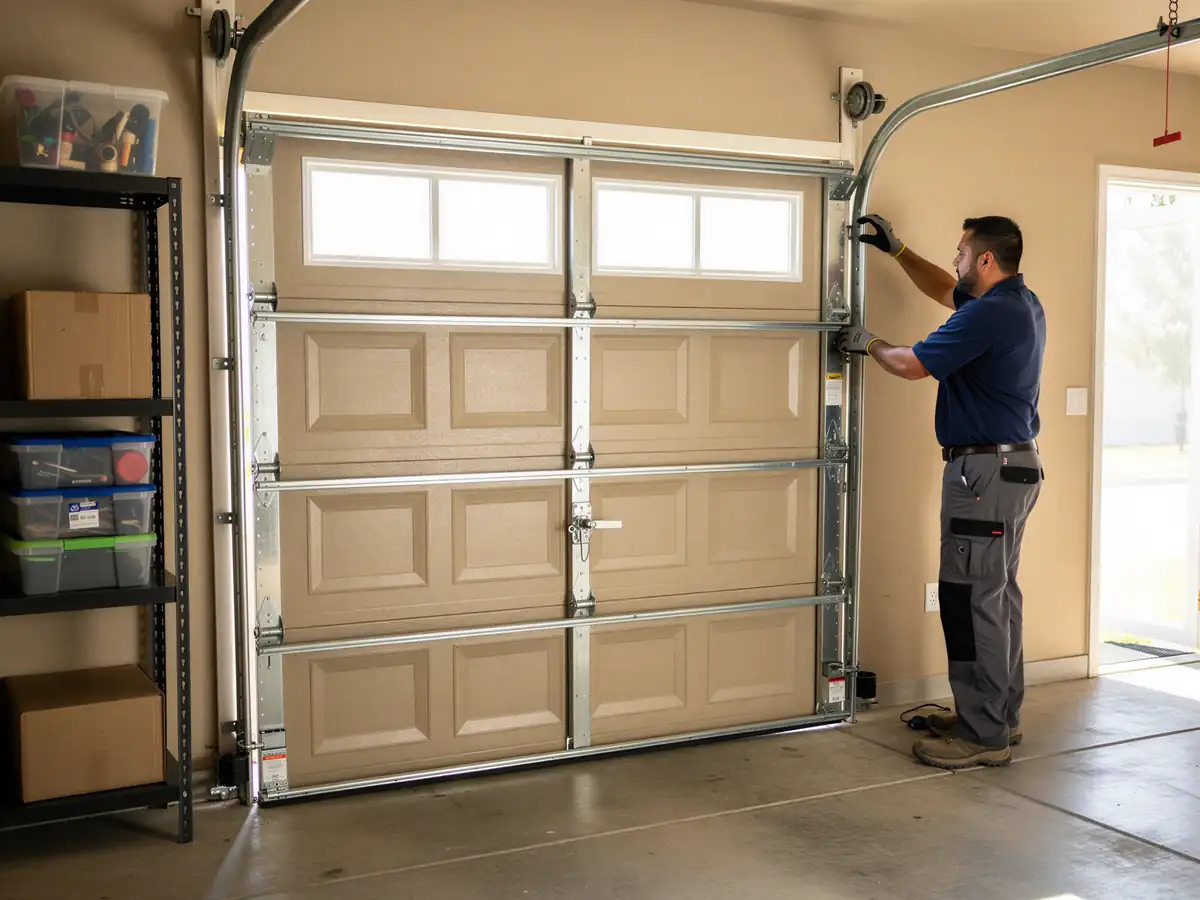
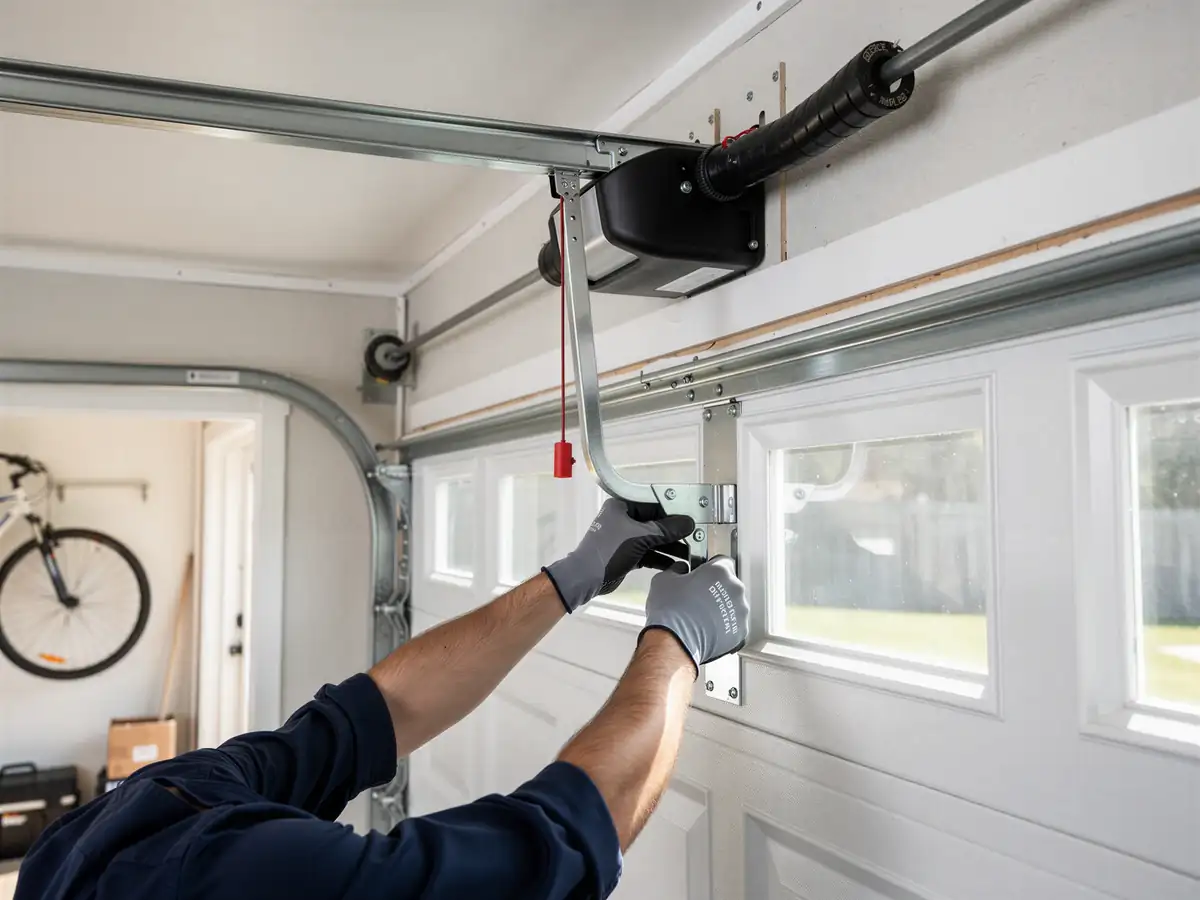
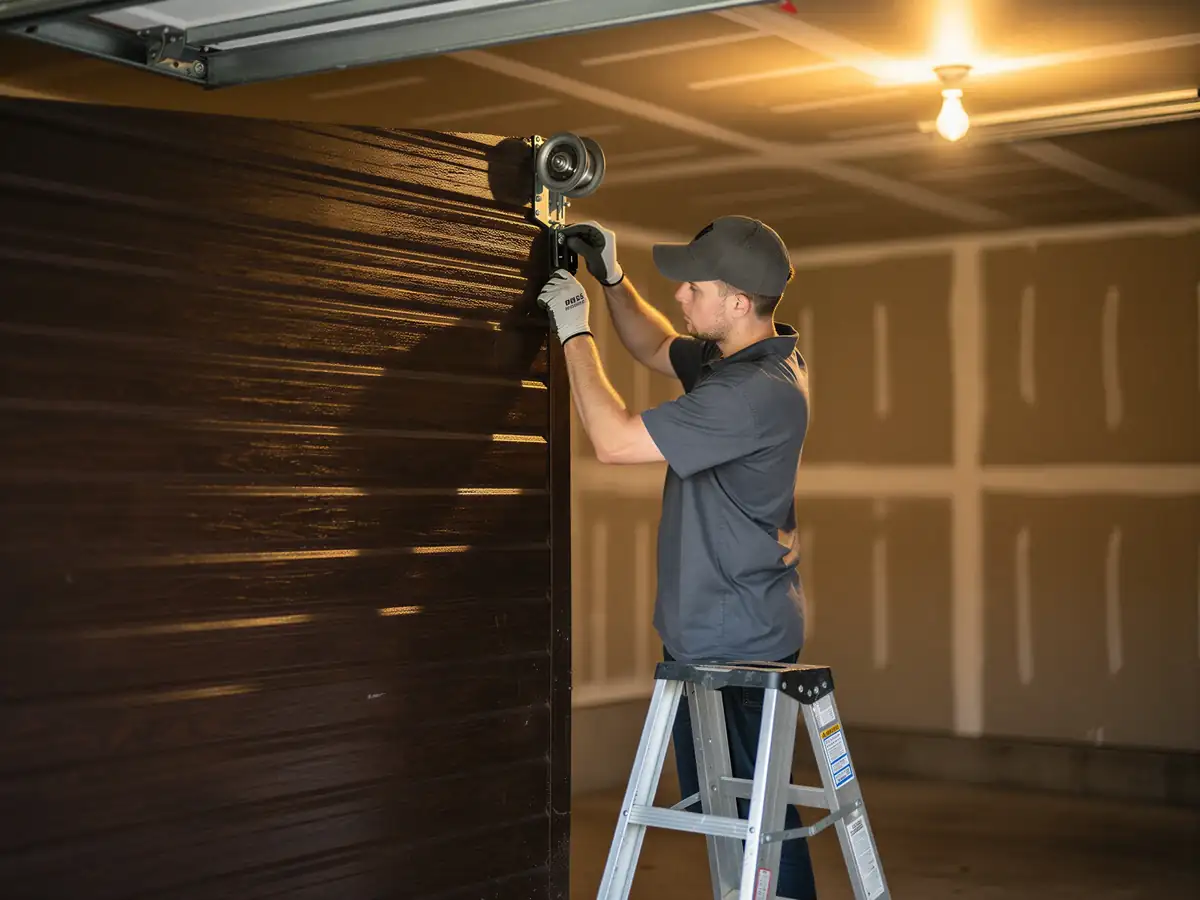
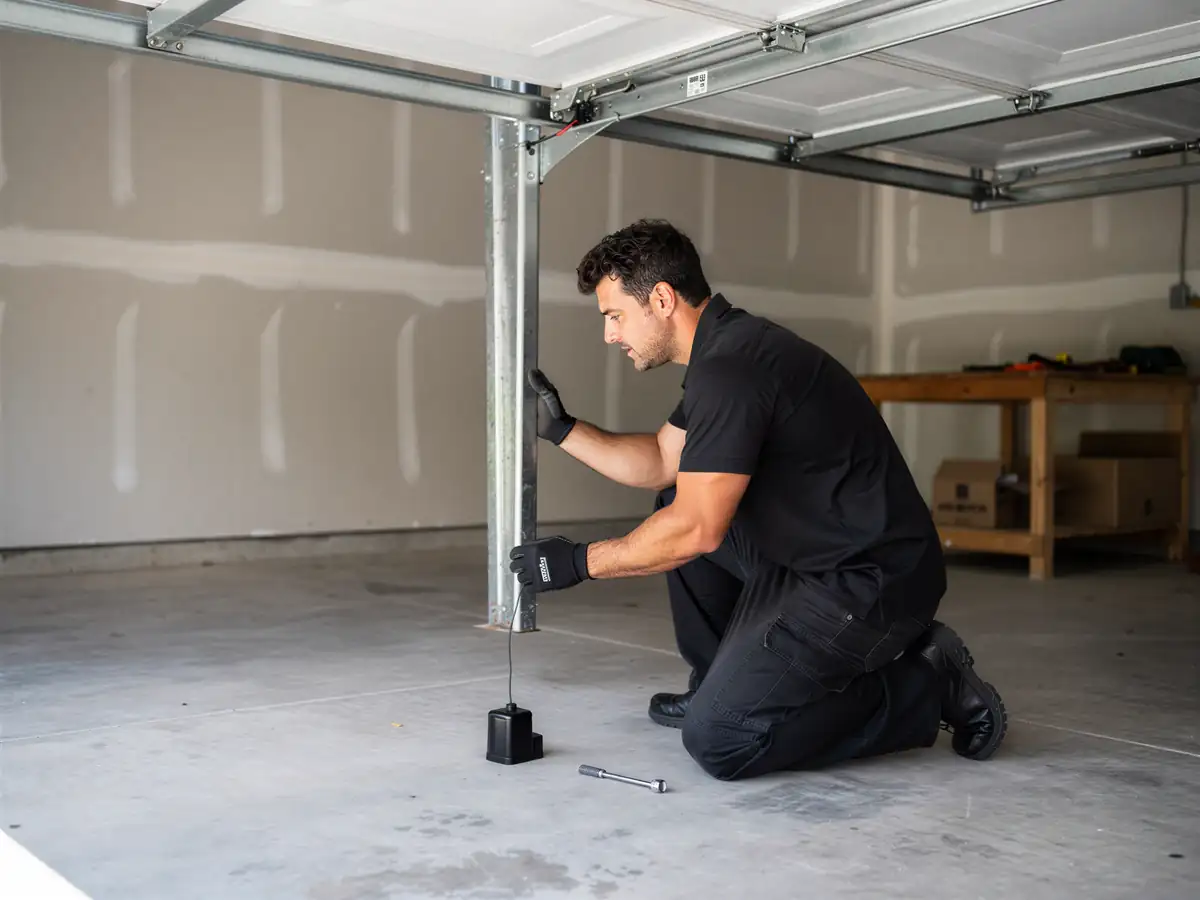
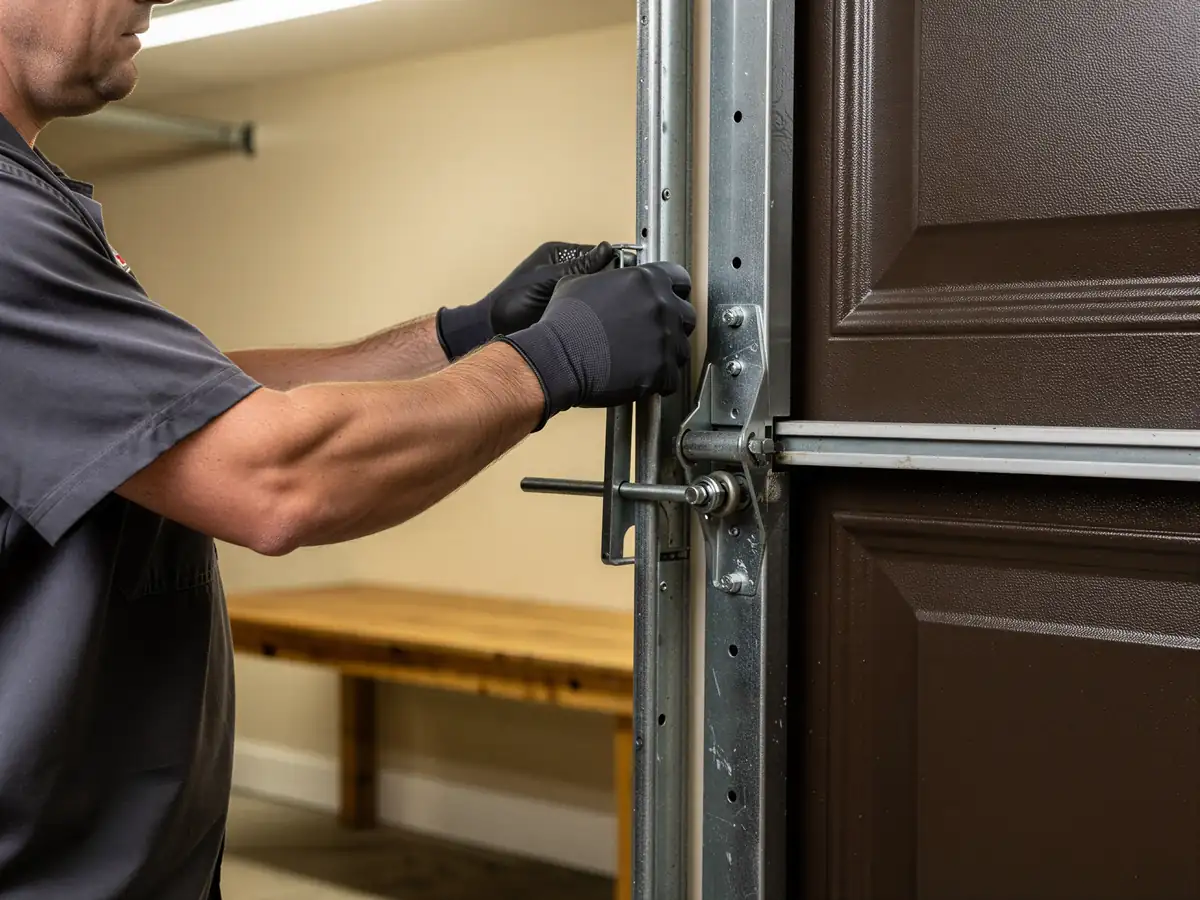
Most off-track calls break into two different jobs once we're looking at the door. If a roller or hinge has simply slipped out of the track channel and the door is otherwise undamaged, that's a straightforward realignment - loosen the track brackets, walk the panel back into the channel, check the gap, retighten. If a cable has come off the drum or a spring is involved, that's a longer job, because we're not just fixing the symptom, we're fixing whatever let the door come off in the first place.
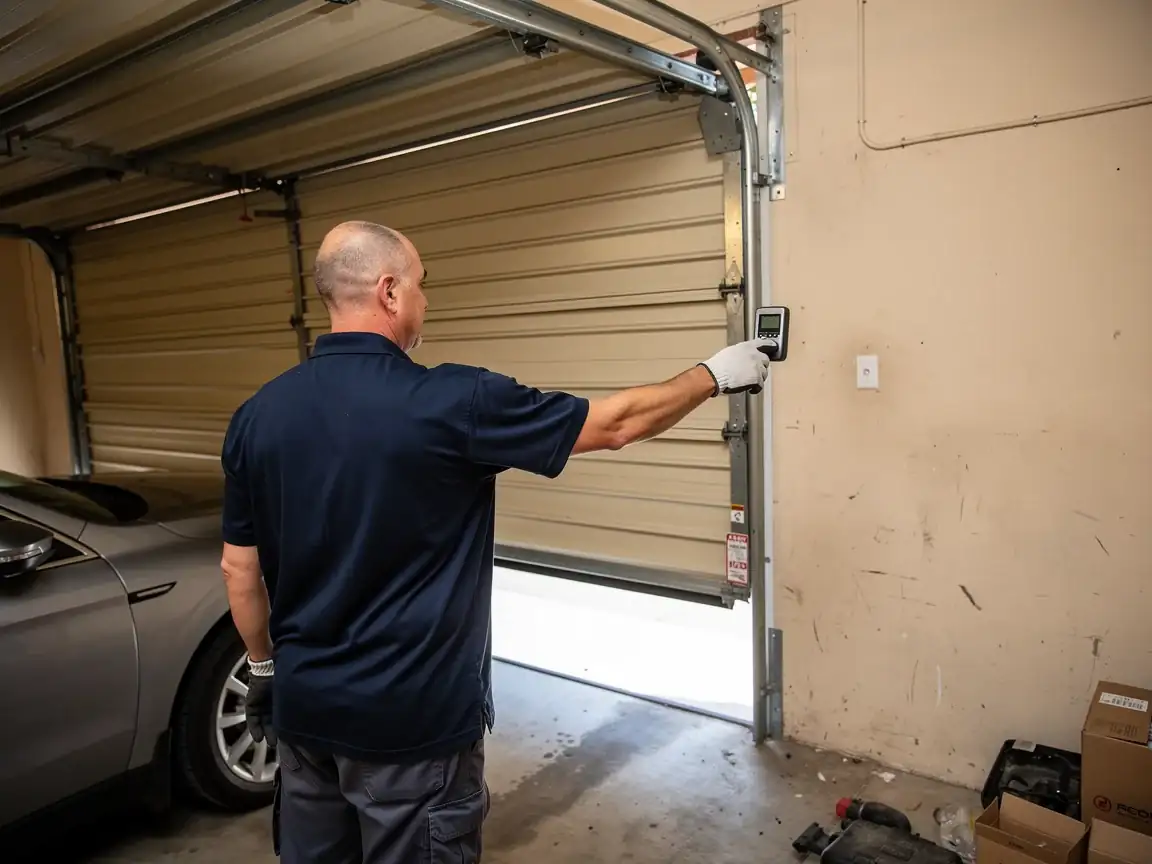
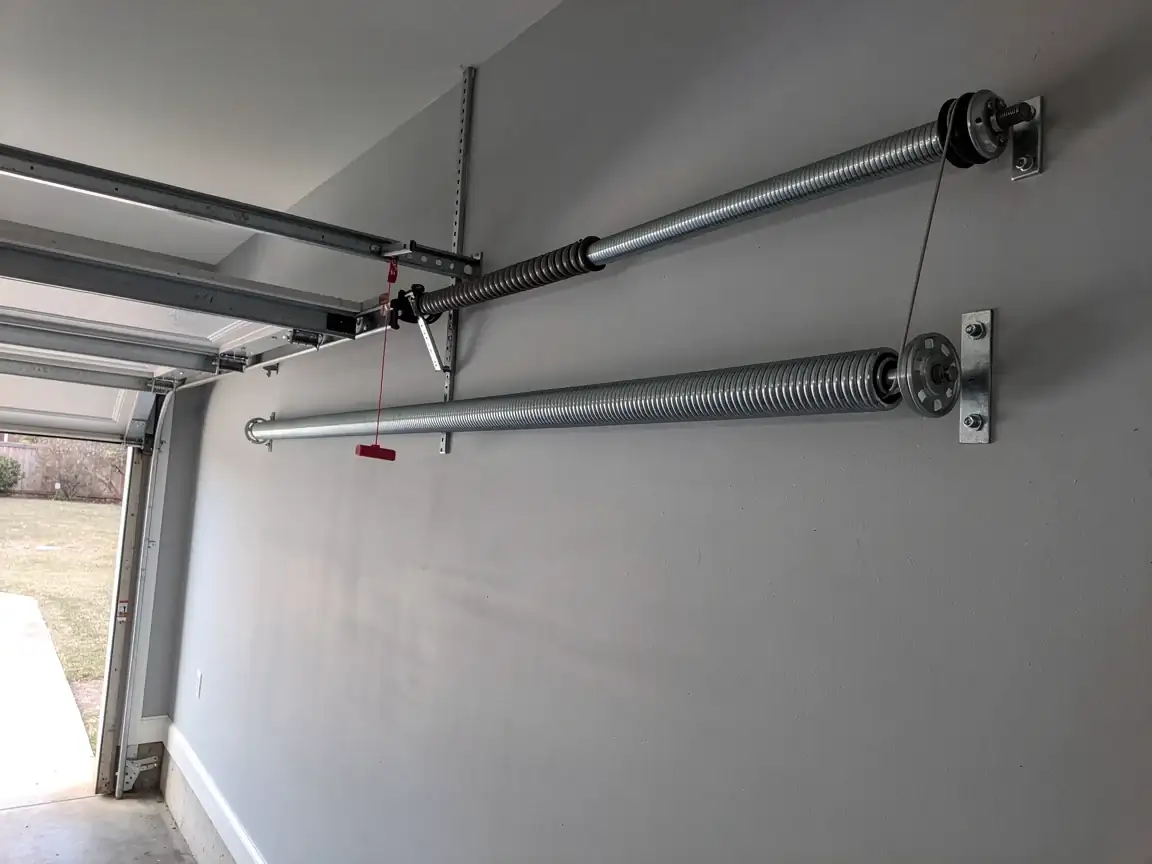
We can't quote a fixed number of hours here because every door and every track is different - a door on a 1970s side-mounted torsion setup takes different work than one on a newer extension spring system. What we can tell you is that the diagnosis happens first, out loud, before any work starts, so you know which kind of job you're looking at before we touch anything.
The Symptom
An off-track door doesn't usually look dramatic. The most common version: the door is open a foot or two and stuck, won't go up or down, and one bottom corner sits lower than the other. Sometimes you'll see a roller sitting outside the track channel instead of inside it, or the track itself pulled away from the wall bracket at an angle. The opener may still hum and strain against it, which is worse for the opener and won't move the door.
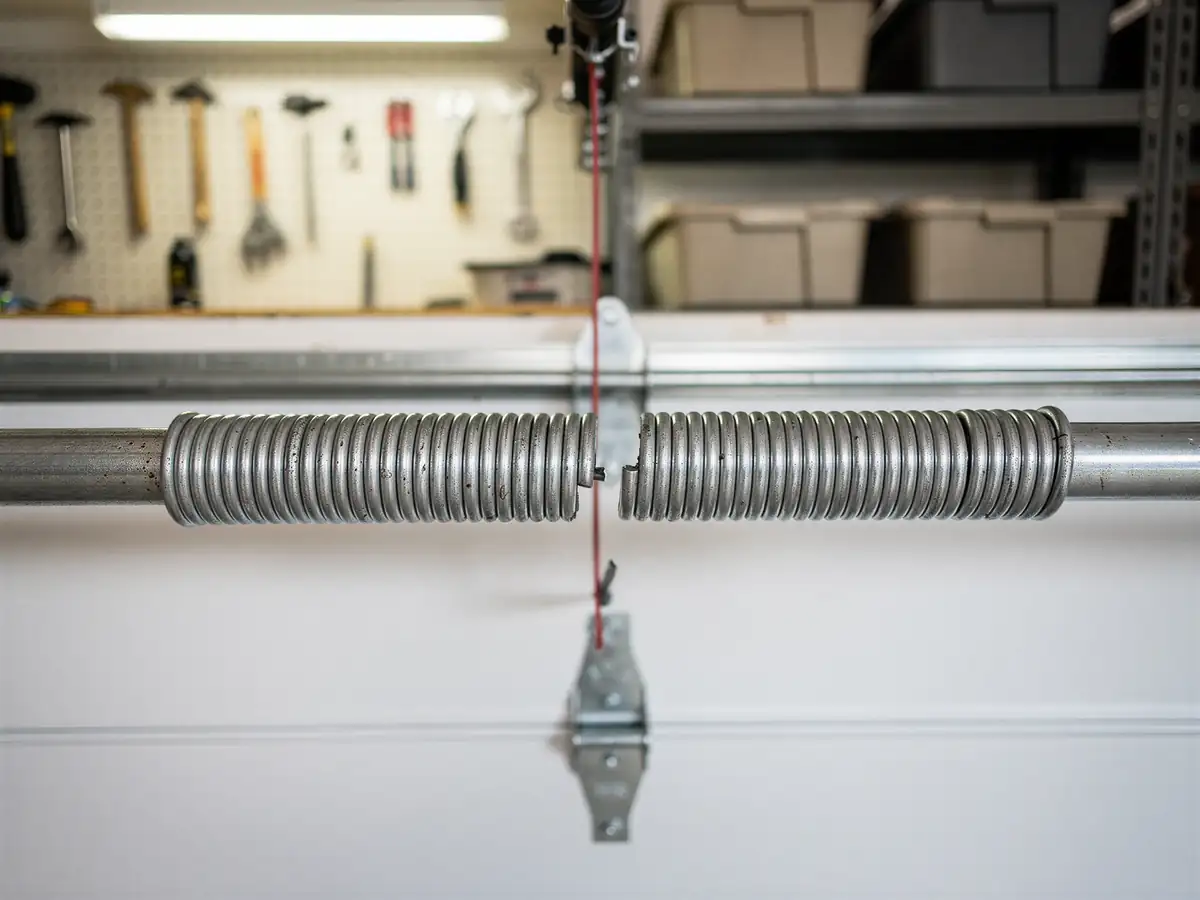
Another version shows up gradually - the door runs rough for weeks, scrapes or grinds on one side, and then one day just stops partway. If you hear a bang followed by the door refusing to move, that's often a cable or spring letting go rather than the track itself, but from the driveway the two can look identical. Either way, a door stuck at an angle with a visible gap between roller and track is the tell.
Can You Do This Yourself
Here's the honest limit
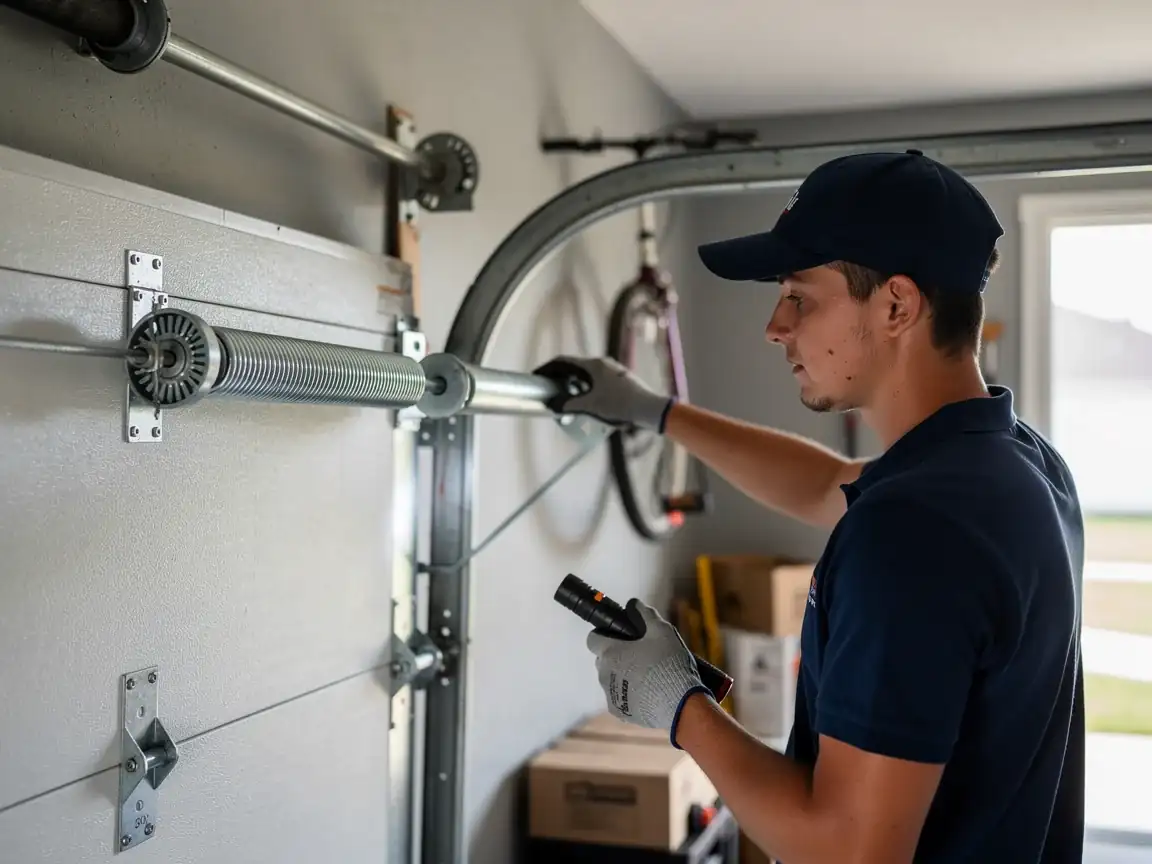
If the door is just resting slightly crooked and nothing is under tension, you can sometimes walk it back by hand with the opener disconnected. But a double door, or any door where a spring or cable is part of why it came off, is not a DIY repair. Torsion springs on these doors hold enough stored force to break a wrist or worse, and once a cable has come off a drum, the system is unpredictable until someone gets eyes on it with the door secured.
We'd rather tell you that upfront than have you find out the hard way
If you're not sure which situation you're in, don't force the door up or down by hand - leave it where it is and call. A door that's merely cosmetically crooked costs little to leave alone for a day; a door under spring tension that gets forced can turn a $150 repair into an ER visit.