Fixing Broken Garage Door Springs in Orland Park, IL
Torsion and extension springs wear out fast on Orland Park's 1960s-90s housing stock in cold winters. We diagnose the break and replace the spring fast.
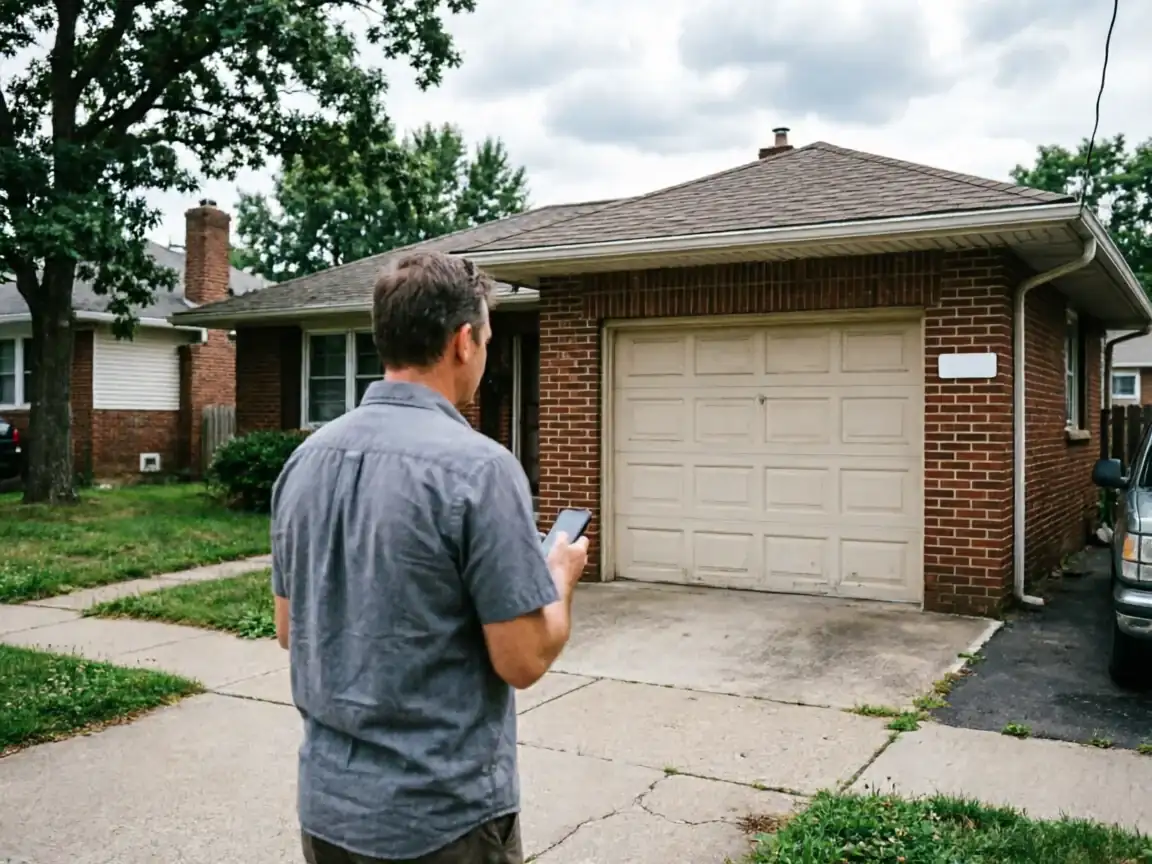
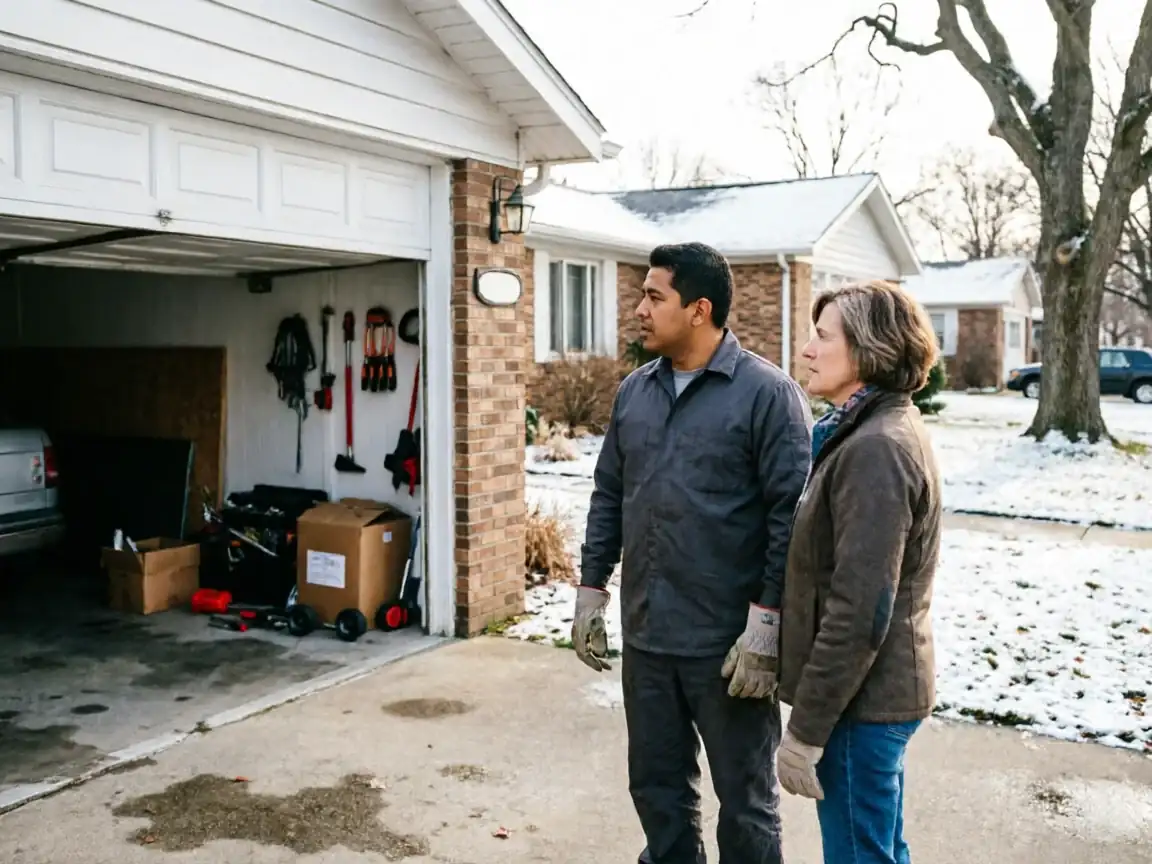
Orland Park's housing stock mostly went up between 1938 and 2004, with the median build landing around 1970. That matters because the torsion springs bolted above most of those doors were only ever rated for a set number of open-close cycles, and a door from that era has usually used up most of that allowance by now, whether anyone's touched it or not. Across the broader service area, the dominant pattern is the same: mostly 1960s and 70s construction spread across 94 named communities, so a wave of same-era springs is reaching the end of its working life at roughly the same time, not just in one neighborhood. Orland Park also sits in a cold, moderate climate band, and that freeze-thaw swing does its own damage. Galvanized coil steel loses some flex in a hard freeze, and a spring that's already fatigued from decades of cycling is a lot more likely to let go on a fifteen-degree morning than on a mild one. We don't see more spring failures in winter because anything about the door changed overnight - the fatigue was already there, and the cold just finishes the job.
How Long It Takes
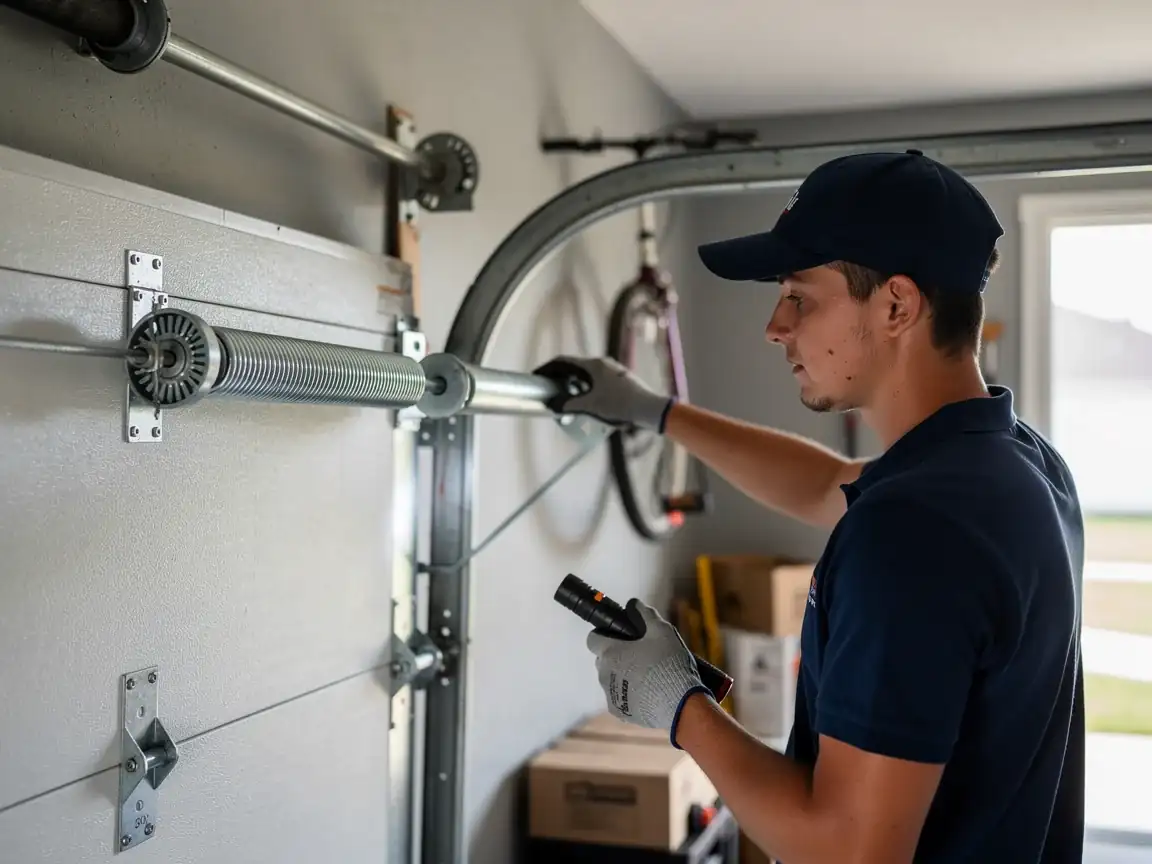
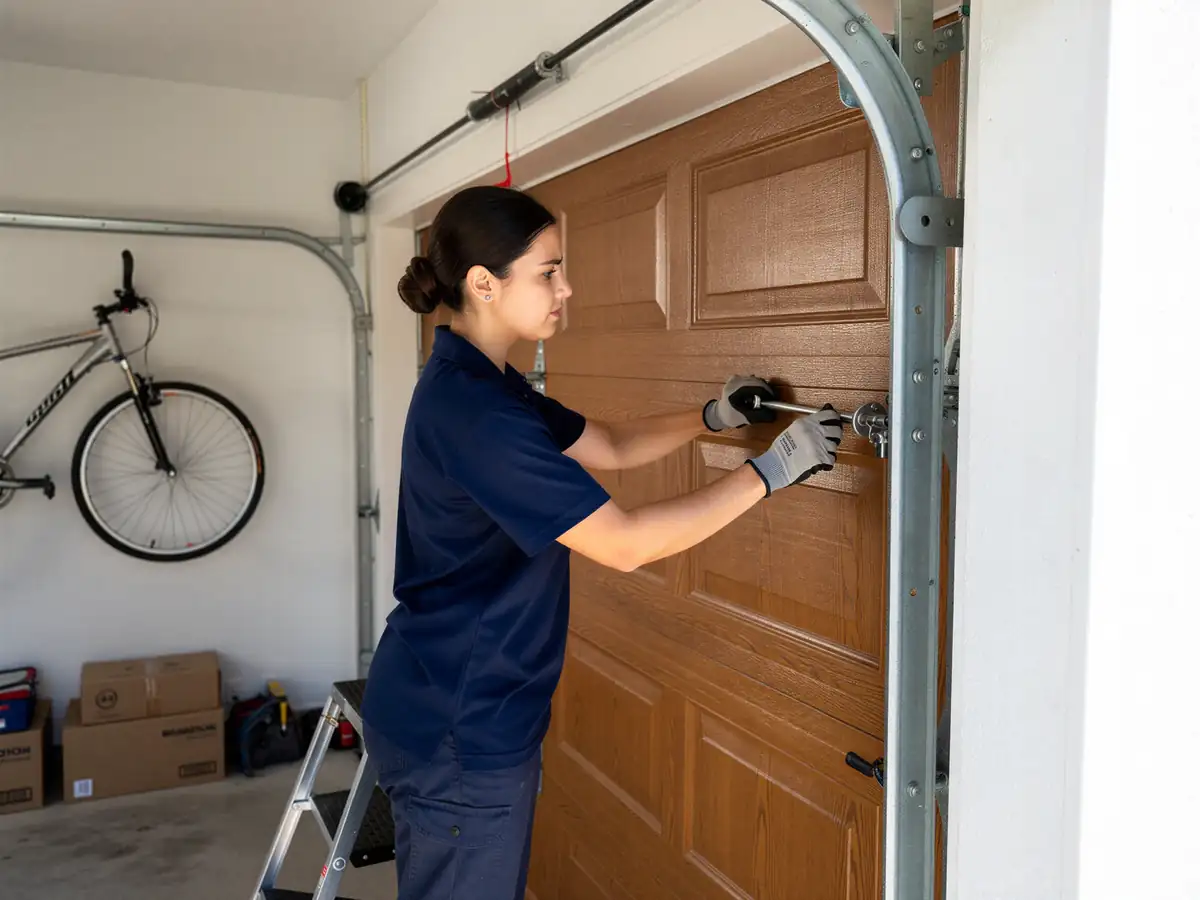
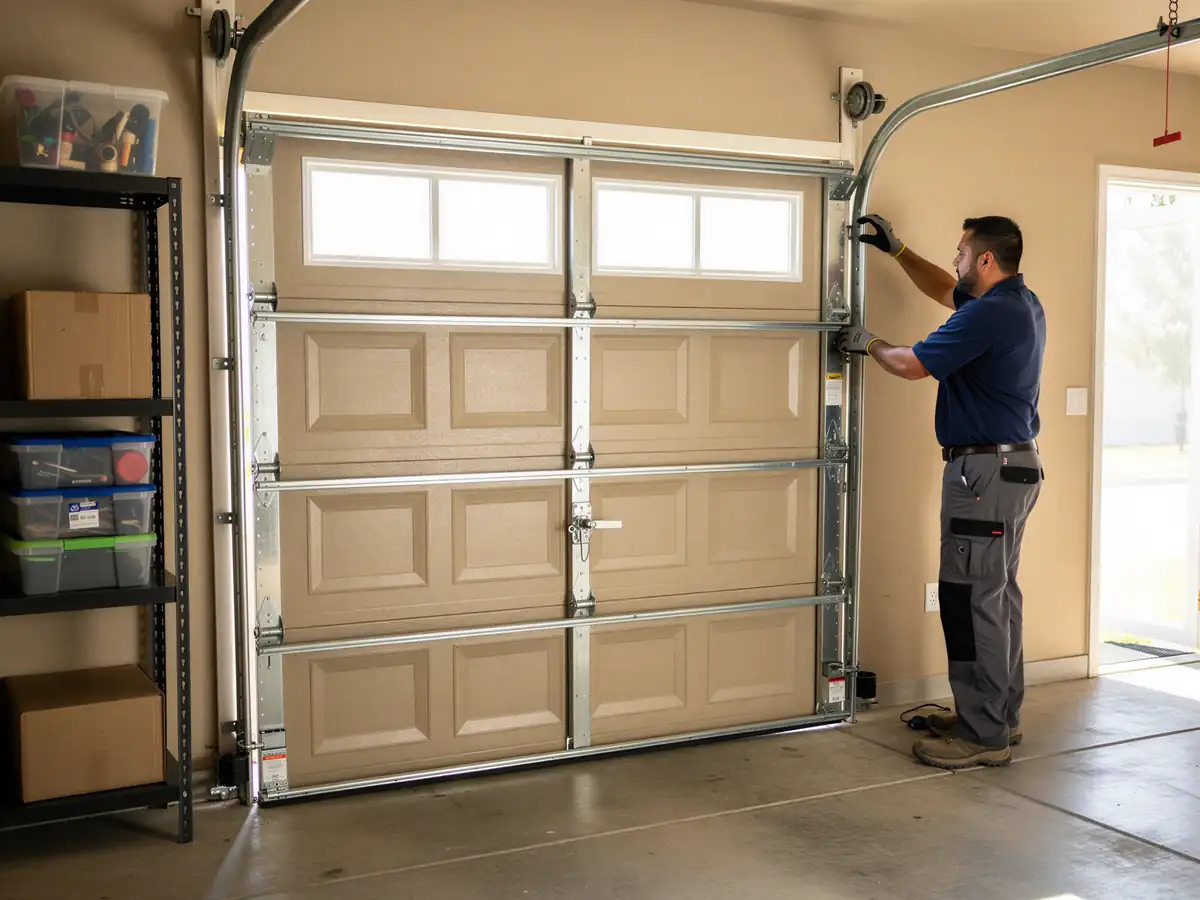
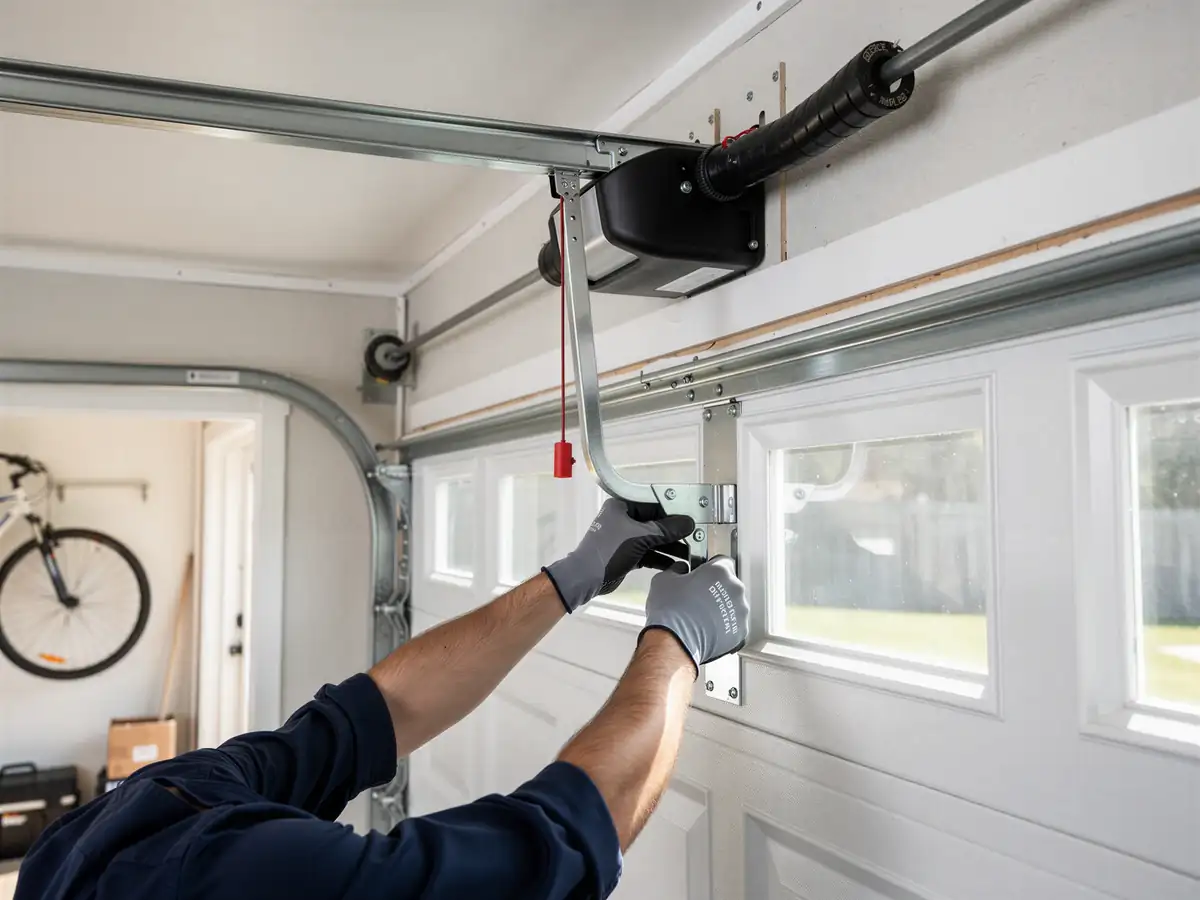
Most spring jobs are a single visit. How long that visit runs depends on a few things: whether it's one torsion spring or a matched pair, whether the drums and shaft need to come off to get an accurate wire-size and wind-direction reading, and whether what's needed is something we carry on the truck. On a lot of Orland Park's older homes, from that 1938-2004 build range, you'll find shaft diameters or wire gauges that don't match current stock parts, and that's the one honest limitation worth naming here: if a door takes a non-standard size, the visit becomes a diagnosis-and-order trip rather than a same-visit fix. That's not common, but it happens more often on original hardware than on anything installed in the last twenty years. For a standard torsion or extension setup, the spring swap itself is a focused job - unwind the old spring under control, measure and confirm the replacement, wind it to the correct tension, and run the door through a full open-close cycle to check balance before we leave.
The Symptom
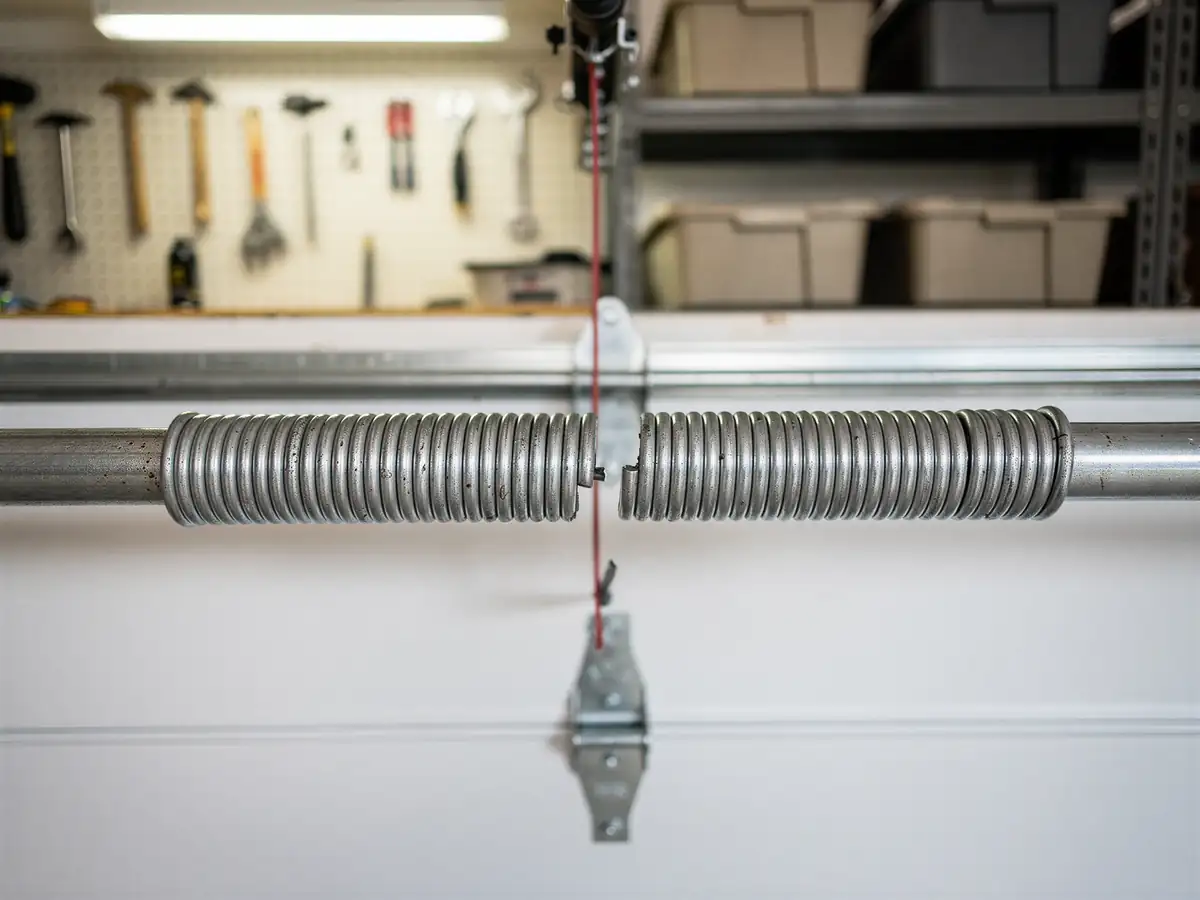
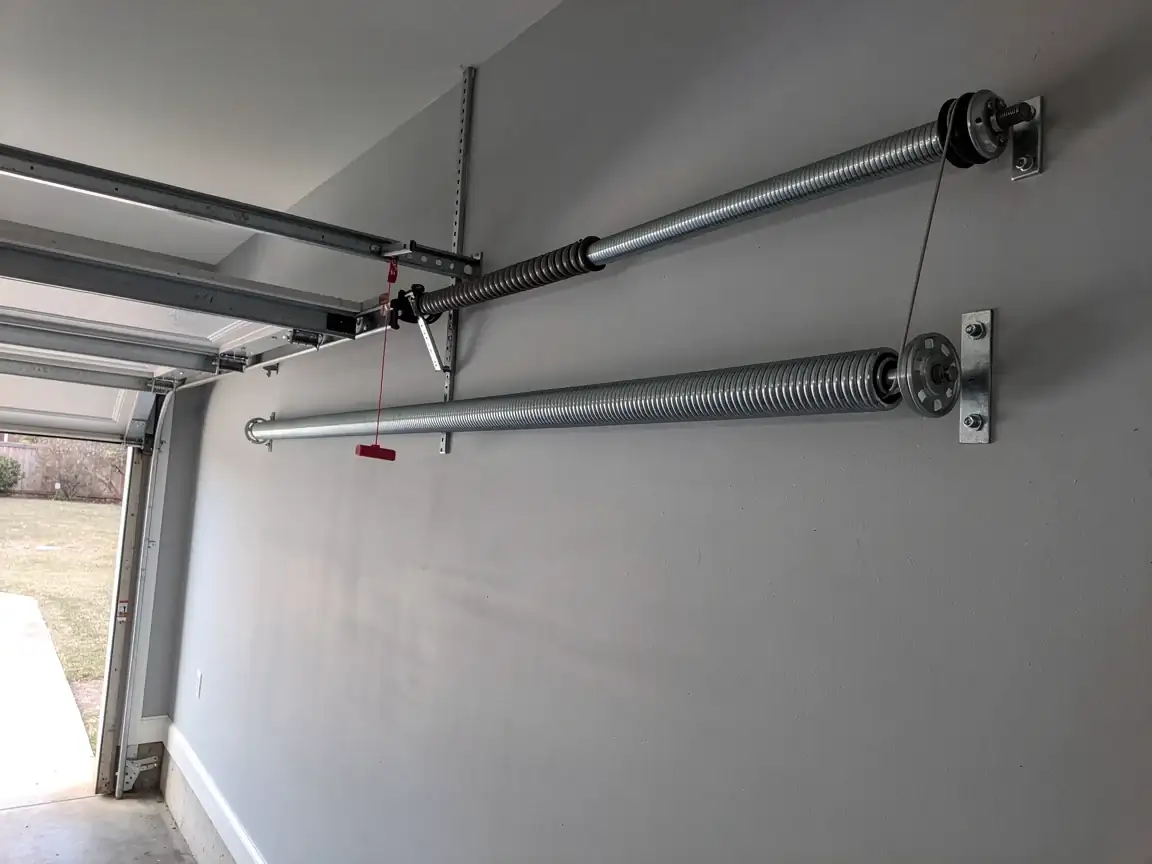
A broken spring doesn't usually whisper. Most owners hear it first - a loud bang from the garage, often when nobody's touched the door, which is the spring letting go under tension rather than the door itself. After that, the door gets heavy fast: an opener that used to lift it smoothly now strains, stalls partway, or trips the opener's safety reversal. Look up at the spring over the header and you'll often see a visible gap in the coil where it's separated. If it's an extension spring setup along the upper tracks instead of a torsion spring over the door, you might notice the door drop suddenly on the way down, or one side closing faster than the other. In Orland Park's cold stretches, these symptoms tend to show up first thing on a cold morning, since a fatigued spring under strain is more likely to fail when the steel is stiff from overnight temperatures. If the door won't budge at all and the opener motor just hums, don't keep hitting the button - that strains the opener gears for no reason.
Can You Do This Yourself
A torsion spring is wound under enough tension to cause a serious injury if it releases wrong, and that's true whether the door is light aluminum or a heavy insulated steel panel. We don't walk homeowners through a torsion spring swap over the phone, and we wouldn't recommend trying it without the winding bars and clamps built for the job - this is the one place on this page we're not going to soften. Extension springs, the kind that run along the horizontal tracks, carry less stored tension and some handy owners do replace those themselves, but even there the safety cables that keep a broken spring from flying across the garage are easy to install wrong. What you can safely do yourself: check the gap in the coil, note whether the door is a torsion or extension setup, and stop using the opener once you suspect a spring failure so you're not forcing a motor against a dead lift assist. Past that point, matching the spring to the door's weight and wind cycle is where a wrong guess costs more than the service call would have.
How it works
From “it’s stuck” to “it’s fixed”
01
Tell us what’s wrong
Describe the symptom - won’t open, loud bang, opener runs but the door won’t move.
02
On-site diagnosis
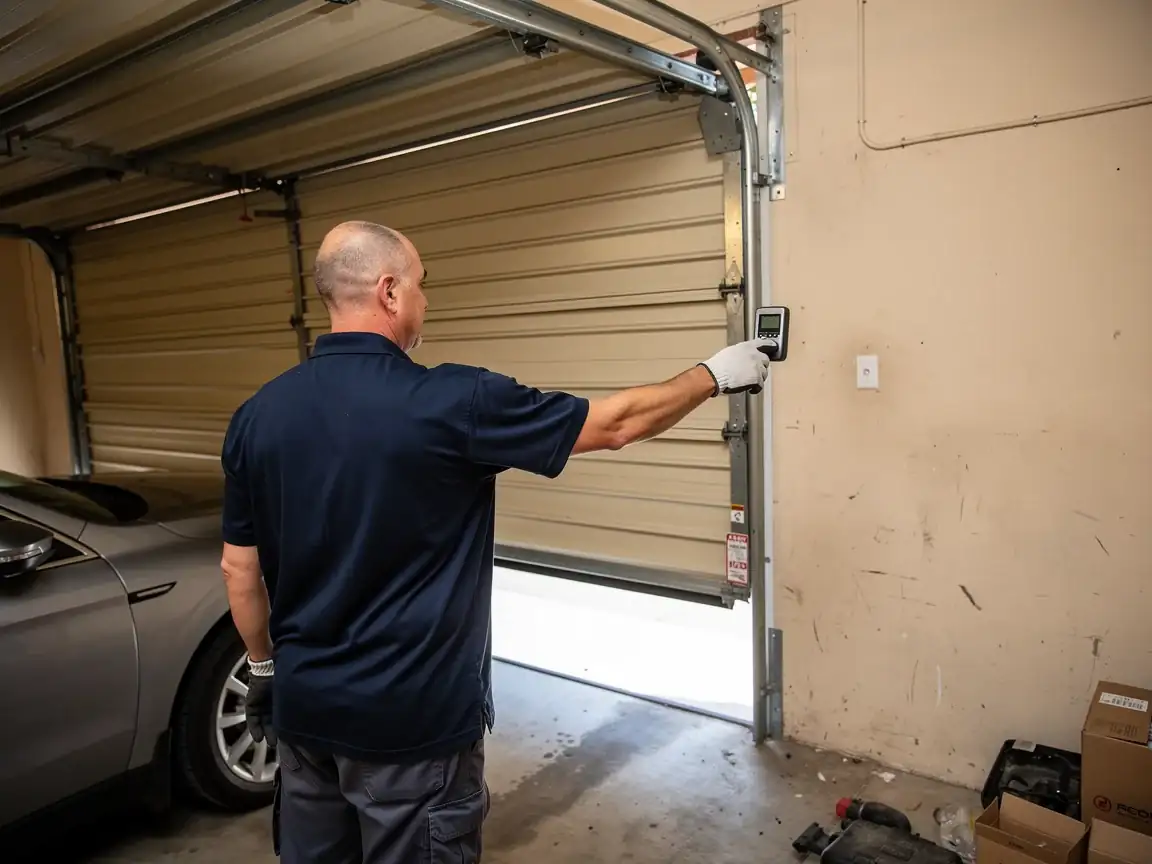
A technician tests the door under power and by hand and finds what actually failed.
03
Clear, up-front plan
You get the fix that’s needed and what drives the cost - before any work starts.
04
Repaired & tested
The repair is done, the door is set true and tested, and the work area left clean.
Not sure which repair your door needs in Orland Park, IL? Describe what it’s doing - every job starts with a diagnosis.
How do I know if it's the spring and not the opener?
If the opener motor runs but the door barely moves, or moves and then reverses, the lift assist is gone - that's the spring, not the opener. A dead opener usually means nothing happens at all, no motor sound, no movement. A visible gap in the torsion spring coil above the door confirms it either way.
Can I replace just the one spring that broke?
You can, but most torsion setups run a matched pair, and the spring that didn't break has usually logged the same cycles as the one that did. Replacing only one often means a second failure within a short stretch. We'll tell you what we see on the shaft and let you decide.
Does Orland Park's winter actually affect spring life?
The cold doesn't cause the fatigue, but it does trigger the failure. A spring that's already near the end of its cycle life is stiffer and more likely to snap in a hard freeze than on a mild day, which is why winter mornings see more spring calls than summer afternoons.
Why would a repair take more than one visit?
Only when the door needs a non-standard wire size or shaft diameter that isn't on the truck - more common on original hardware from older builds than on anything installed in the last couple decades. We'll confirm the size on the first visit and source the part if needed.
Ready to get your garage door sorted?
Tell us what it’s doing and where you are in Orland Park - we’ll take it from there.