Why Orland Park's 1960s-70s housing stock and cold winters wear out garage door seals fast, what it costs to fix, and how to check your own door first.
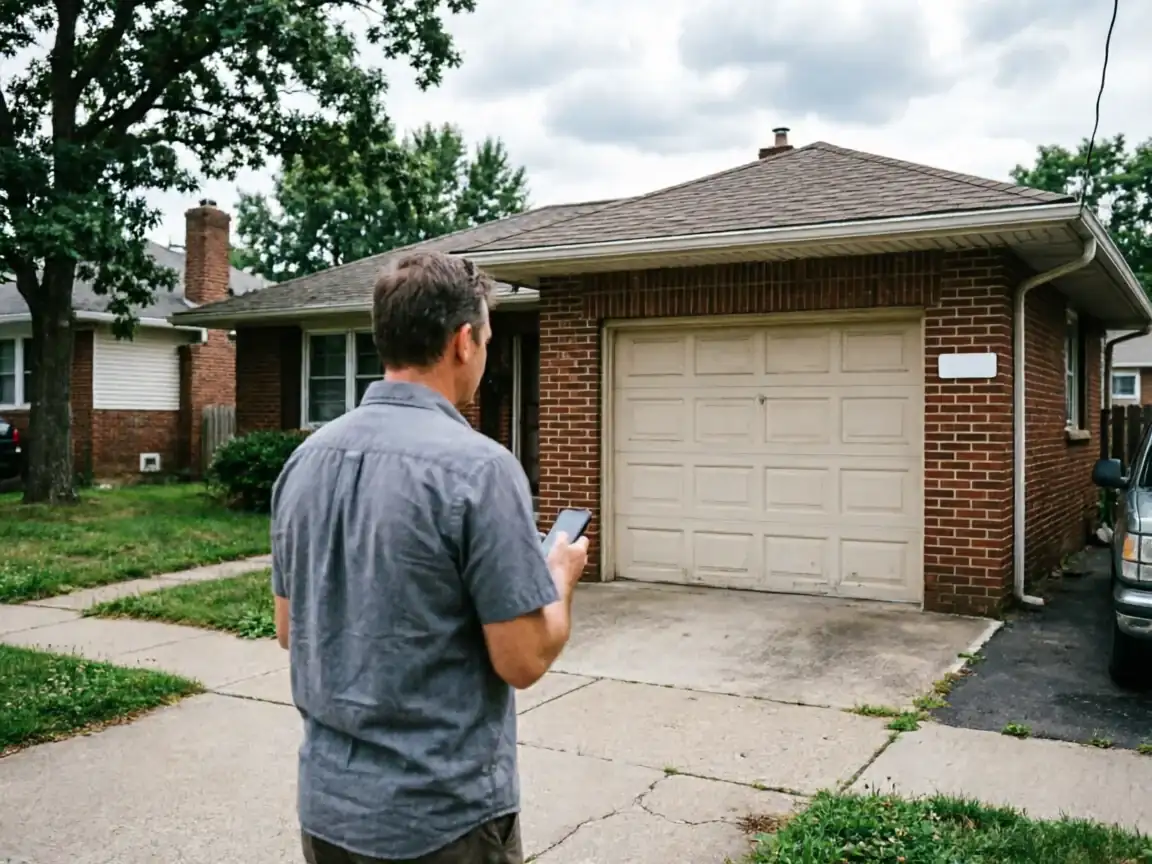
We can't post a number here without a door in front of us, but we can tell you what drives the price. Bottom seal replacement on a standard door is a small job. Full weatherstripping around the jambs - top and sides, not just the bottom - runs more because of labor time, not material cost. The variable that matters most in Orland Park is age. Most houses in this area were built between 1938 and 2004, with the bulk of that stock going up in the 1960s and 70s. A door frame from that era has had forty to sixty years to settle, and settling means the jamb is no longer square. Seal that doesn't sit flush against a warped jamb won't stop a draught no matter how new the rubber is, so sometimes the real job is shimming or resetting the stop molding before the seal goes on. We won't sell you a seal kit and call it done if the frame underneath needs attention - that's a different, bigger job, and we'll tell you if that's what you're looking at before we start.
What Local Conditions Do
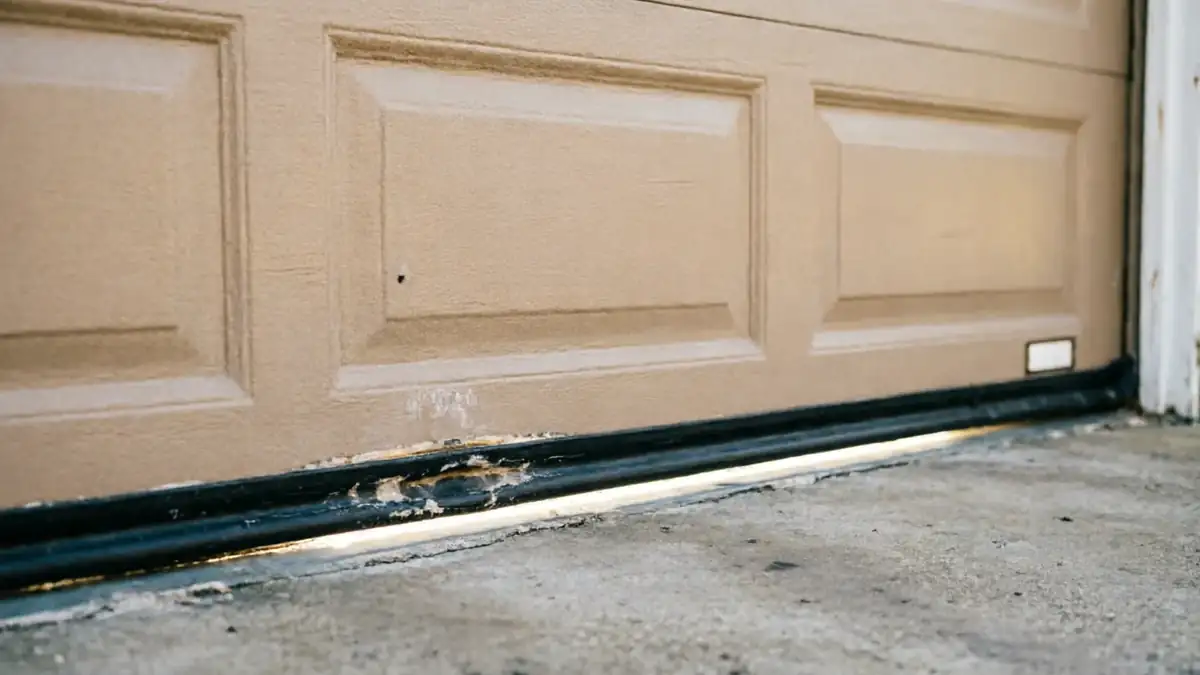
Orland Park sits in a cold-moderate climate band. That matters for seals specifically because rubber and vinyl don't fail the same way in a climate with real winter swings as they do somewhere mild. Cold stiffens the bottom seal until it cracks at the fold instead of flexing, and repeated freeze-thaw cycles pull the vinyl weatherstrip away from the track where it's stapled or glued. You'll feel it as a cold line of air along the floor or the sides of the door on a windy January night, long before you see a visible gap. In a service area with 483,490 households, this isn't rare - it's the seasonal pattern for garages built before modern insulated steel doors became standard. The fix isn't exotic. It's checking the seal every fall before the hard cold sets in, not waiting until you notice the draught.
The Problem
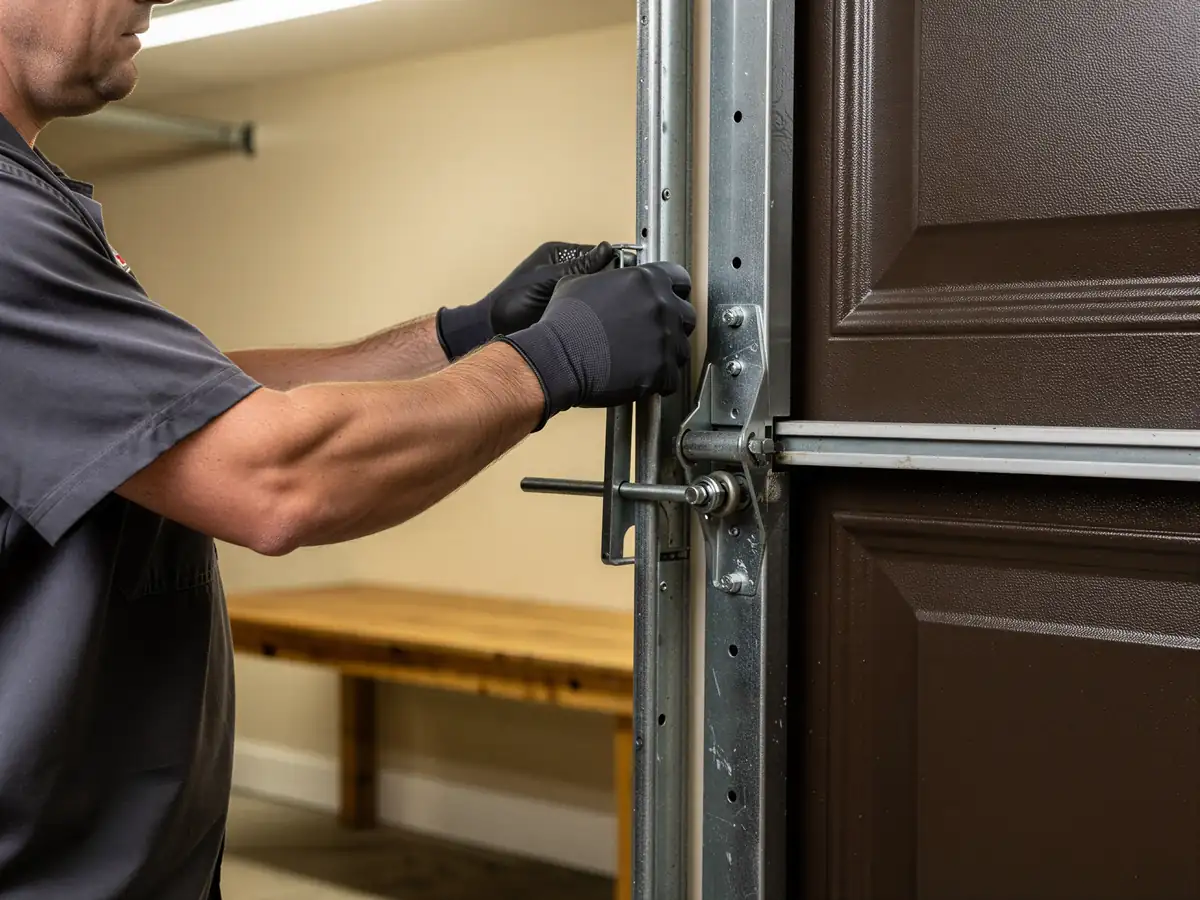
The problem is almost never the seal alone. In housing built across the 1938-2004 range, with a concentration in the 1960s and 70s, the garage opening itself has usually moved a little - a quarter inch of frame racking is normal after sixty years, and it's enough to leave a gap the new seal can't close. Homeowners replace the rubber, feel the draught again within a season, and assume the product was bad. What actually happened is the seal was never making full contact to begin with. Track alignment plays into it too: if the door isn't closing square against the frame, no seal compensates for that. We check both the frame and the door's travel before we touch the weatherstrip, because putting a new seal on a door that's closing crooked just means doing the job twice.
Checking It Yourself
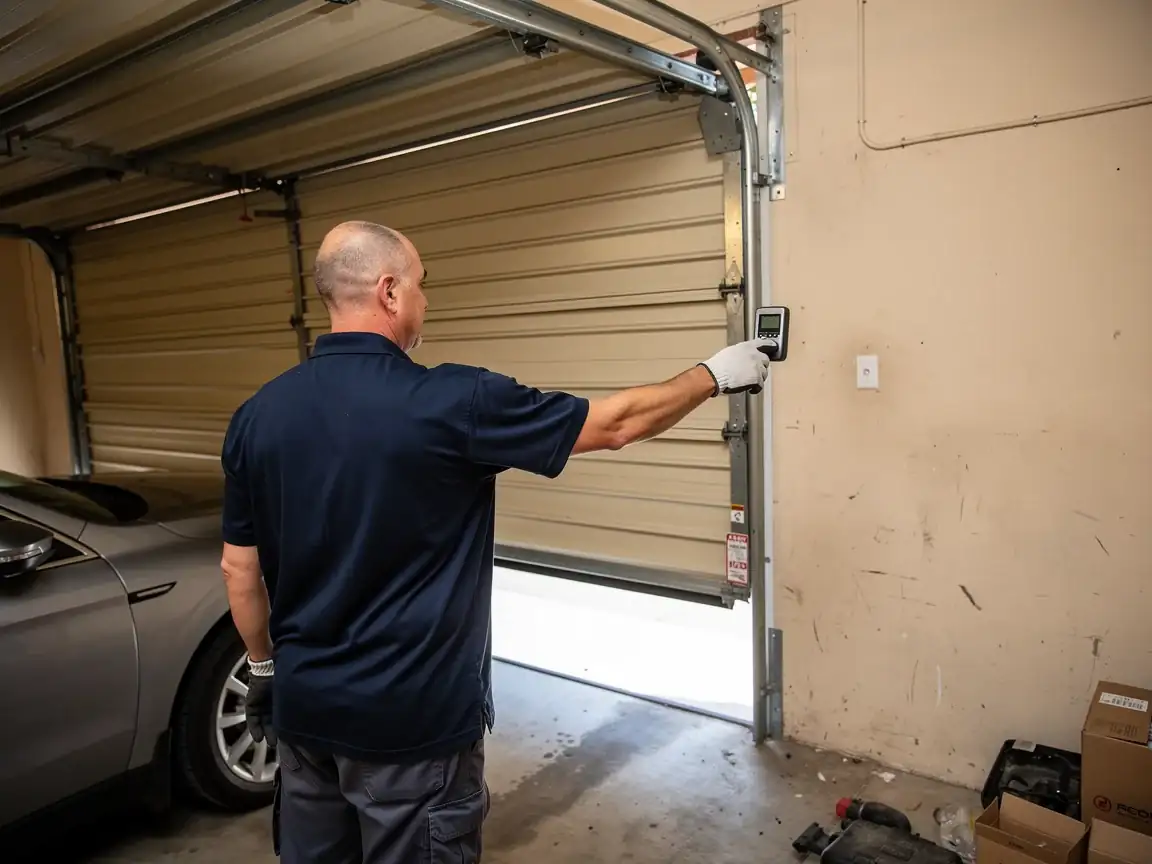
Close the door and walk the inside perimeter with a lit candle or a thin strip of paper on a windy day - if the flame flickers or the paper pulls, you've found a gap. Check the bottom seal for cracking at the folds, especially if your house falls in that 1960s-70s band common across this area; that's the seal most likely to have gone brittle from age and cold. Look at the top seal where it meets the header - this one gets ignored because it's harder to see. If the gap runs along one whole side rather than in spots, that's frame or track alignment, not the seal, and it's worth a call rather than a trip to the hardware store for more weatherstrip. If it's small spots along the bottom only, a seal swap is a fair weekend job.
Why does my garage door let in cold air even with a new bottom seal?
If the frame has shifted - common in houses from the 1960s and 70s that make up most of this area's stock - the seal doesn't sit flush anymore. New rubber against a warped jamb still leaves a gap. Check the frame alignment before assuming the seal itself failed.
How often should I replace garage door weatherstripping in Orland Park?
There's no fixed interval, but given the cold-moderate winter swings here, check the bottom seal every fall. Cracking at the folds is the first sign it's stiffened past usefulness, and it tends to show up faster on older doors that have been through many freeze-thaw cycles.
Is it worth replacing seals myself before calling someone?
Yes, if the draught is only at the bottom seal and the door closes square. That's a fair DIY job. If the gap runs along a full side or the door looks crooked when it closes, the issue is frame or track, and that's worth a call instead.
Ready to get your garage door sorted?
Tell us what it’s doing and where you are in Orland Park - we’ll take it from there.