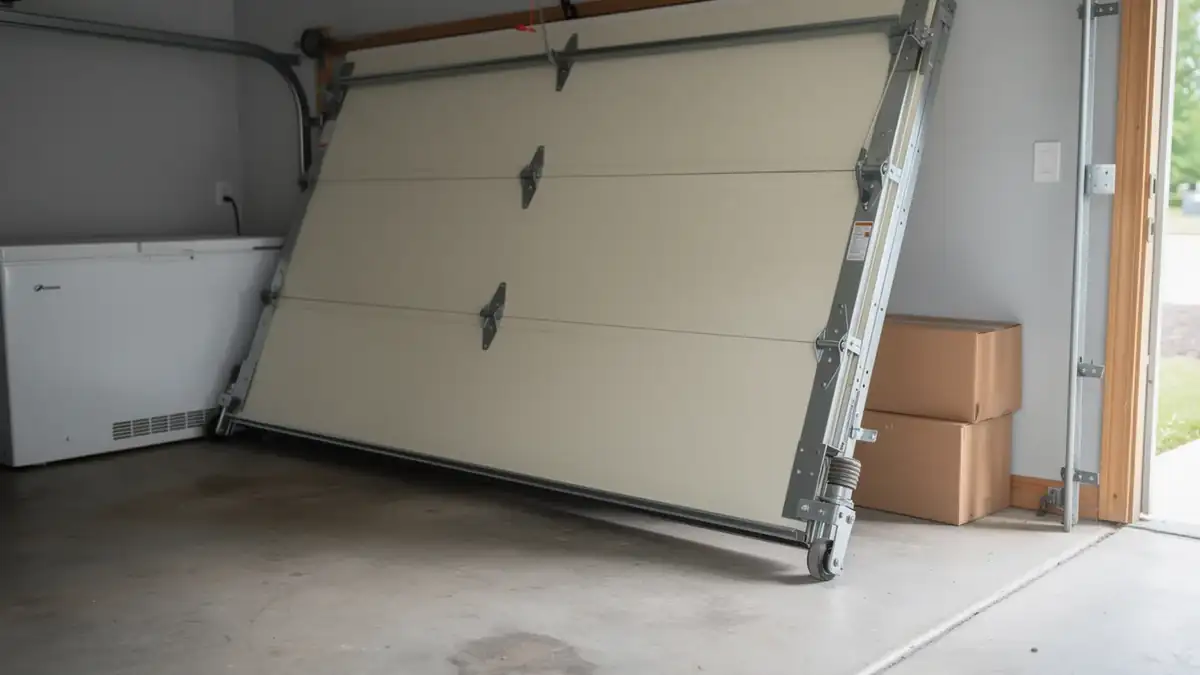
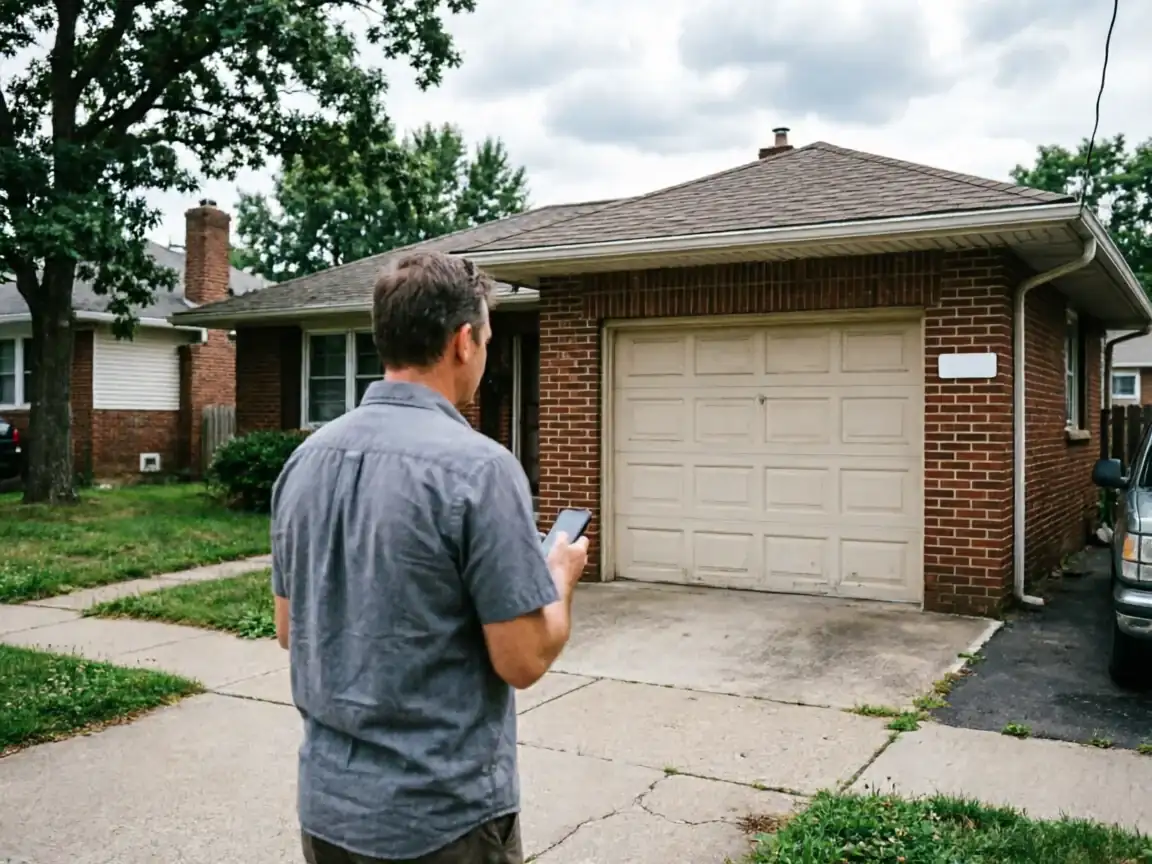
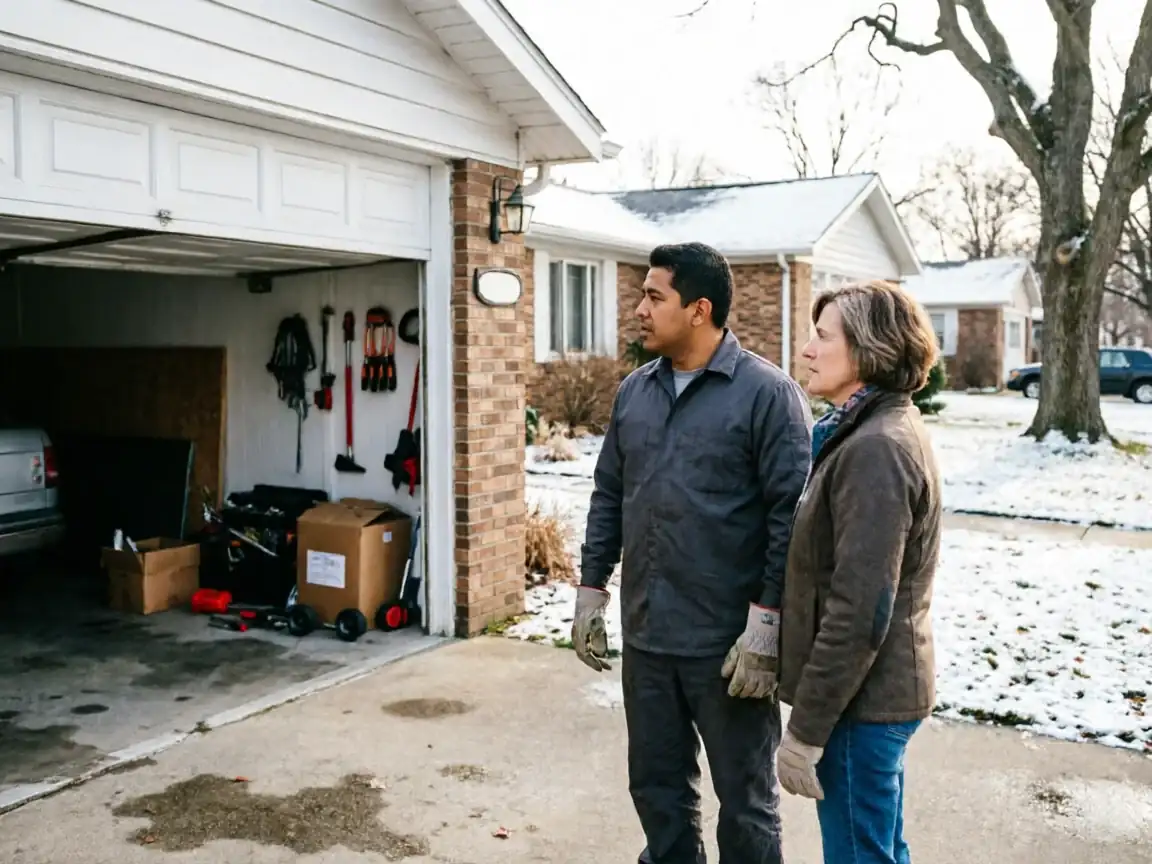
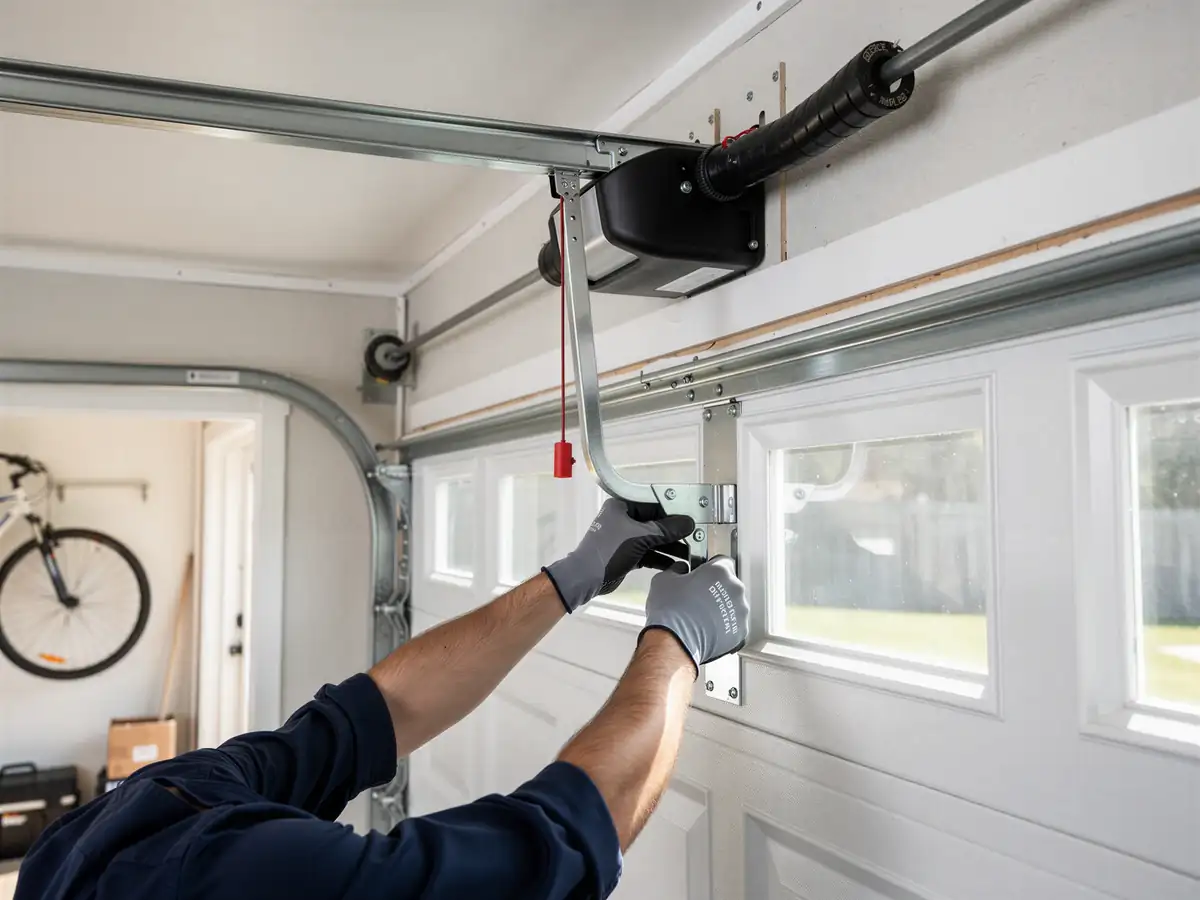
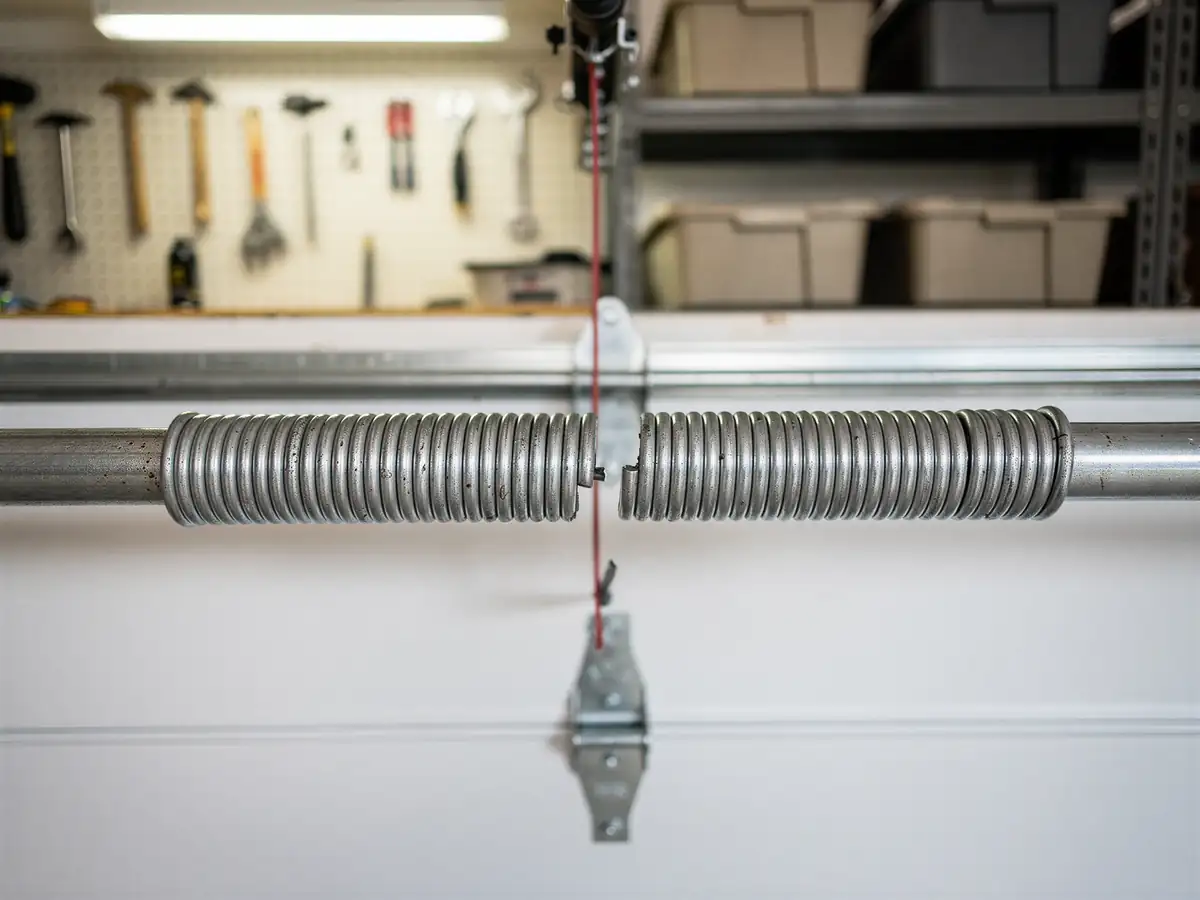
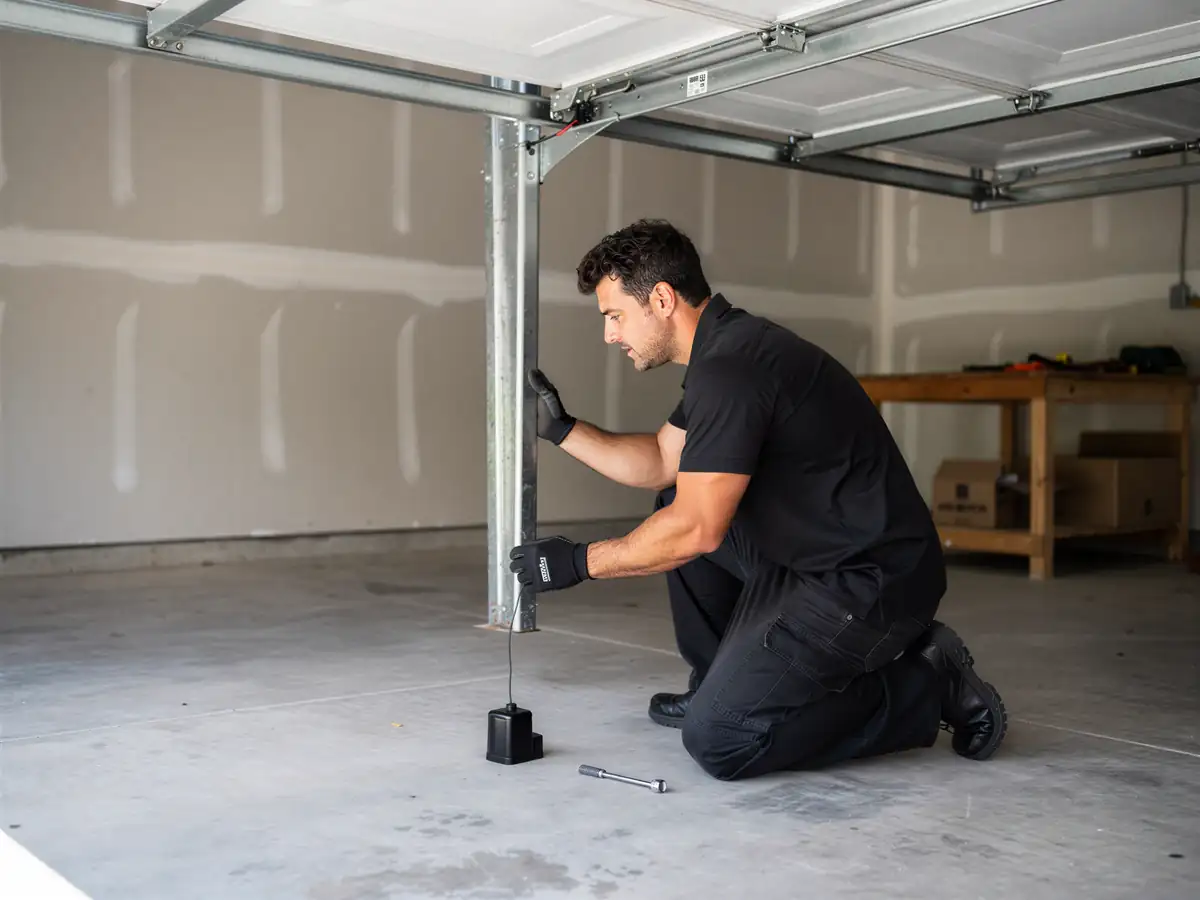
Orland Park homes built mostly in the 1960s-70s run original steel track and hardware. Here's why doors here jump track and what to check before you call.
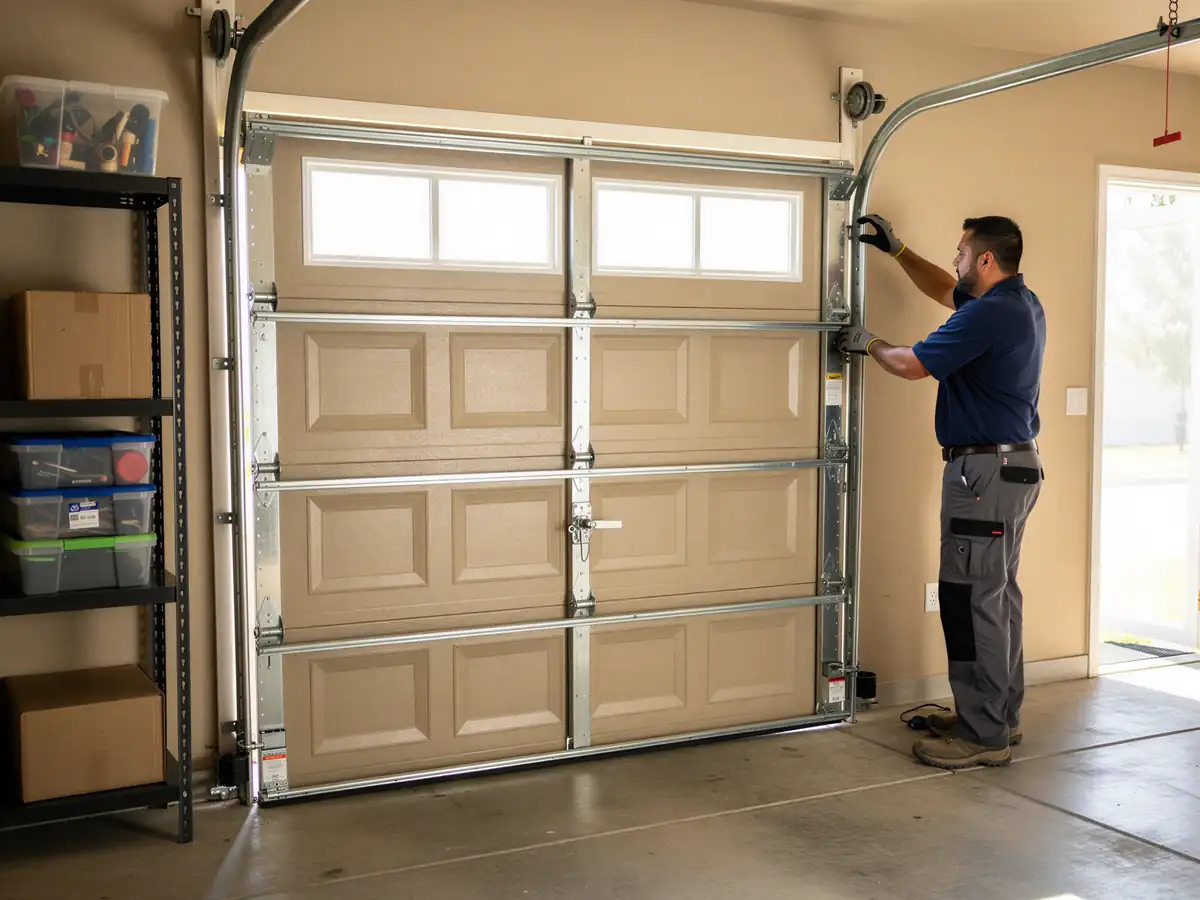
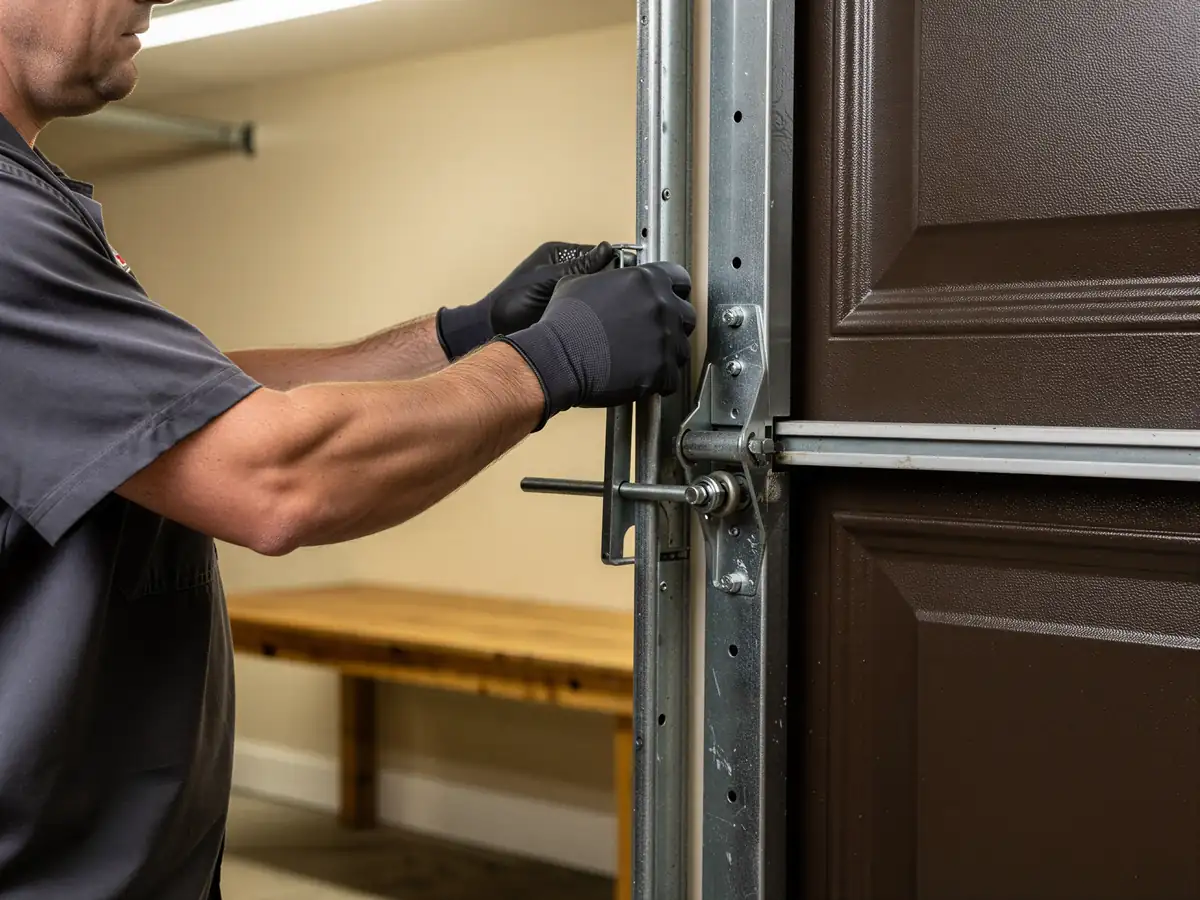
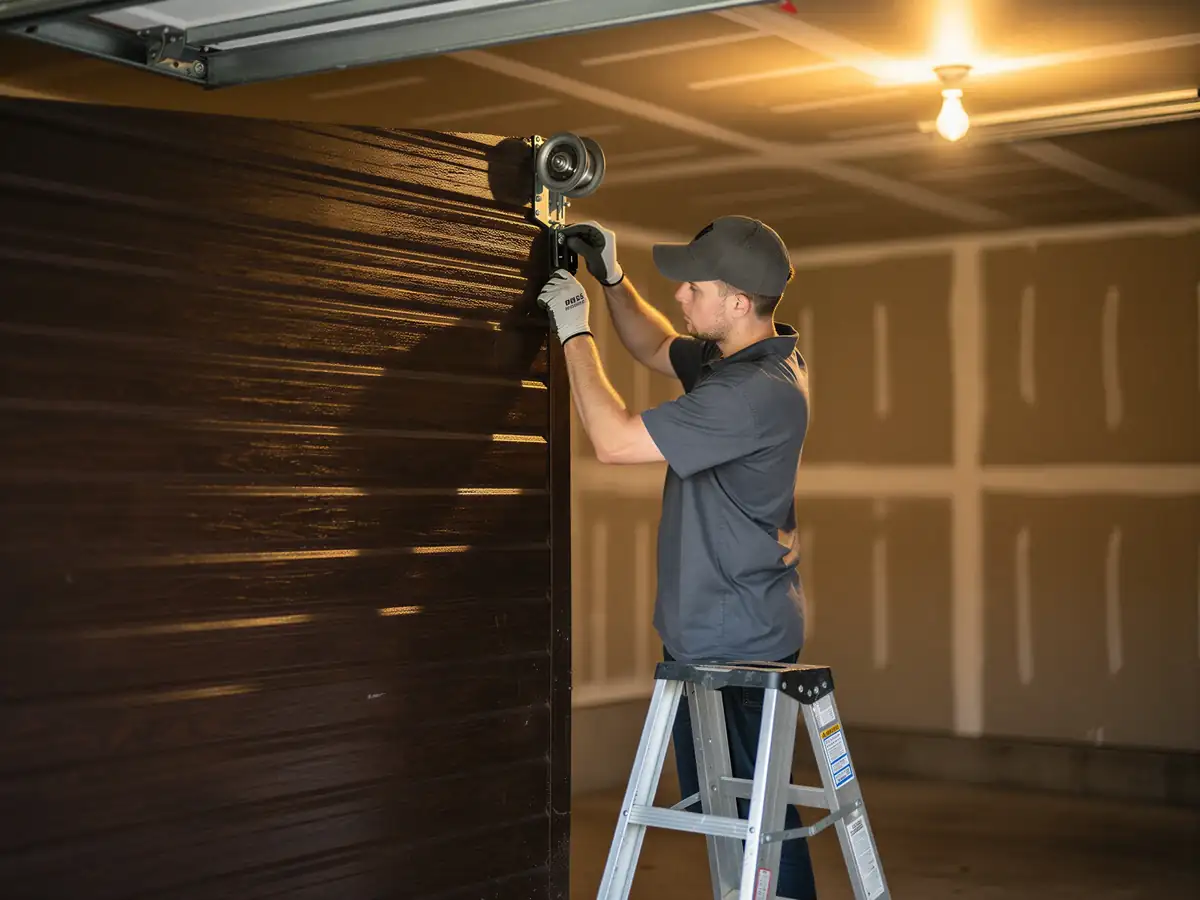
A door off its track isn't one repair, it's three or four possible ones wearing the same symptom. Sometimes it's a bent track rail that just needs straightening or swapping a section. Sometimes a roller has sheared and the door is riding on a broken stub, which means new rollers across the run, not just the bad one. Sometimes the bracket holding the track to the jamb has pulled loose from decades of flex, and that's a different fix again - new lag screws, sometimes a reinforced plate if the jamb wood has gone soft. We don't quote a flat number for this one because the job changes once we're standing in front of the door. What we can tell you is that in a service area where median household income sits around $79,442, most homeowners want the cheapest fix that actually holds, not a full track-and-hardware swap when a $40 roller would've done it. We'll tell you straight which one you're looking at before we start turning a wrench, and if the track itself is still square and the rollers are the only casualty, that's the job we do - not the bigger one.
What Local Conditions Do
This area sits in a cold-moderate climate band, which means the garage goes through real freeze-thaw cycles every winter, not just a few cold mornings. Steel track contracts in the cold and expands again once the garage warms up through the day, and that cycle, repeated every winter for forty or fifty years on an older house, works the track brackets loose millimeter by millimeter. You don't see it happen. You see the door start to lean toward one side as it travels, or hear a new scrape near the top of the run, and that's the bracket finally giving up the fight it's been losing since the house was built. Condensation plays a part too - a cold track surface pulls moisture out of the air inside a closed garage, and a roller that's been sitting in dampness all winter doesn't spin the way it should. It drags, catches, and eventually jumps the lip of the rail instead of riding through it. None of this is dramatic. It's slow wear from a climate that doesn't let the hardware sit still.
The Problem
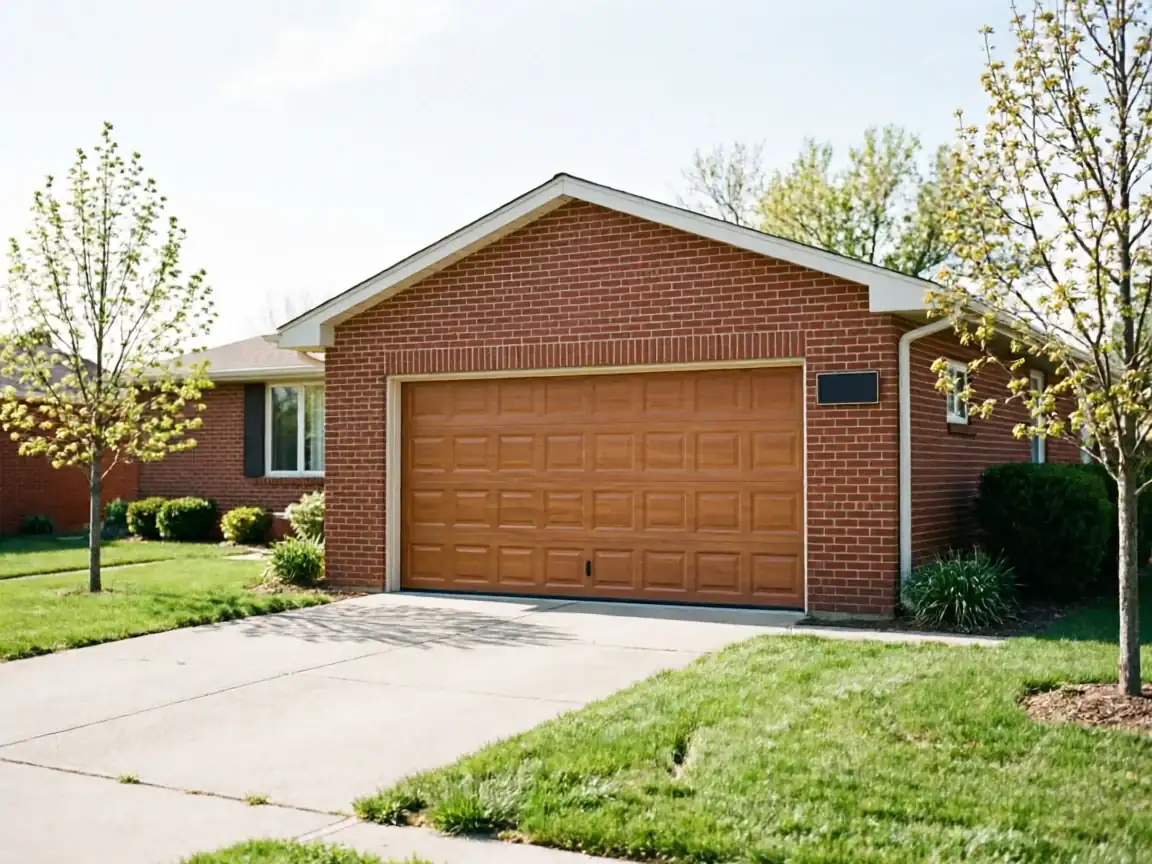
Most of the housing stock around Orland Park went up between 1938 and 2004, with the bulk of it dating from the 1960s and '70s - a median build year of 1970. That matters here specifically because a door built or installed in that window is running original or first-replacement steel track, often the lighter-gauge rail that was standard before heavier residential track became common. That track was never designed to carry forty-plus years of thermal cycling without the brackets being checked. On a lot of these houses nobody ever has checked them, because the door still opens and closes, right up until the morning it doesn't sit flush in the rail anymore. The off-track moment itself is usually the last step in a slide that's been happening for months - a roller worn thin, a bracket screw backed halfway out, a track rail bowed a quarter inch from where it should run straight. By the time the door actually jumps the rail, the hardware's been telling you for a while.
Checking It Yourself
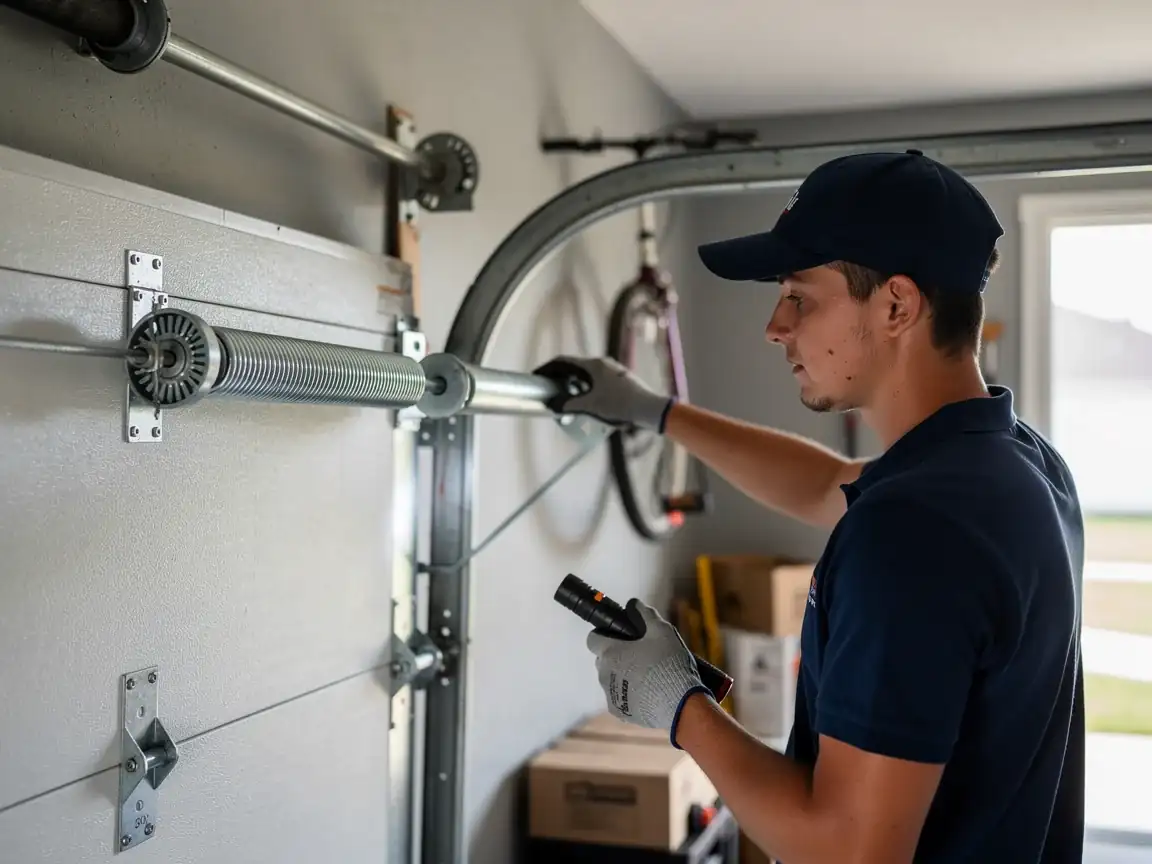
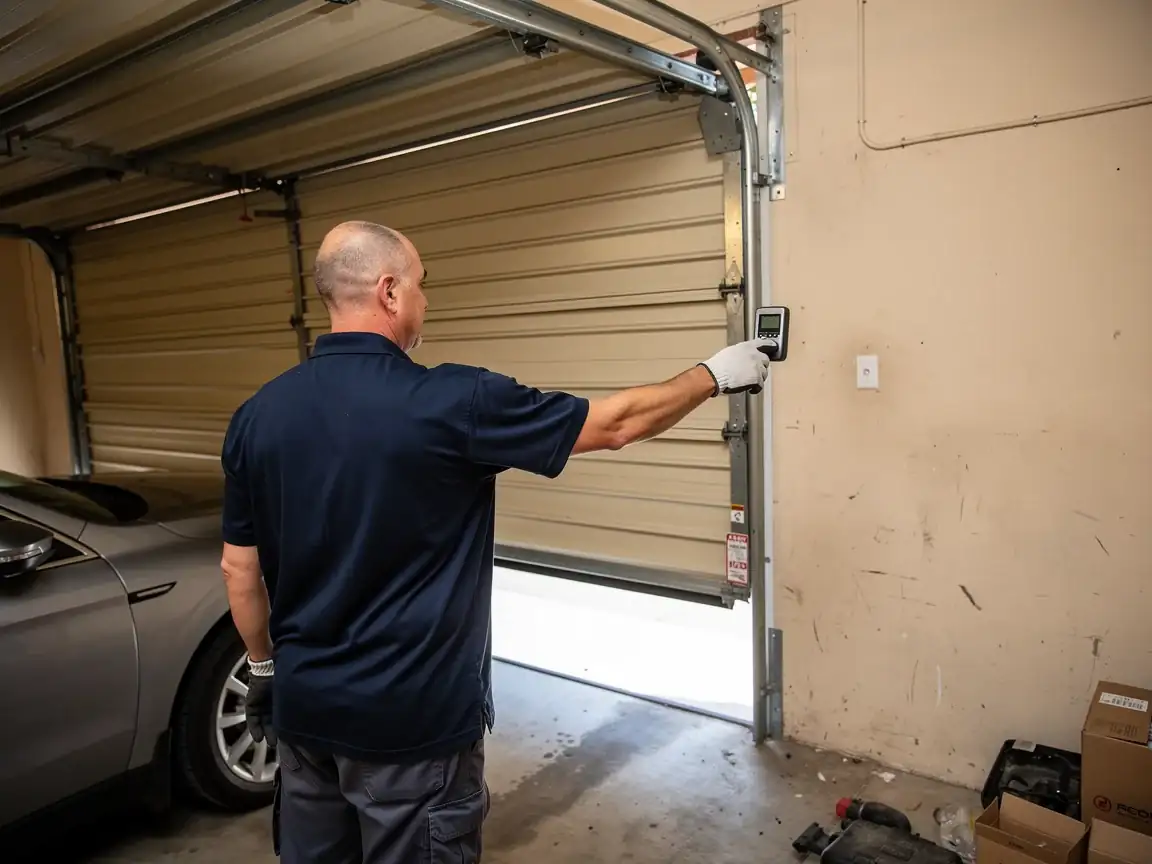
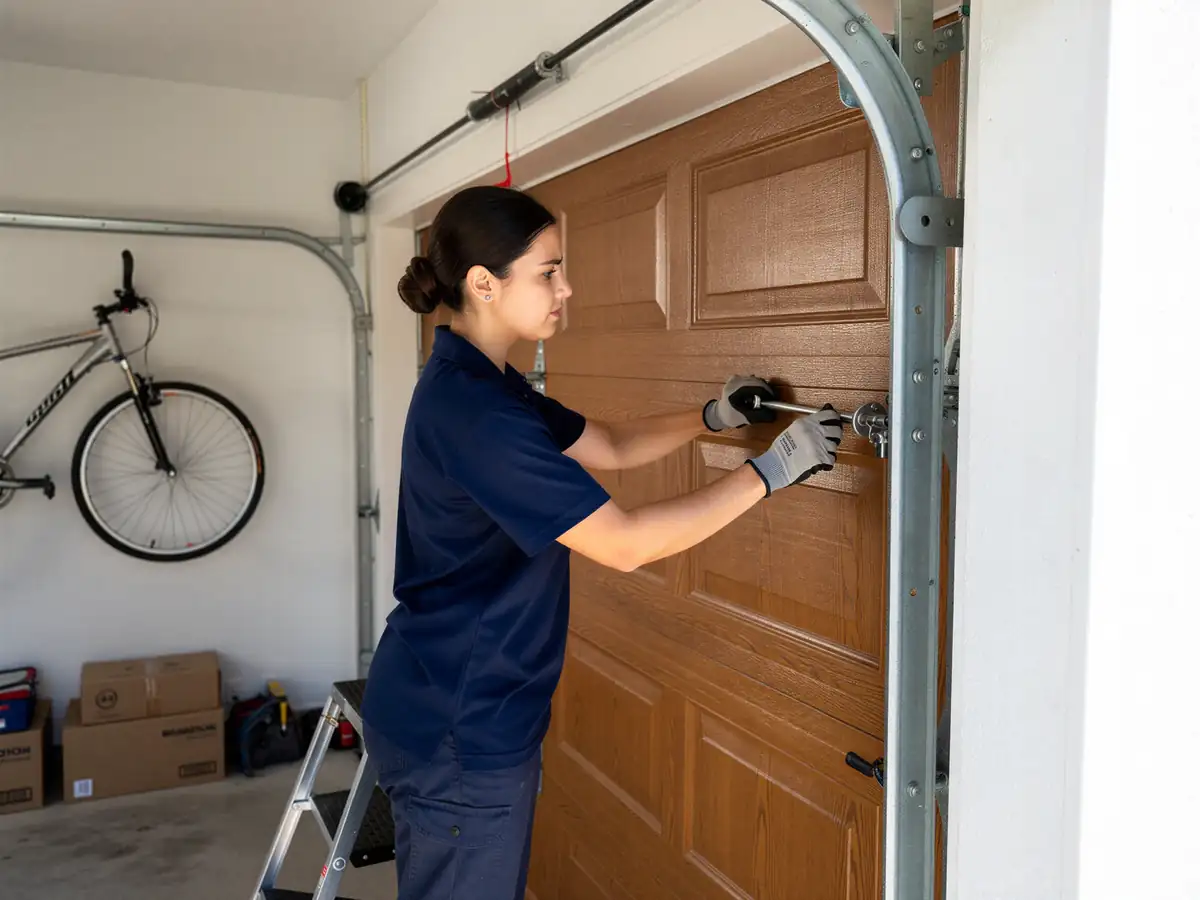
Before you call anyone, look at three things with the door down and the opener disconnected. First, stand at the side and sight down the track rail - if it bows in or out instead of running straight, that's your answer, and it's not a DIY straightening job on a loaded track. Second, check the brackets where the track meets the wall stud or jamb; if you can wiggle the bracket by hand, the screws have backed out and that's often fixable without replacing anything. Third, look at the rollers themselves where you can see them - a roller that's cracked, flat on one side, or missing its bearing housing needs replacing before the door goes back on track, not after. One honest limit here: if the cable has come off the drum at the same time the door is off track, stop entirely and don't try to force the door back into the rail yourself. That's a spring-tension situation, and forcing it is how people get hurt.
Why did my garage door suddenly come off the track with no warning?
It almost never happens with no warning - a worn roller, a loosened bracket, or a slightly bent rail has usually been building toward it for weeks. On older Orland Park houses with original track from the 1960s-70s build era, that wear is just more likely because the hardware has had more freeze-thaw cycles to work loose.
Can I push the door back onto the track myself?
If the cable is still on the drum and the track isn't visibly bent, sometimes yes, carefully, with the opener disconnected. If the cable has also come off, or the track is bowed, don't force it - the door is under spring tension and that's not a job to do solo.
Is a bent track always a full replacement?
No. A single bent section can often be swapped without replacing the whole run, especially on a door that's otherwise sound. We check the rest of the rail and the brackets before deciding - replacing more than needs replacing isn't the job.
Does the cold really affect this?
Yes. This area sits in a cold-moderate climate band, and steel track contracting and expanding through winter cycles is a slow but real cause of loosened brackets and worn rollers on older hardware.
Ready to get your garage door sorted?
Tell us what it’s doing and where you are in Orland Park - we’ll take it from there.