When to Fix an Older Garage Door in Orland Park and When to Replace It
A look at when a garage door from Orland Park's 1960s-70s building boom is worth repairing, and when the cold-climate wear means it's time to replace it instead.
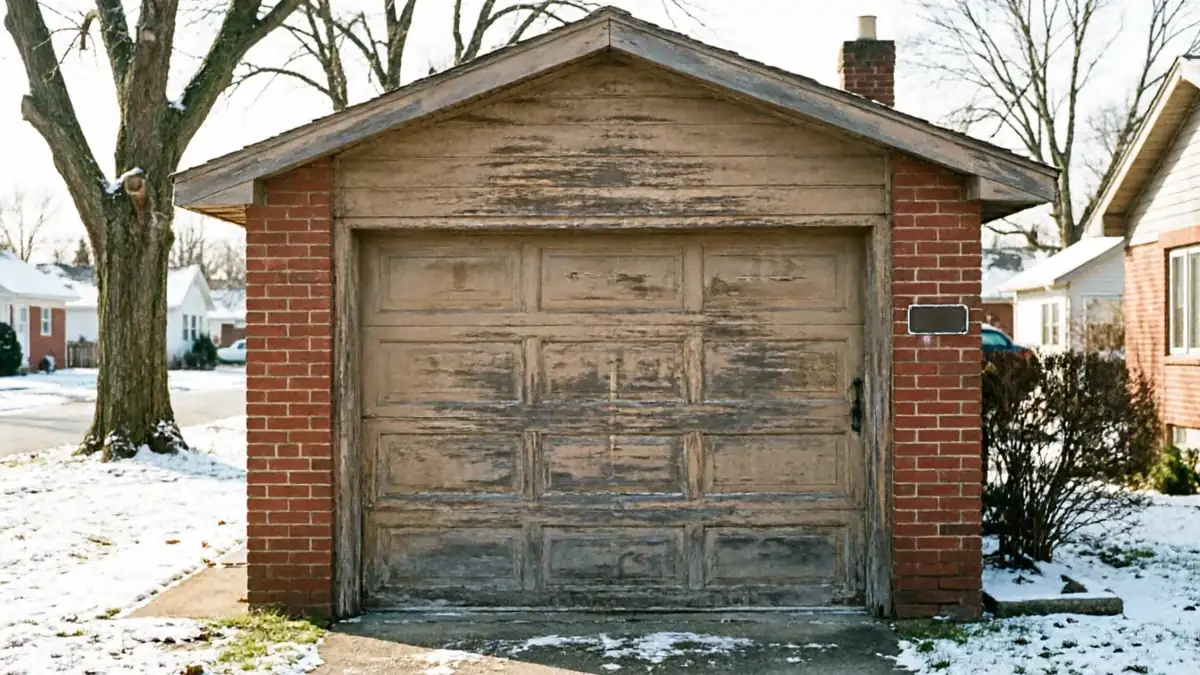
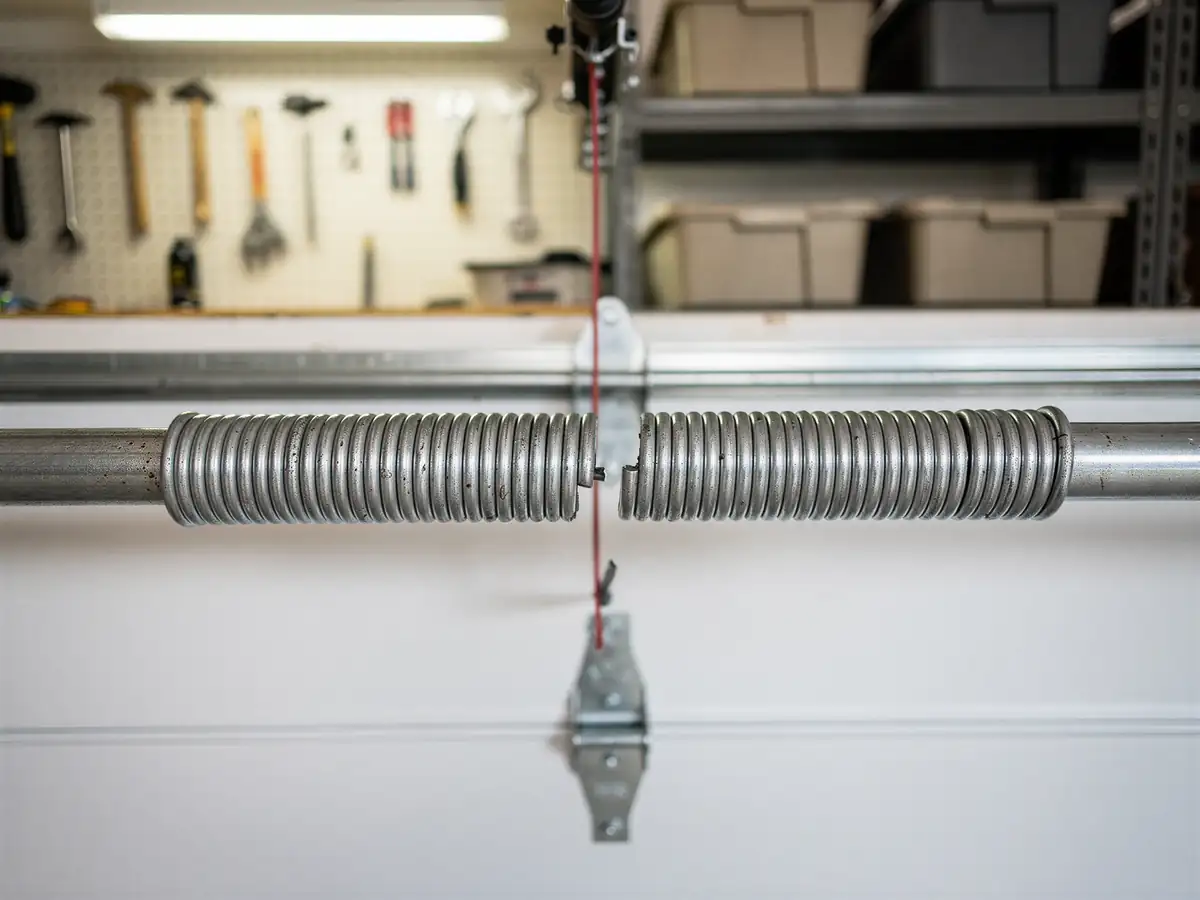
We can't quote you a number until we're standing in front of the door, and that's not a dodge - it's the truth with older hardware. Orland Park's housing stock runs from 1938 up through 2004, with the median build year sitting around 1970, so a lot of what we find behind the panel is original equipment nobody manufactures anymore. A torsion spring off a 1971 build might take a special order. A track bracket bent from fifty years of slab settling might need to be fabricated rather than bought off a shelf. That's the honest limitation: parts for a door this old sometimes cost more in wait time than the labor does. We'd rather tell you that up front than guess at a price and miss it. What we can say is this - if the section panels are sound and the opener is the only failure, repair almost always beats replacement. If the spring system, the track, and the panels are all original to a house built in the 1960s or 70s, you're usually better off putting the money into a new door rather than chasing parts for one that's outlived its design life.
What Local Conditions Do
Orland Park sits in a cold climate band, and cold doesn't just make the door harder to lift - it changes how the metal and the hardware behave over decades. Steel torsion springs lose tension faster through repeated freeze-thaw cycles, and that process has been running on homes here since the 1960s and 70s, when most of this housing stock went up. Track alignment drifts as concrete slabs heave slightly each winter, which is a slower, quieter problem than a broken spring but just as real on a forty- or fifty-year-old house. Weatherstripping on original doors from that era was never built for the duty cycle of decades of Illinois winters, so you'll often find the bottom seal brittle and cracked long before anything mechanical fails. None of this means an older door is doomed. It means the conditions here wear on specific parts in a specific order, and knowing that order is most of what tells us whether a repair will hold or just delay the inevitable.
The Problem
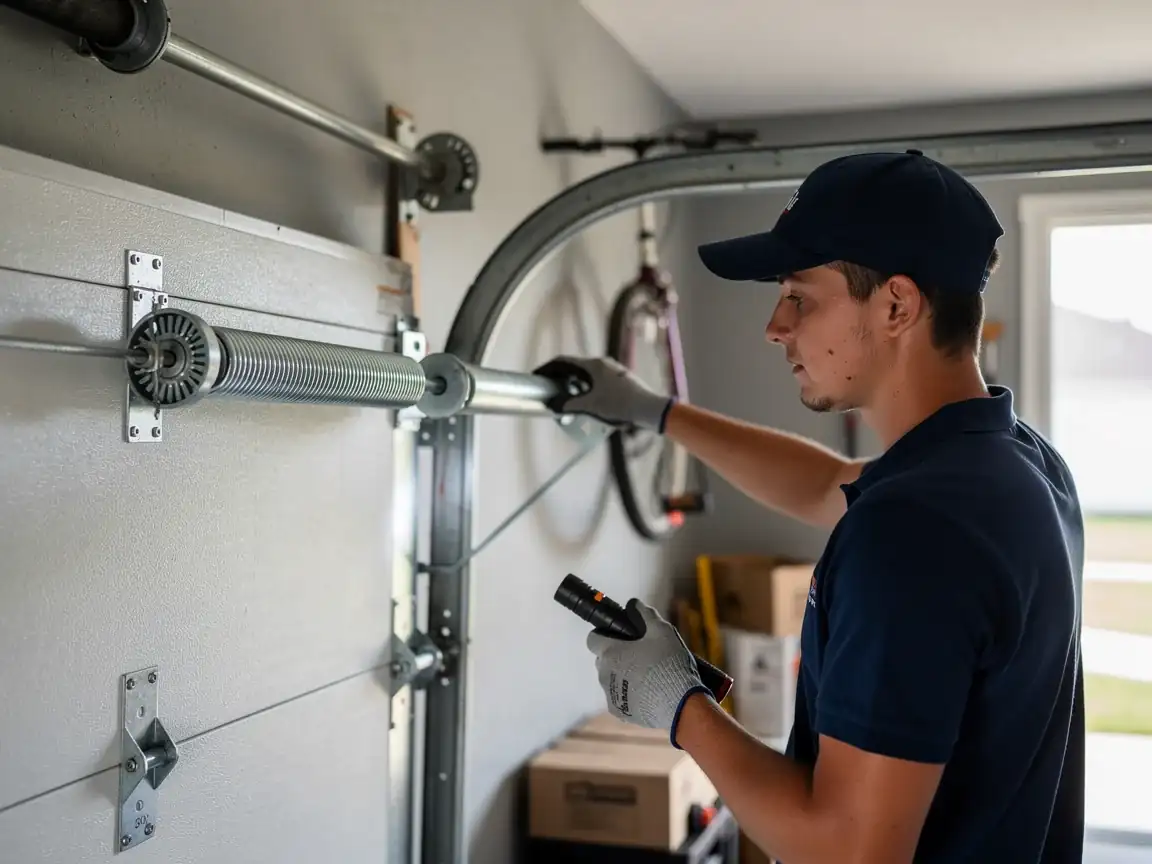
The doors we see failing most in Orland Park's older neighborhoods share a pattern: single torsion spring systems rated for a lighter door than what's actually hanging on them, steel panels with no insulation layer, and rollers that have never been swapped in the life of the house. On a home built in the 1938-2004 range - and especially the 1960s-70s cluster that makes up most of this area - that combination means the door is working harder than it was designed to, especially in winter when steel contracts and lift resistance goes up. Add in track brackets fastened to jambs that have settled slightly over fifty-plus years, and you get doors that bind, drop unevenly, or throw a cable off the drum. None of that is a defect specific to one house. It's what happens to hardware this old in a climate this cold. The question isn't whether an original door from that era will eventually need real work - it's whether the panels and track are still straight enough to be worth putting new springs and rollers on.
Checking It Yourself
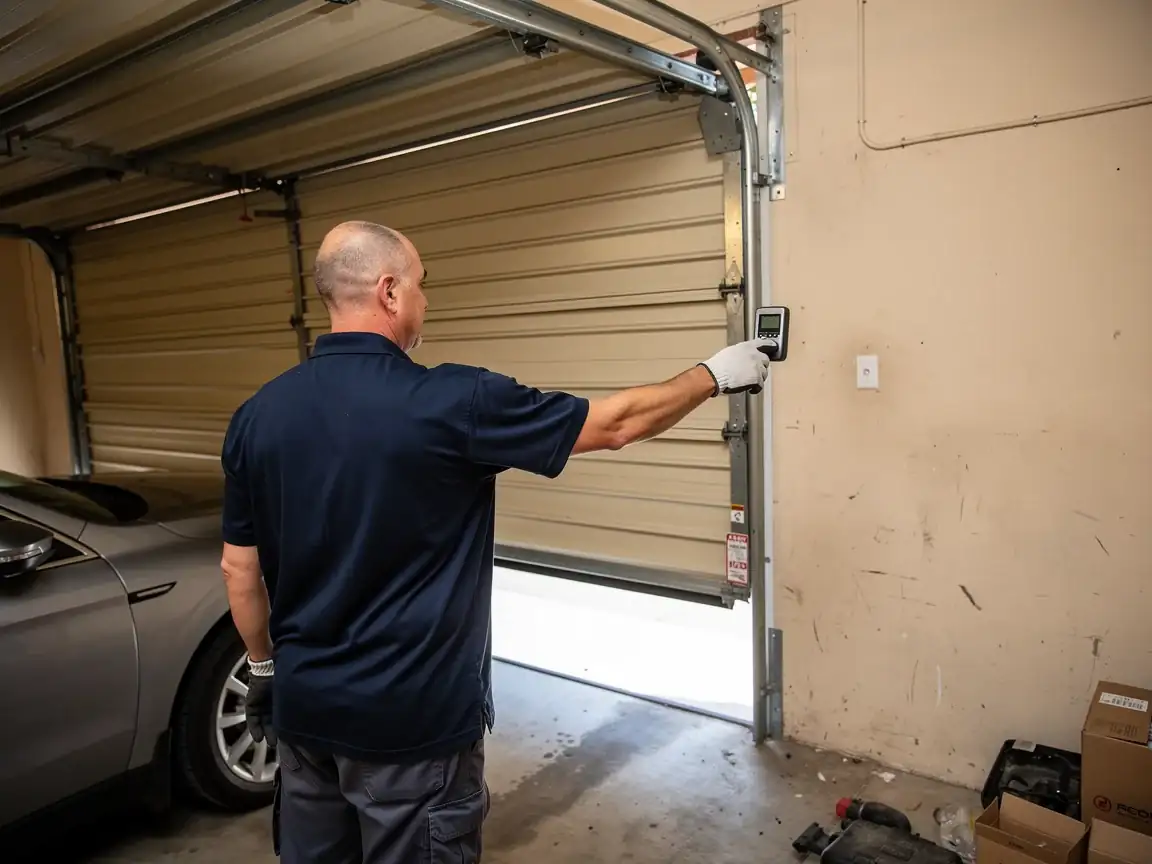
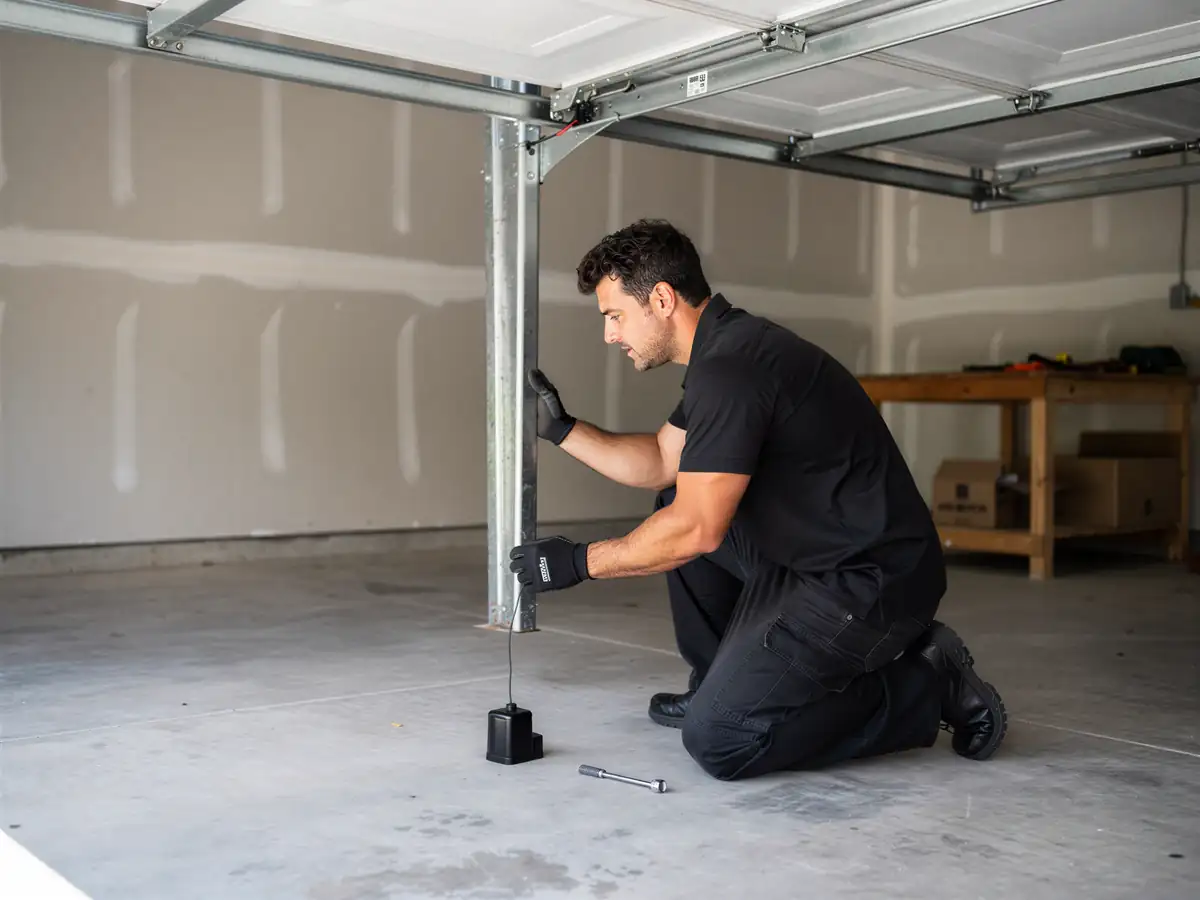
Start with the manufacture plate, usually on the inside edge of a panel near the bottom - if it predates the 1990s, you're dealing with original-era hardware and should expect spring and roller wear regardless of how the door looks. Pull the emergency release and lift the door by hand; if it feels heavy or uneven, the spring has lost tension, which happens faster here given the winters. Check the bottom seal for cracking or hardening, common on doors that have been through decades of Orland Park cold. Look at the track brackets where they meet the frame - gaps or rust streaks mean the house has settled and the track has shifted with it. Listen for grinding when the door moves; that's usually rollers that have never been replaced. None of this tells you for certain whether to repair or replace, but it tells you what questions to ask when someone comes to look at it, and it keeps you from paying for diagnosis on problems you can spot yourself in five minutes.
How it works
From “it’s stuck” to “it’s fixed”
01
Tell us what’s wrong
Describe the symptom - won’t open, loud bang, opener runs but the door won’t move.
02
On-site diagnosis
A technician tests the door under power and by hand and finds what actually failed.
03
Clear, up-front plan
You get the fix that’s needed and what drives the cost - before any work starts.
04
Repaired & tested
The repair is done, the door is set true and tested, and the work area left clean.
Not sure which repair your door needs in Orland Park, IL? Describe what it’s doing - every job starts with a diagnosis.
How do I know if my garage door is original to the house?
Check the manufacture plate near the bottom corner of a panel. If your house was built in the 1960s or 70s - common across Orland Park - and the plate matches, you're likely looking at original hardware, which means the spring and rollers have been working for decades longer than their designed service life.
Does the cold actually matter for garage door repair here?
Yes. Orland Park sits in a cold climate band, and repeated freeze-thaw cycles fatigue torsion springs and stiffen weatherstripping faster than in milder areas. On a door already decades old, that cold-driven wear is often what finally pushes a marginal spring into failure.
Is it ever not worth fixing an old door?
When the panels are original to a 1960s or 70s build and the spring, track, and rollers are all failing at once, chasing parts for obsolete hardware often costs more in wait time and labor than a new door would. We'll tell you when we see that, rather than patch something that won't hold.
Ready to get your garage door sorted?
Tell us what it’s doing and where you are in Orland Park - we’ll take it from there.