Orland Park homes built mostly in the 1960s-70s run original hardware that groans different ways in cold. Here's what each noise means and what it costs to fix.
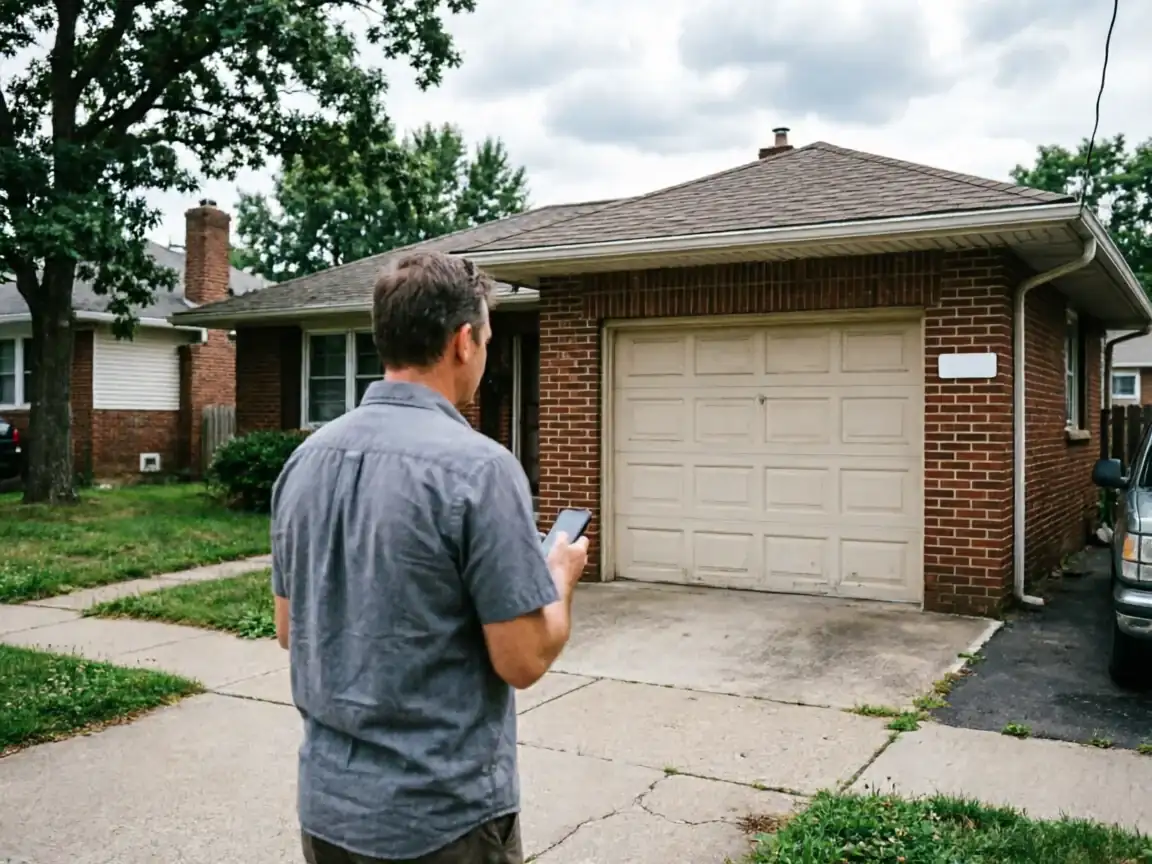
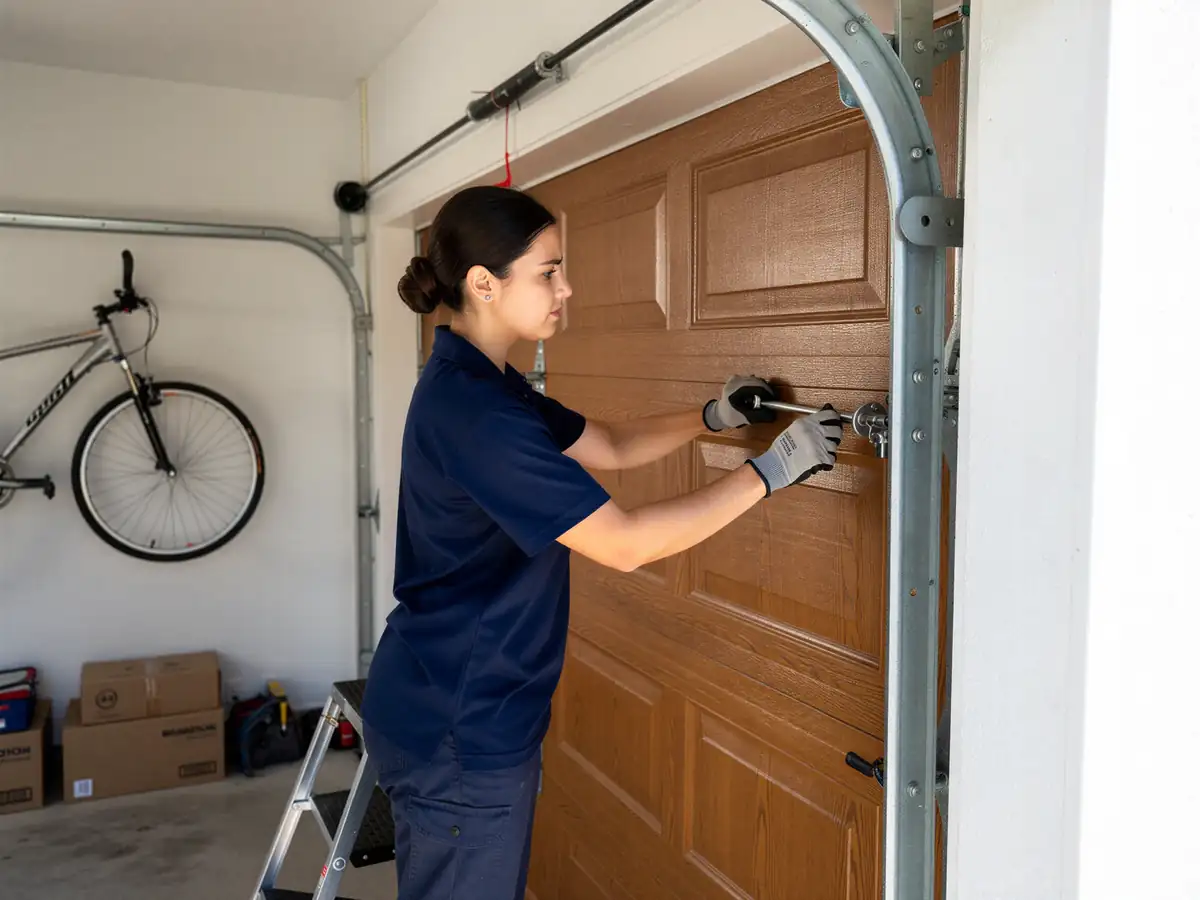
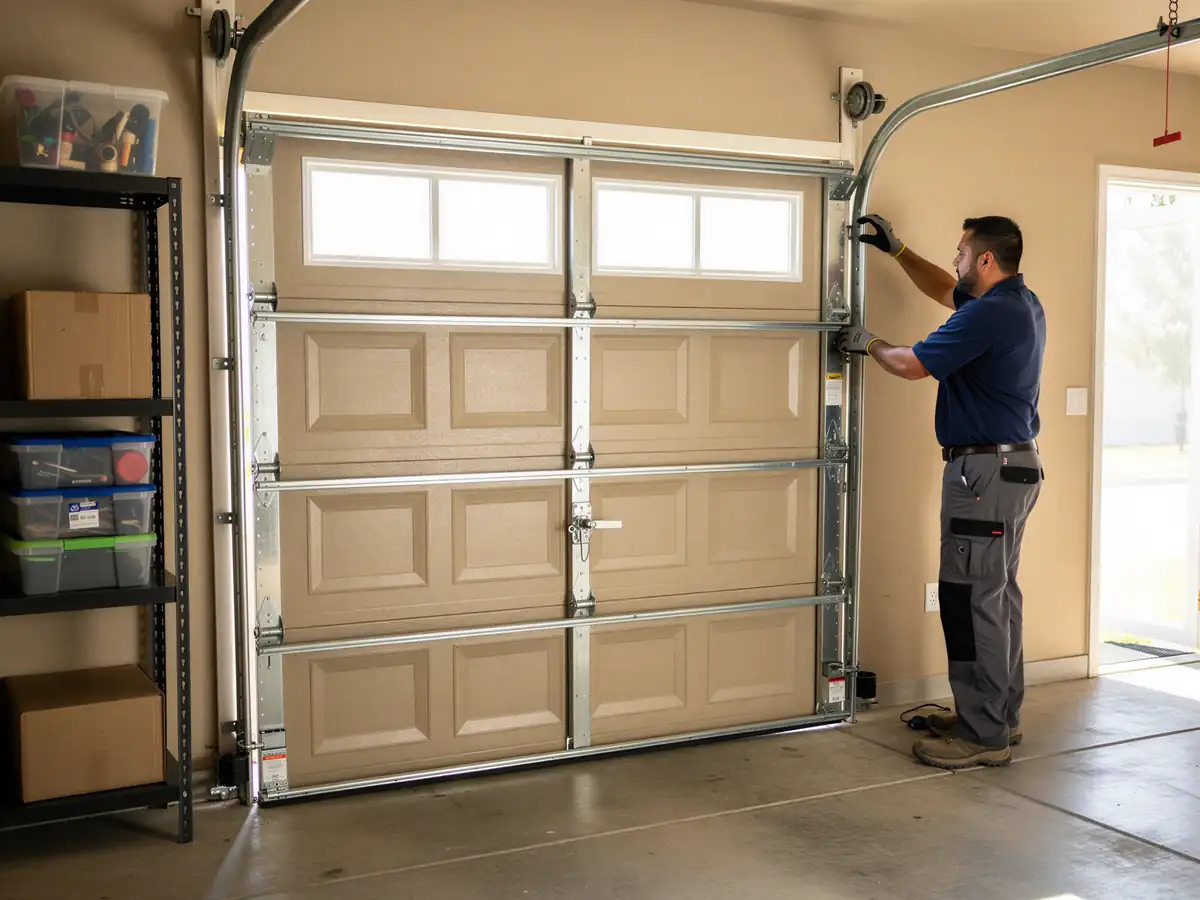
We can't quote a number without seeing the door, because the fix for a noisy door ranges from a ten-minute lube job to a full spring swap. What we can tell you is what drives the cost around here. A lot of Orland Park houses were built in the 1960s and 70s, and plenty of those garages still have the original torsion hardware - springs, bearing plates, and center brackets that are 50-plus years old. Replacing a spring on that older hardware sometimes means replacing the bracket or shaft with it, because parts made for a 1968 header don't always bolt straight onto a current spring. Newer builds in town, the ones from the 80s through early 2000s, usually take standard parts off the truck with no adapting. So the age of the house is doing a lot of the work in whether this is a quick job or a longer one. We'll tell you which one you've got before we touch anything, not after.
What Local Conditions Do
This area sits in a cold climate band, and cold does specific things to a garage door that heat doesn't. Steel torsion springs lose a little tension as the metal contracts in low temperatures, which changes the pitch of the sound they make under load - a spring that was quiet in August can start ticking or creaking in January on the same door, same hardware, nothing broken yet. Grease on rollers and hinges also stiffens up when it's cold, so metal-on-metal contact that was cushioned in summer becomes a dry squeal in winter. None of this is unique to one house - it's what cold does to steel and lubricant across every door in town. The difference is how long your hardware has been fighting that cycle. A door running original 1970s-era springs has gone through 50-some winters of this contraction and expansion. That's wear you can hear before you can see it.
The Problem
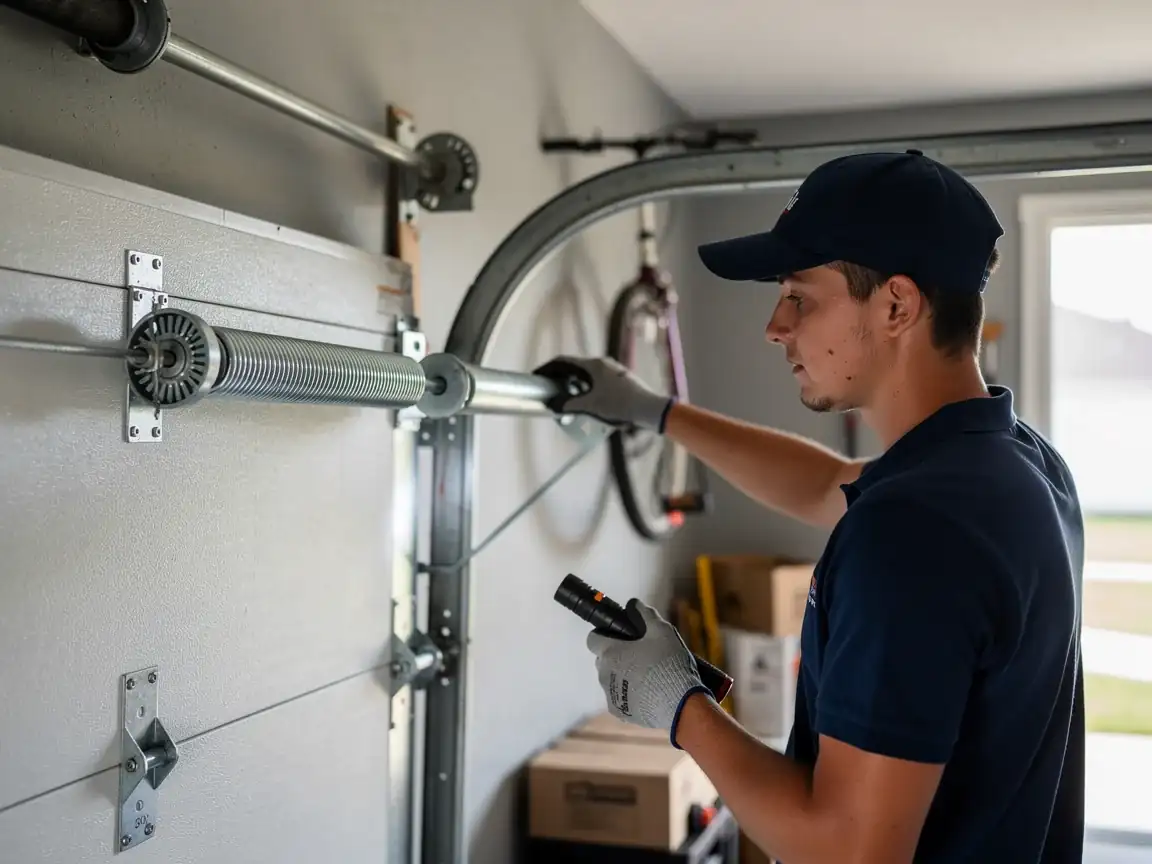
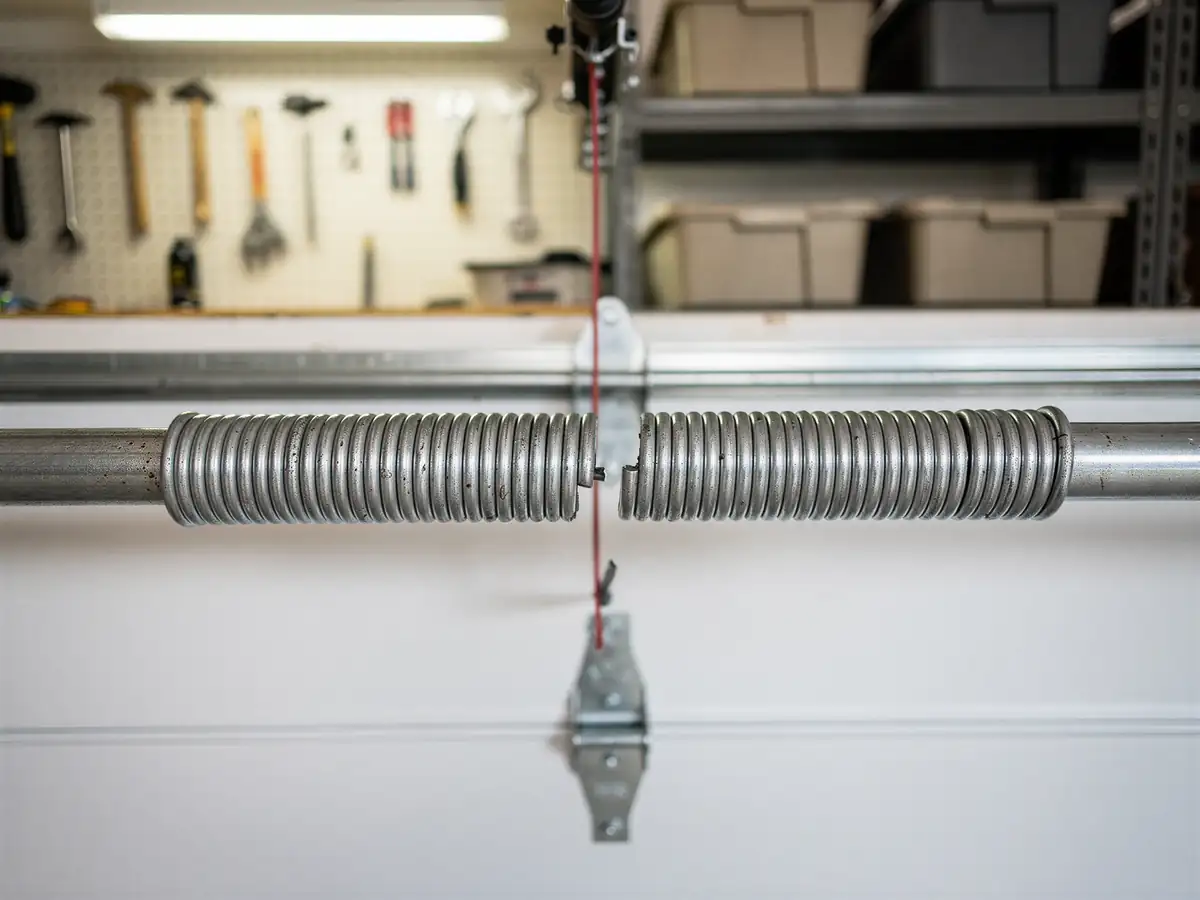
Here's the part that trips people up: a noisy door and a broken door sound almost the same right up until the moment they aren't. A grinding noise on an older torsion spring usually means the coils are rubbing against each other or the shaft, which happens as the spring fatigues - and fatigue is cumulative, it doesn't reset. On a house built in the median year for this area, around 1970, that spring has had decades to get there. A loud bang followed by the door going dead weight is the spring letting go entirely, and at that point the noise problem and the broken-door problem are the same call. The honest limit here: we can't tell you from a phone description whether your noise is three months from a bang or three years from one. Some sounds we can diagnose over the phone. A spring's remaining life isn't one of them - that takes eyes on the coil.
Checking It Yourself
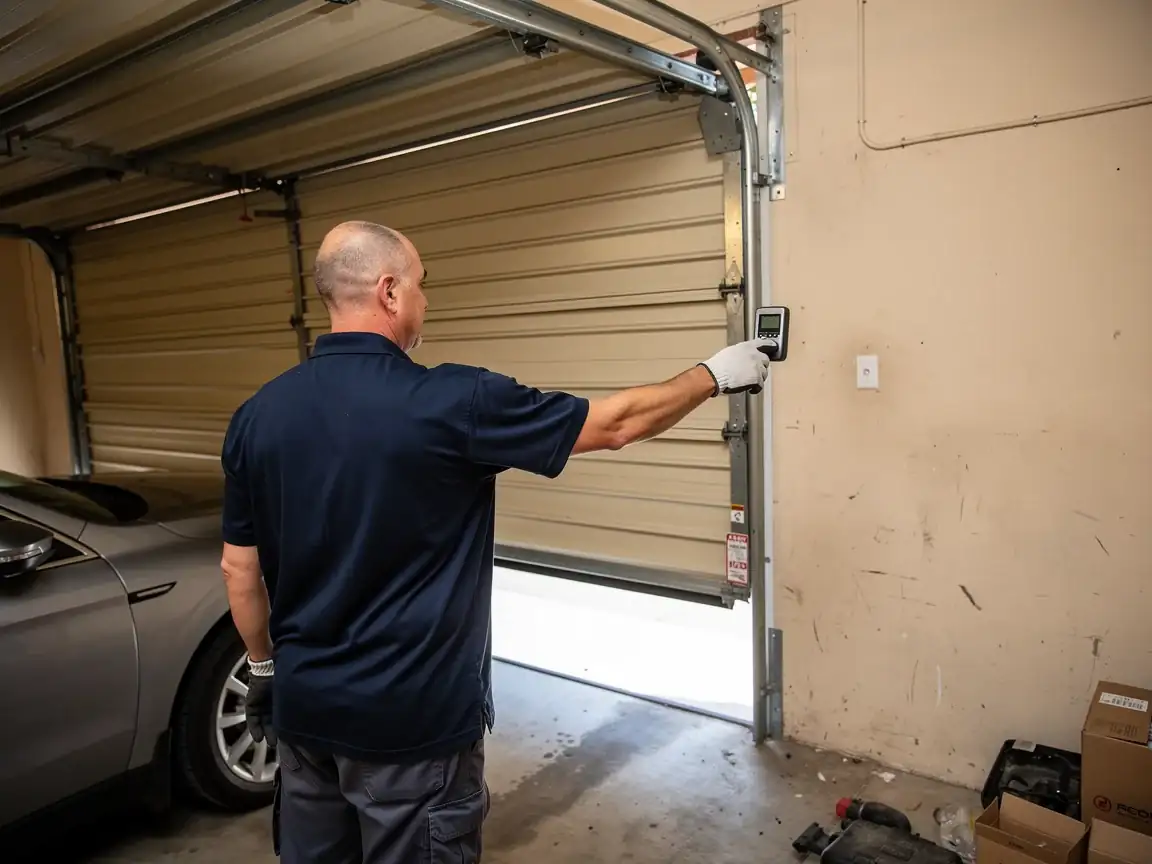
Before you call anyone, open and close the door a couple times and pay attention to where the sound comes from. A squeal at the rollers as they pass the track is usually just dry metal - cheap to fix, not urgent. A deep metallic groan near the top of the door, close to the spring and center bracket, is worth taking seriously, especially if your house falls in that 1960s-70s band of original hardware common across this area. A rattling track is often loose mounting brackets, which cold-weather contraction and expansion can work loose over years. What you should not do is lubricate a spring that's already making a grinding noise and call it handled - that can mask the sound without addressing the fatigue underneath it. If you're not sure which sound you're hearing, that's a fair reason to have someone look rather than guess.
Cold steel contracts and loses a little spring tension, which shifts the pitch of the noise under load. Grease on rollers and hinges also stiffens in low temperatures, turning cushioned contact into dry metal-on-metal squeal. It's the same hardware, just reacting to the season.
Is a grinding spring an emergency?
Not always right away, but it's not nothing either. Grinding usually means the coils are rubbing from fatigue, and fatigue only moves one direction. We can't tell you how close it is to failing without looking at it, so treat it as worth scheduling soon rather than something to ignore.
My house is older - should I expect more noise issues?
A lot of homes in this area were built in the 1960s and 70s, and houses with original torsion hardware from that era are more likely to have noise from decades of spring fatigue and worn bearing plates. It's not a guarantee of trouble, but it's a reason to pay attention to new sounds.
Ready to get your garage door sorted?
Tell us what it’s doing and where you are in Orland Park - we’ll take it from there.