When the Power Goes Out, What Happens to Your Opener
Orland Park homes built mostly in the 1960s-70s often have openers without battery backup. Here's what a power cut does to that hardware and what to check before you call.
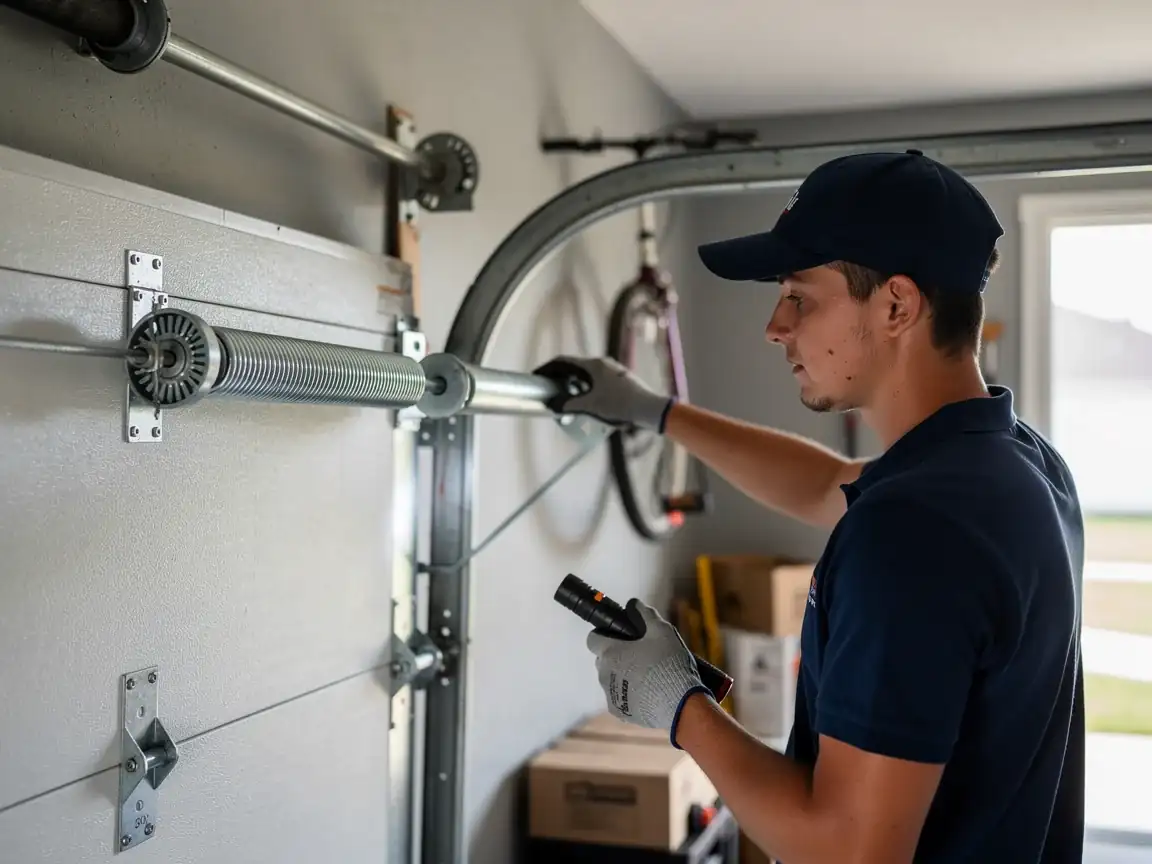
We don't have a flat number to hand you here, because what a power-cut-related opener job costs depends on what's actually wrong once we're in your garage. Sometimes it's a five-minute fix: the manual release cord got pulled during an outage and the trolley never re-engaged. Sometimes the outage caught an opener mid-cycle and fried the logic board, and that's a different conversation entirely. A lot of homes in this area still run openers original to a build era that predates battery backup as a standard feature, so when the power drops, the door just stops wherever it was. If you're calling us about a dead opener after an outage, the first question we'll ask is the age of the unit and whether it has a backup battery at all, because that answer changes the whole job. We won't quote a number over the phone before seeing the unit, and we'd rather tell you that than guess.
What Local Conditions Do
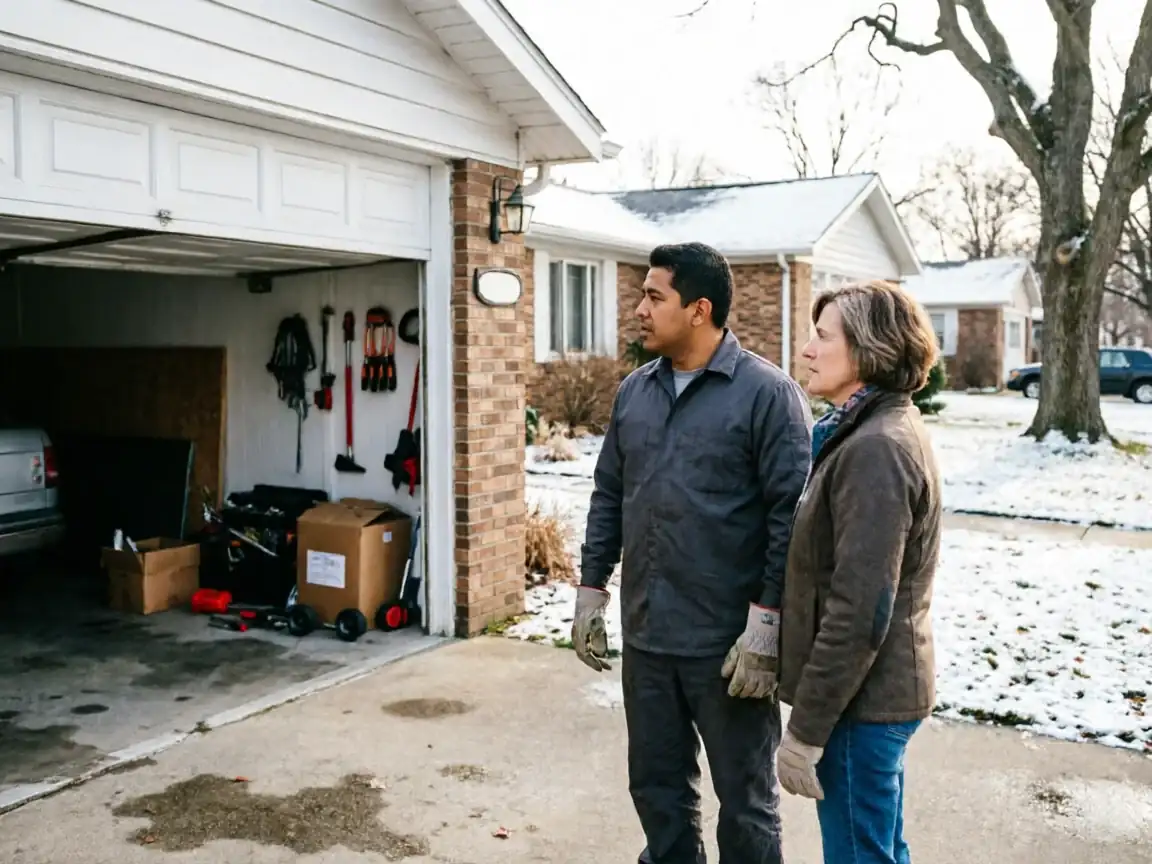
This part of Illinois sits in a cold-moderate climate band, and the outages that matter here aren't hurricanes or heat domes, they're the ice and wind events that knock out power for a few hours or a few days in deep winter. That timing is the problem. A garage door stuck shut (or stuck open) during a winter power cut isn't an inconvenience you can wait out until spring. Cold also does something specific to battery backup systems: a backup battery that tests fine in July can fail to hold a charge at 10 degrees, because lithium and lead-acid chemistries both lose capacity as temperature drops. If your opener's backup battery hasn't been tested since before the first hard freeze, a power cut is exactly when you'll find out it's dead too.
The Problem
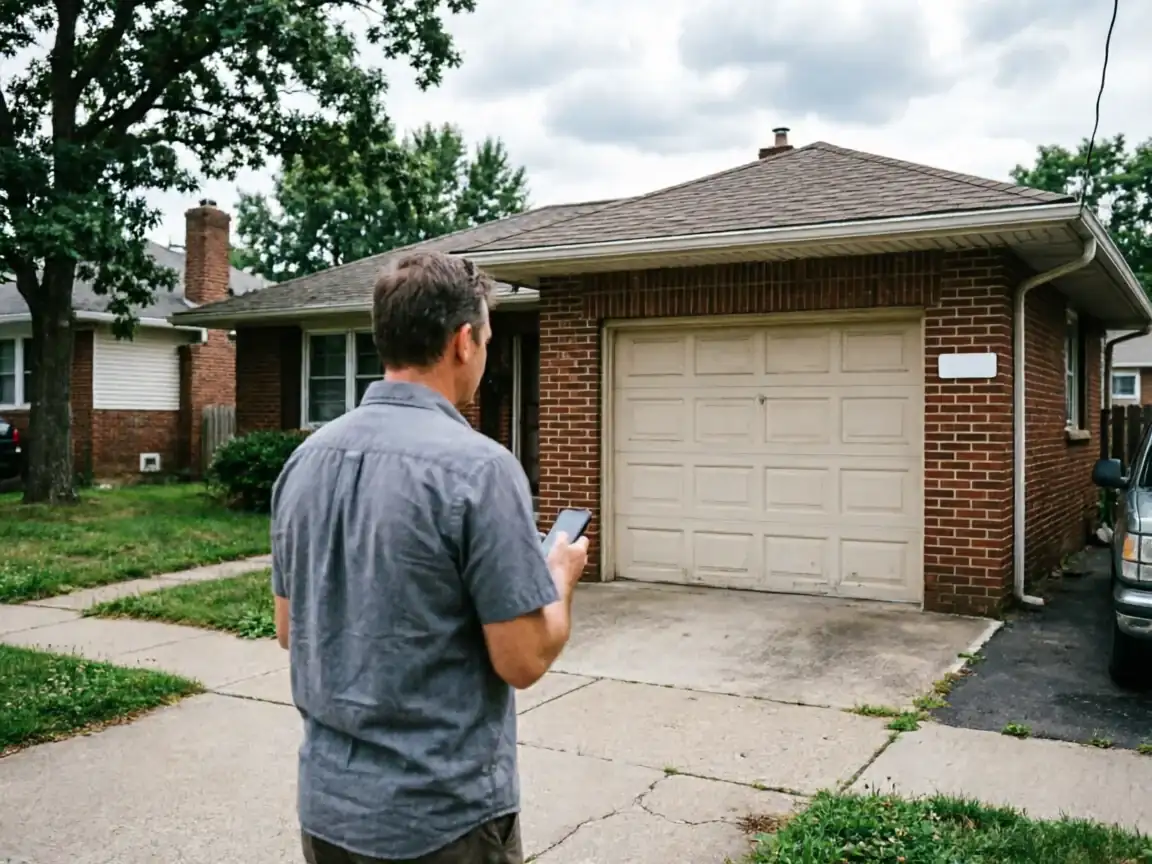
Housing in this service area was mostly built between 1938 and 2004, with the bulk of it going up in the 1960s and '70s. That matters for openers because a huge share of the installed base out there is old enough to have been replaced once already, sometimes twice, and the replacement unit often went in without anyone thinking hard about backup power. Chain-drive openers from that era, and even a lot of newer belt-drive units installed as straight swaps, don't come standard with battery backup unless someone specifically asked for it. So when the power cuts out, the door doesn't just lose smart-home convenience, it loses the ability to open or close at all unless someone manually releases the trolley. In a two-car household with one working vehicle trapped inside, that's not a minor issue, and it's the single most common call we field after a storm knocks out power across this area.
Checking It Yourself
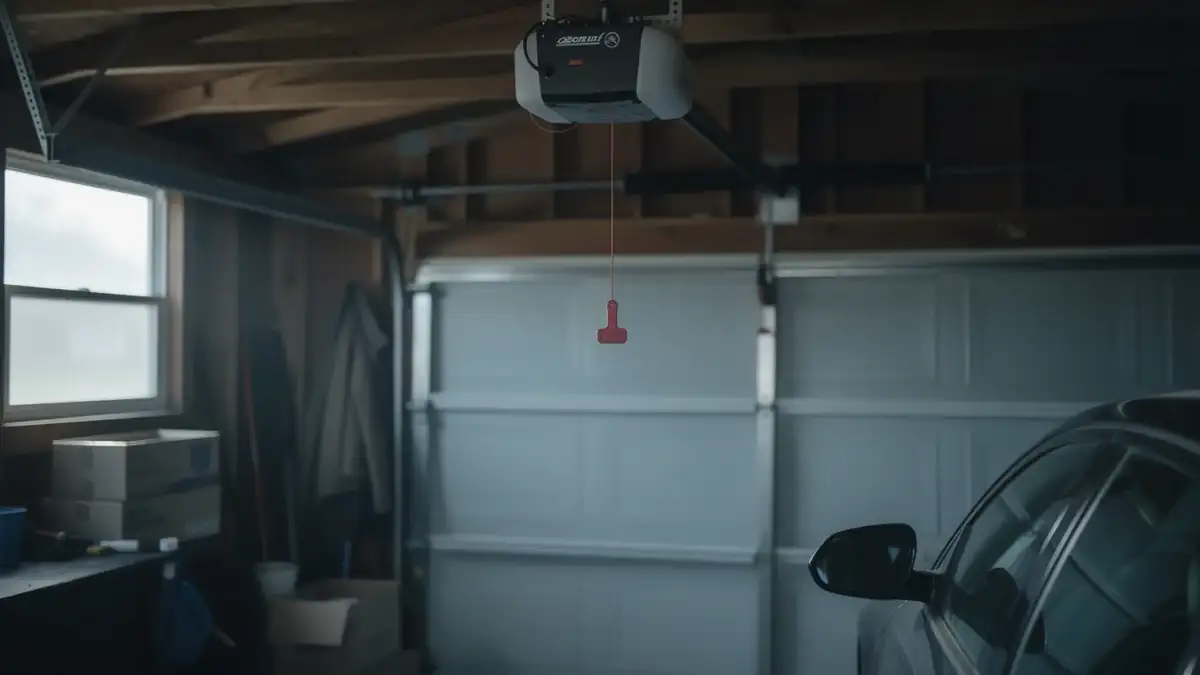
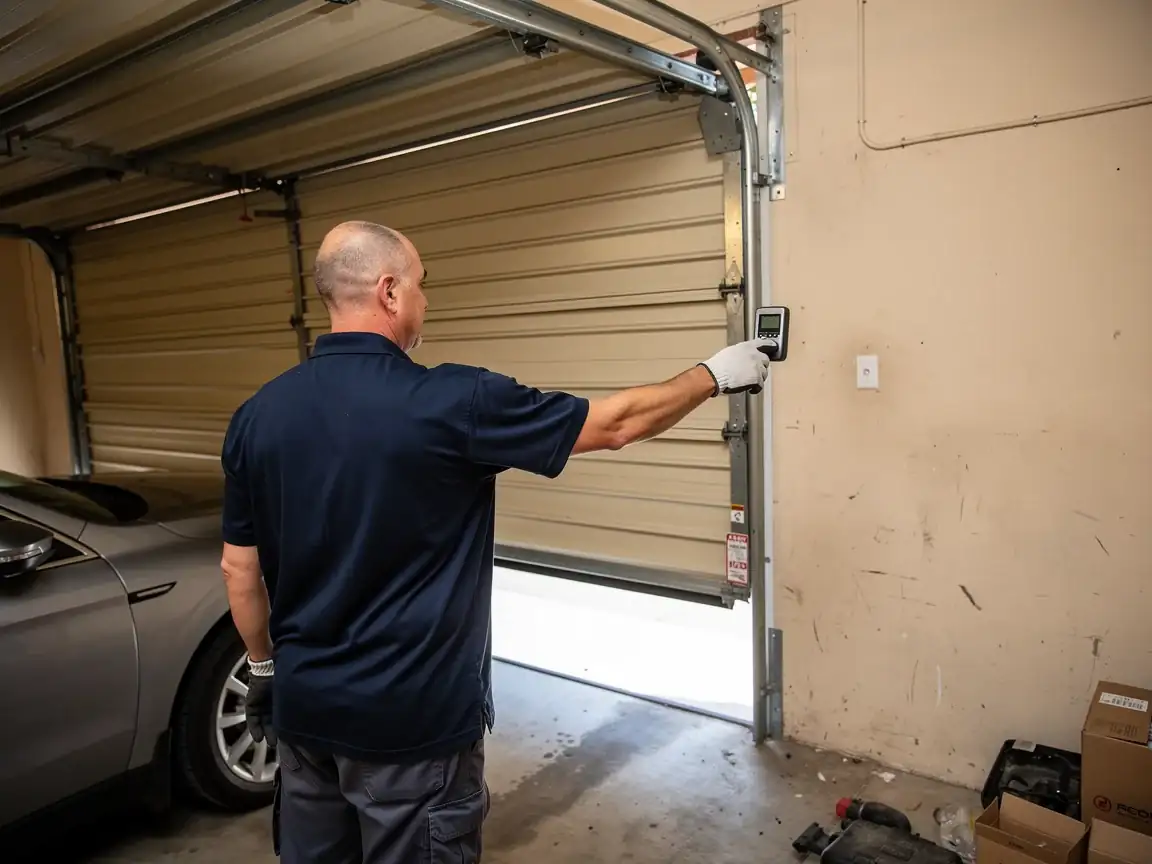
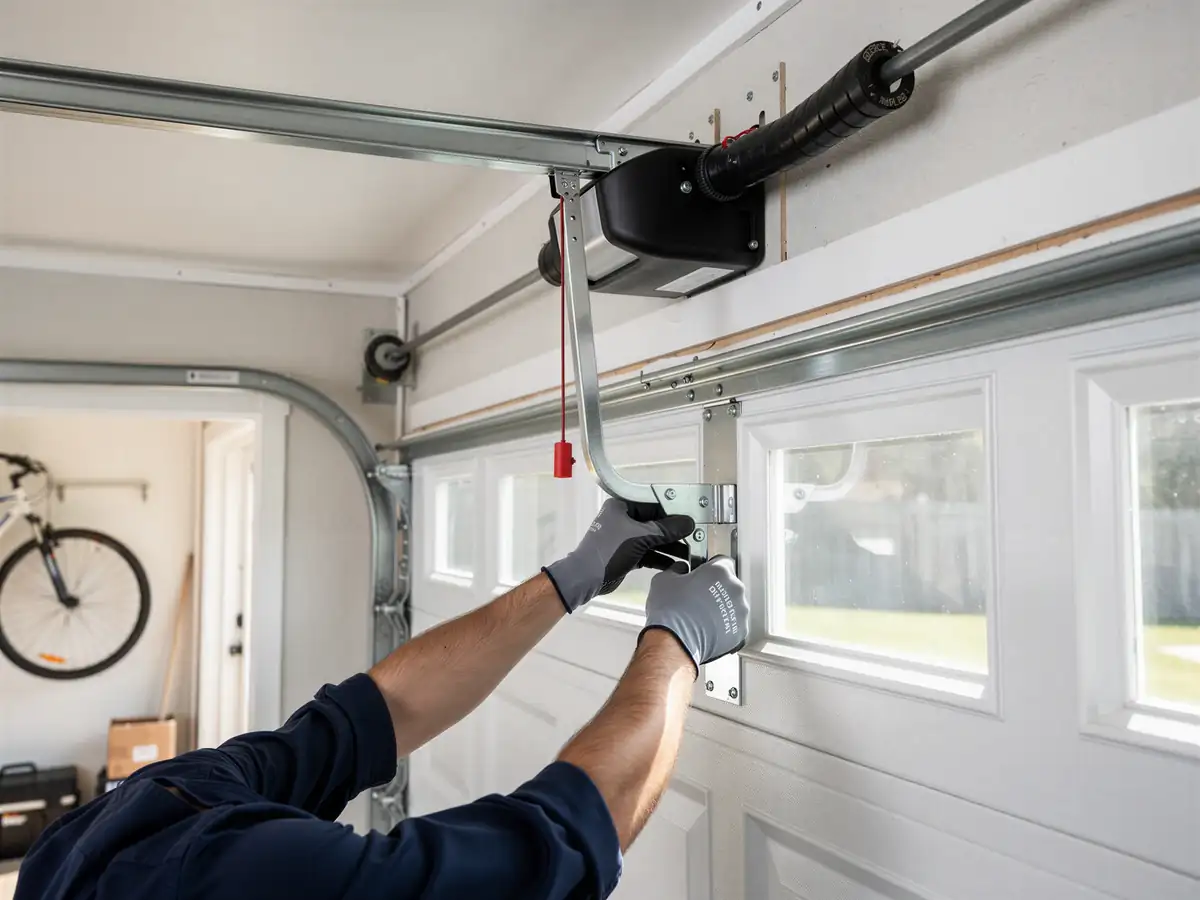
Before you call anyone, there are a few things worth checking yourself. First, find the manual release cord, usually a red handle hanging from the trolley rail, and make sure you and everyone in the house knows how to pull it. Pulling it disconnects the opener so you can lift the door by hand. Second, if your opener does have a battery backup unit mounted on the wall or built into the head unit, check the indicator light. A green light generally means it's charged; no light or a red light means it needs attention before the next outage, not during one. Third, after power comes back, watch the door run a full cycle before trusting it. If it reverses unexpectedly or the opener makes a grinding sound it didn't make before, that's usually a sign the outage caught something mid-motion and it's worth a second look rather than repeated use.
Does my opener need a battery backup if I live in Orland Park?
It's not required, but given how many homes here run openers without one, and given that winter power cuts tend to land at the worst possible time, it's a reasonable upgrade to ask about. Not every door needs it, but if your garage is your only way in or out, it's worth the conversation.
Why did my door stop working after the power came back on, not during the outage?
That usually means the opener's logic board lost its position memory mid-cycle, or a limit switch got knocked out of calibration. It's common enough after outages that we'd want to check it before you run the door again.
Can cold weather drain my opener's backup battery even if it's new?
Yes. Battery chemistry loses capacity as temperature drops, so a battery that held charge fine in warmer months can test weak or dead once deep winter sets in. Testing it before the cold hits is more useful than testing it after.
Ready to get your garage door sorted?
Tell us what it’s doing and where you are in Orland Park - we’ll take it from there.