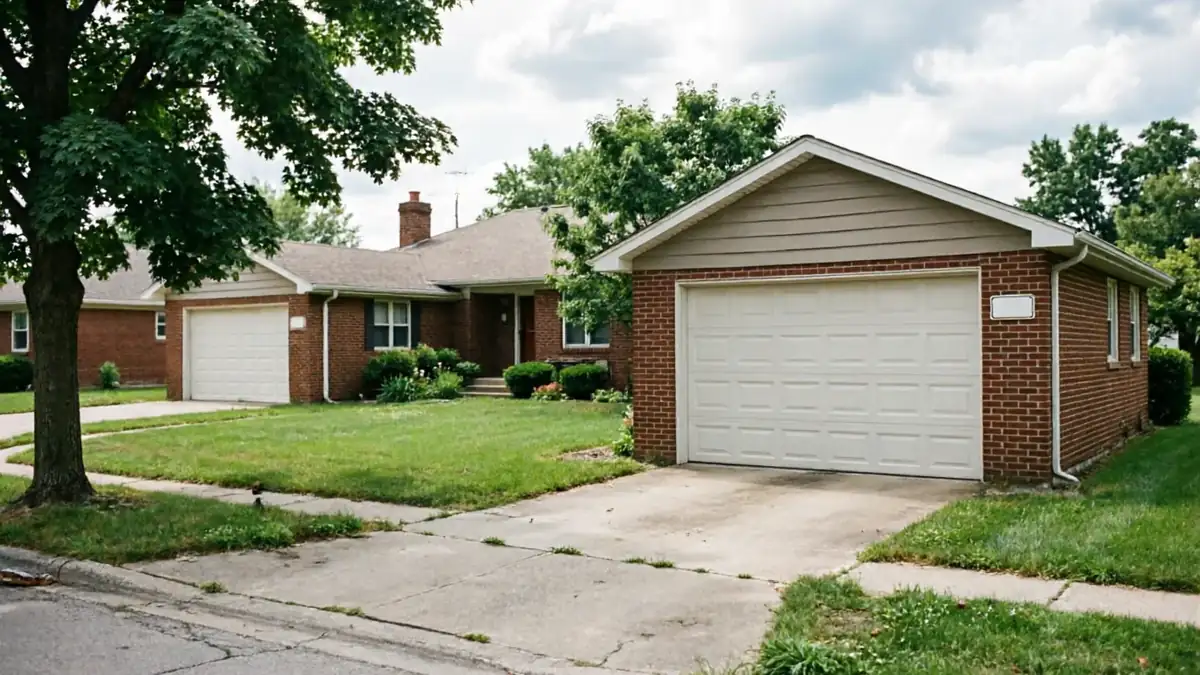
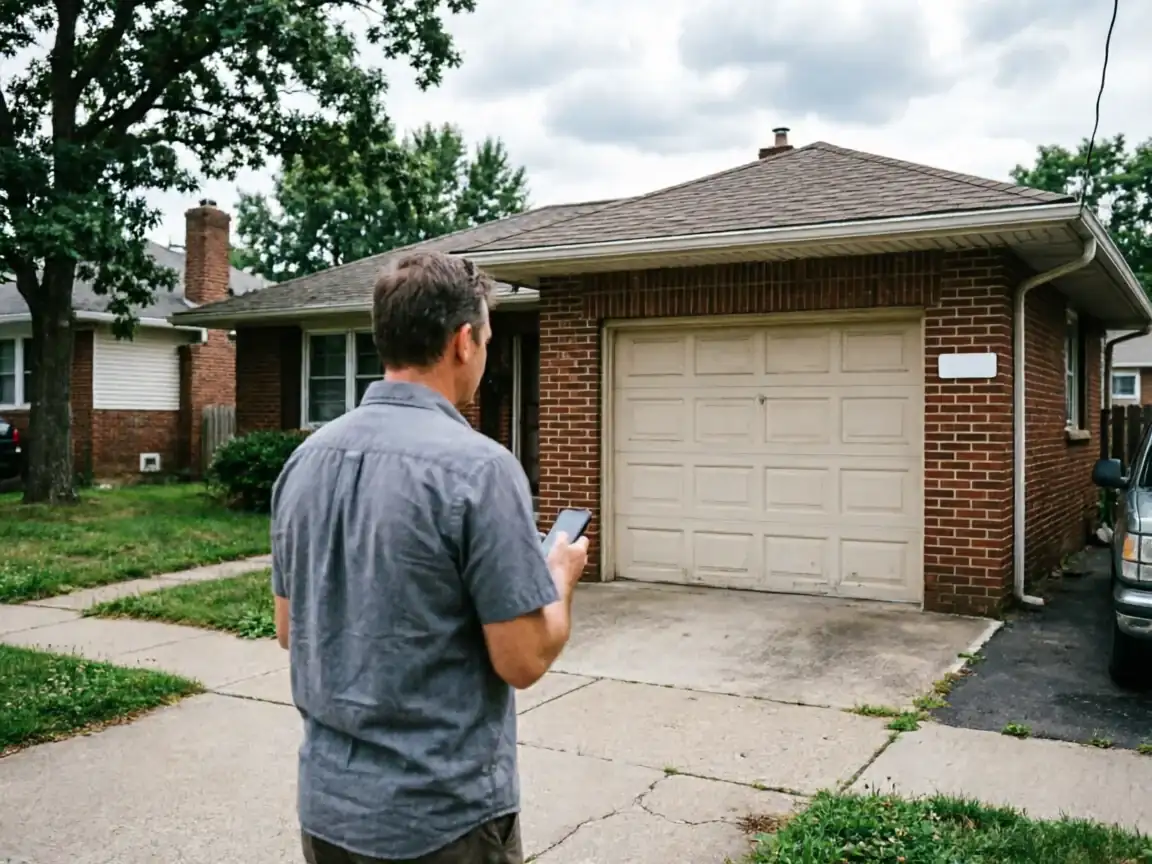
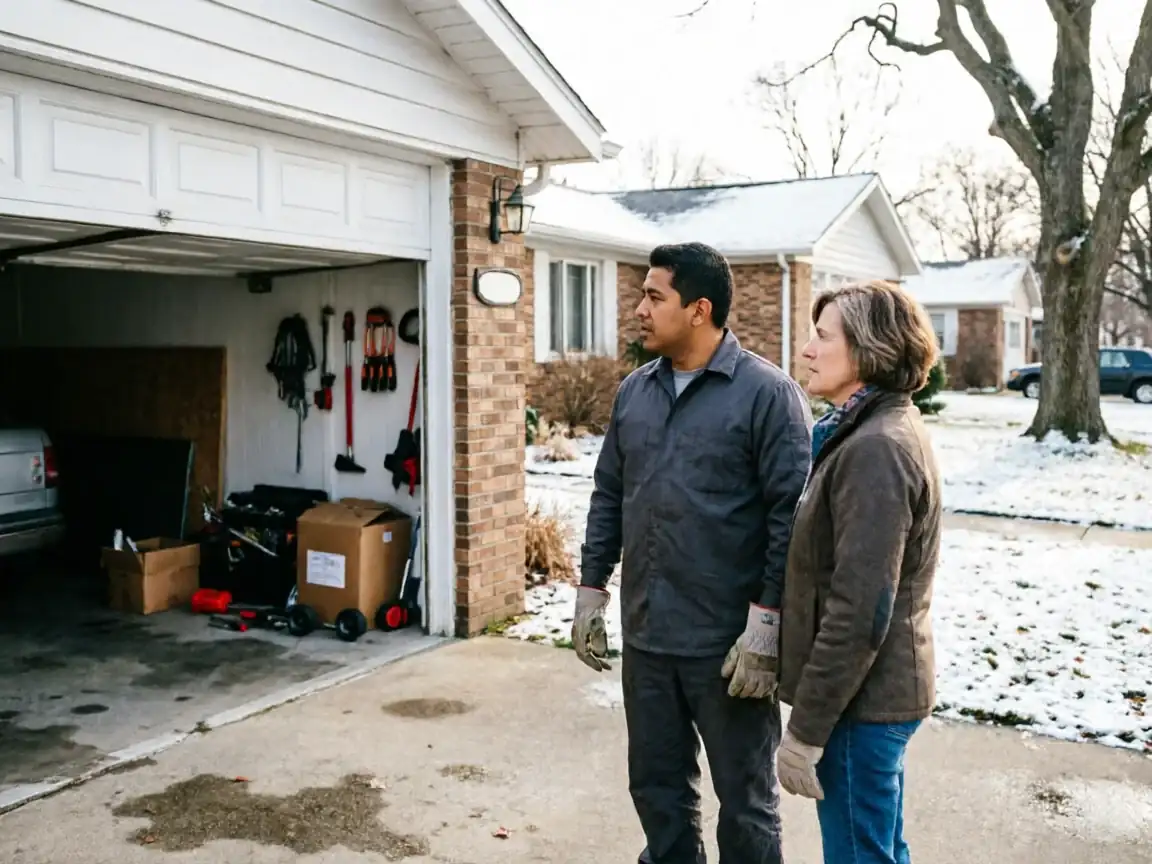
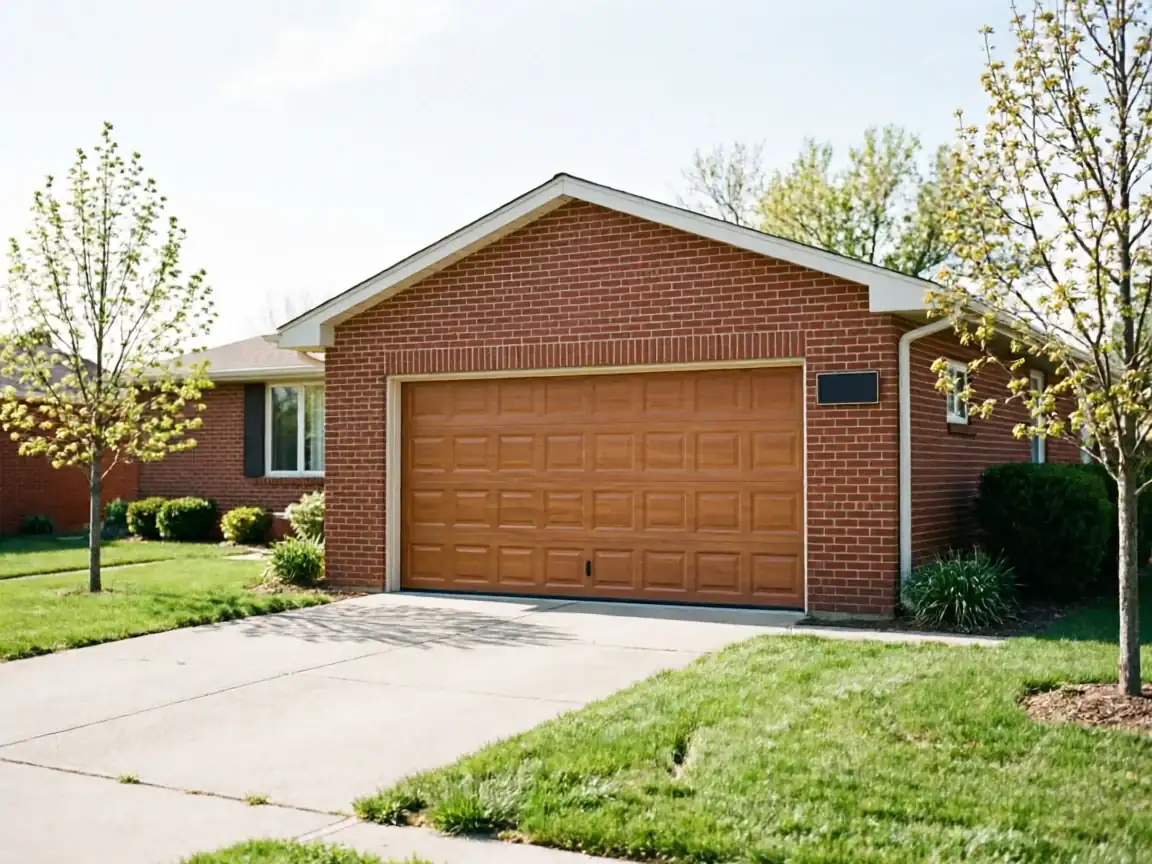
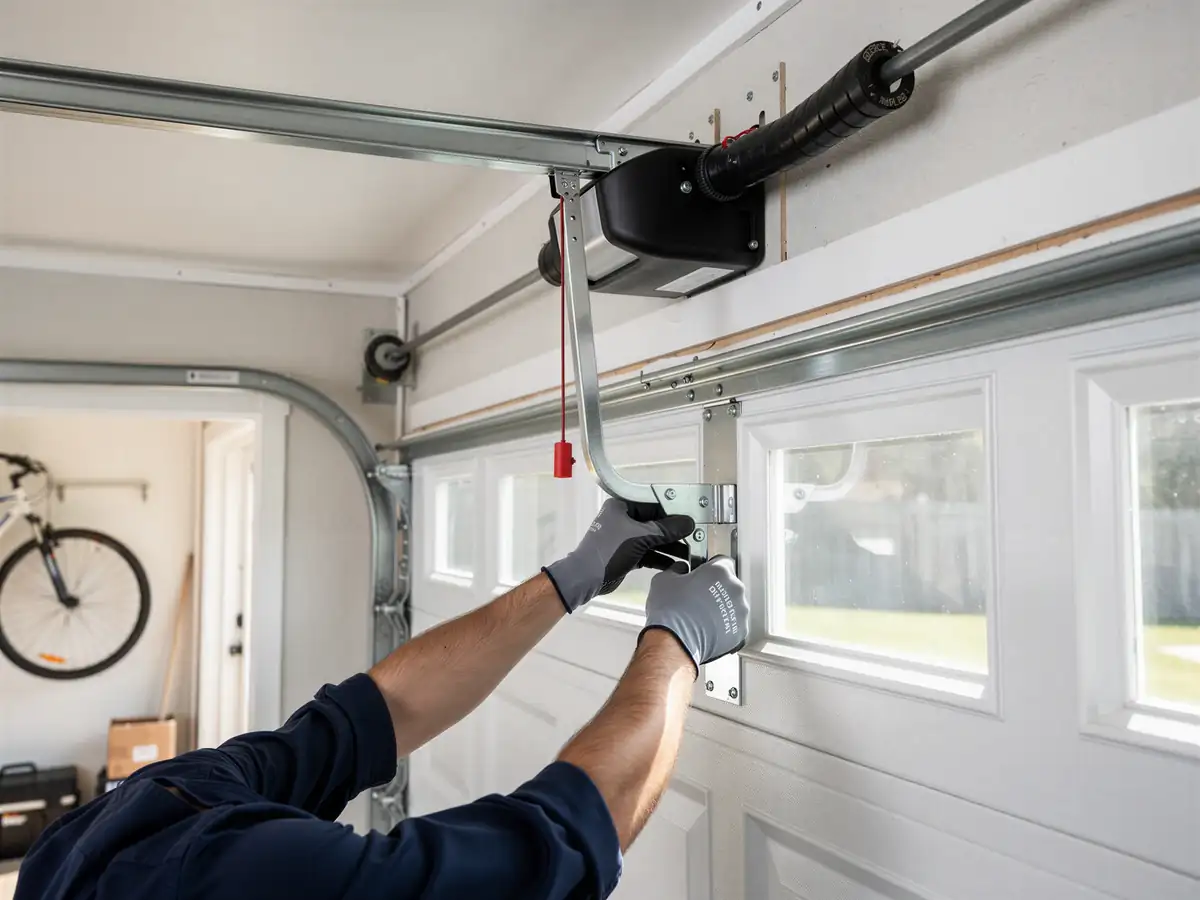
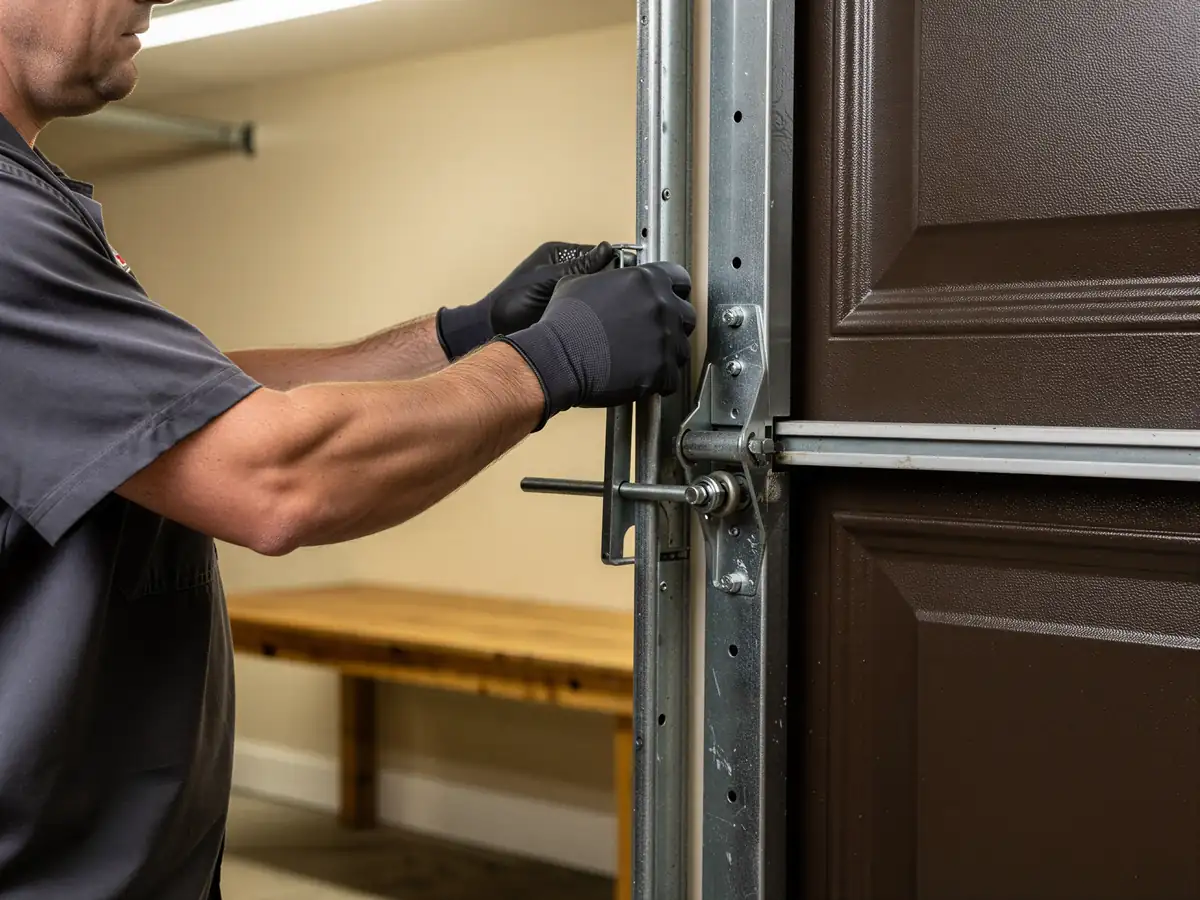
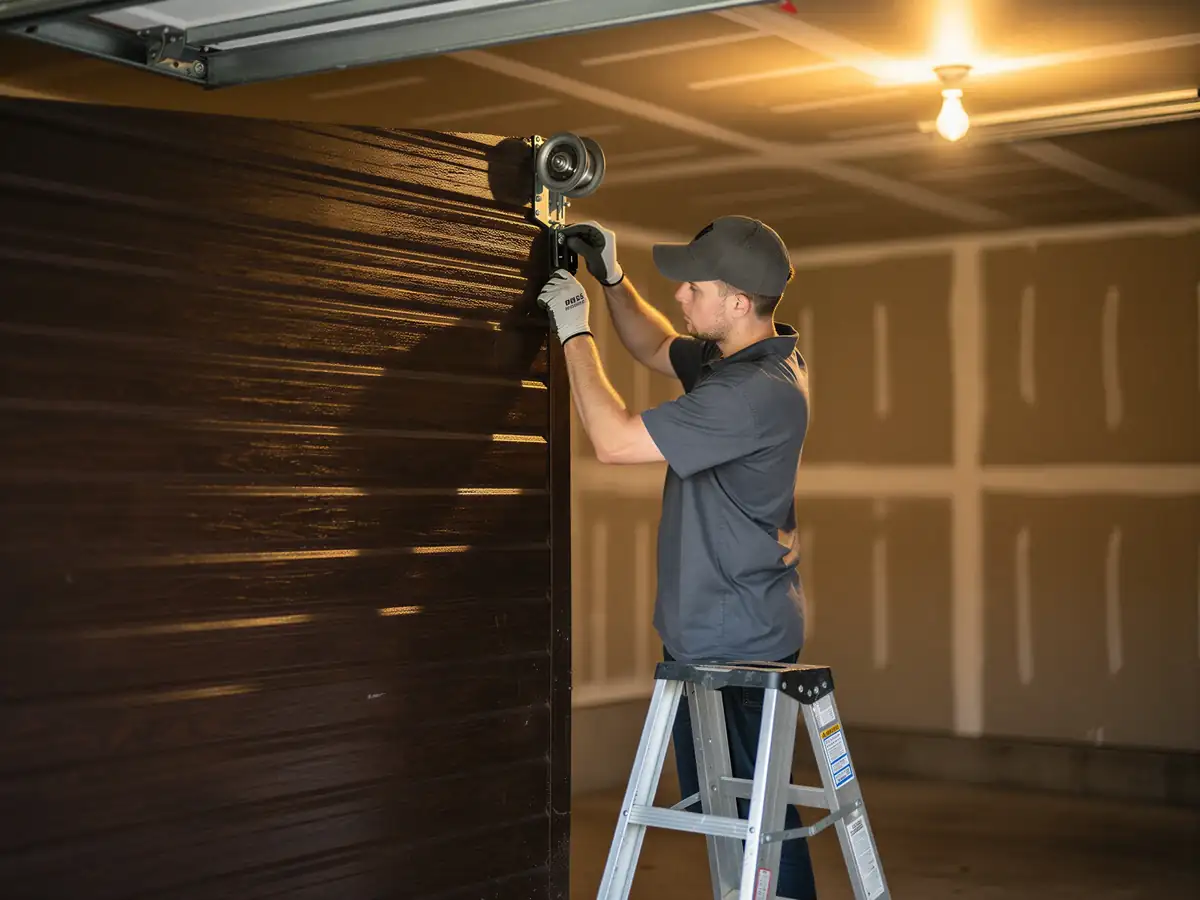
We can't quote a number here without seeing the opening, and we're not going to pretend otherwise - that's not a fact we have, it's a guess dressed up as one. What we can tell you is what moves the price around in this area. A detached garage built in the same era as most Orland Park houses (1938 to 2004, with the bulk going up through the 1960s and 70s) often has a narrower, lower opening than what you'd frame today, which can mean a non-standard panel size instead of an off-the-shelf door. Attached garages from that same stock usually share a wall with living space, so the job often includes checking whether the opener's circuit and the wall separation still meet code - that's extra labor a detached garage doesn't need. The honest answer: the gap between a straightforward attached-garage swap and a detached rebuild with custom framing is real, and you won't know which side of it you're on until someone measures the opening.
What Local Conditions Do
Orland Park sits in a cold-moderate climate band, and that matters differently depending on whether the garage is attached or standalone. An attached garage shares at least one wall with the house, so a door that seals poorly lets cold air push straight into whatever room backs onto it - a mudroom, a kitchen, sometimes a bedroom in the older ranch layouts common in this area's 1960s-70s housing. A detached garage doesn't have that problem in the same way, but it has another: nothing inside to warm it, so the door itself does more of the work holding heat in if the garage is used as a shop or storage for anything that doesn't like a freeze. On older detached structures from the 1938-2004 build range, we also see more gap at the bottom of the track where the slab has settled over the decades - a cold-climate problem that shows up as a draft line you can feel with your hand before you ever see it.
The Problem
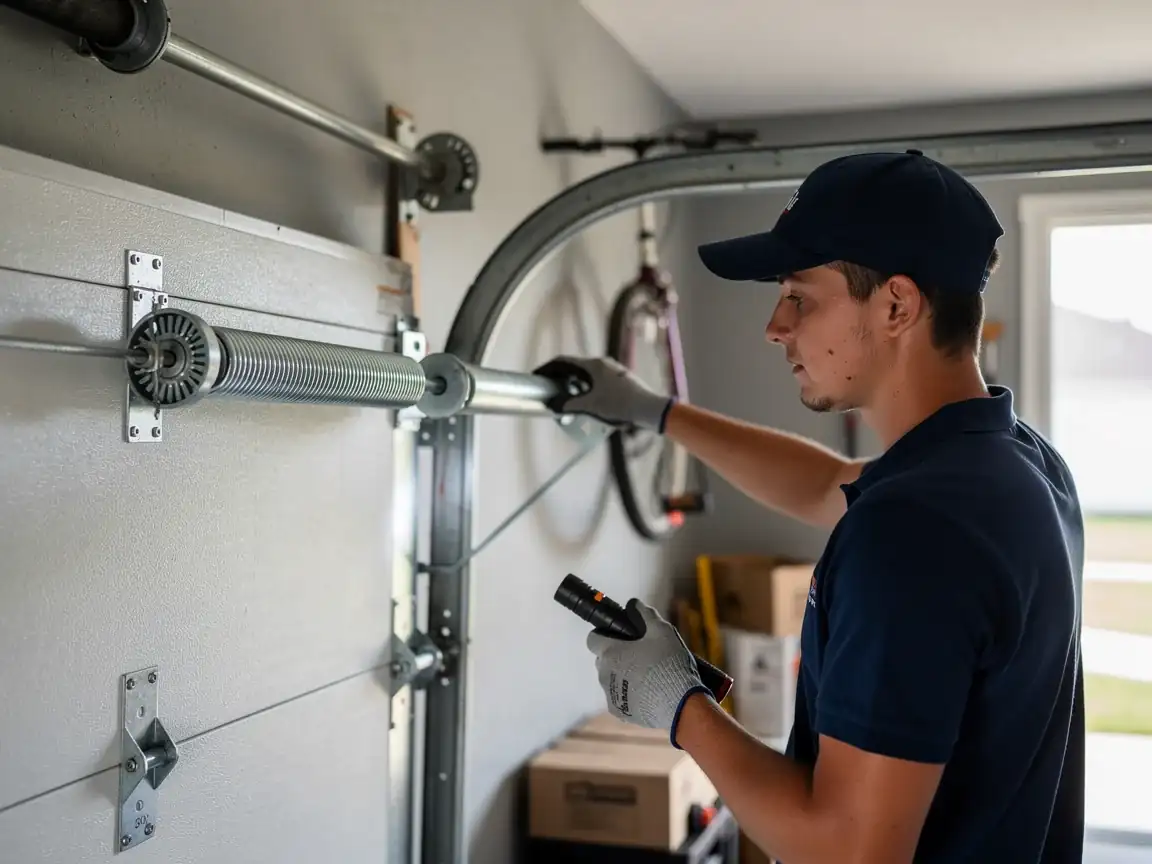
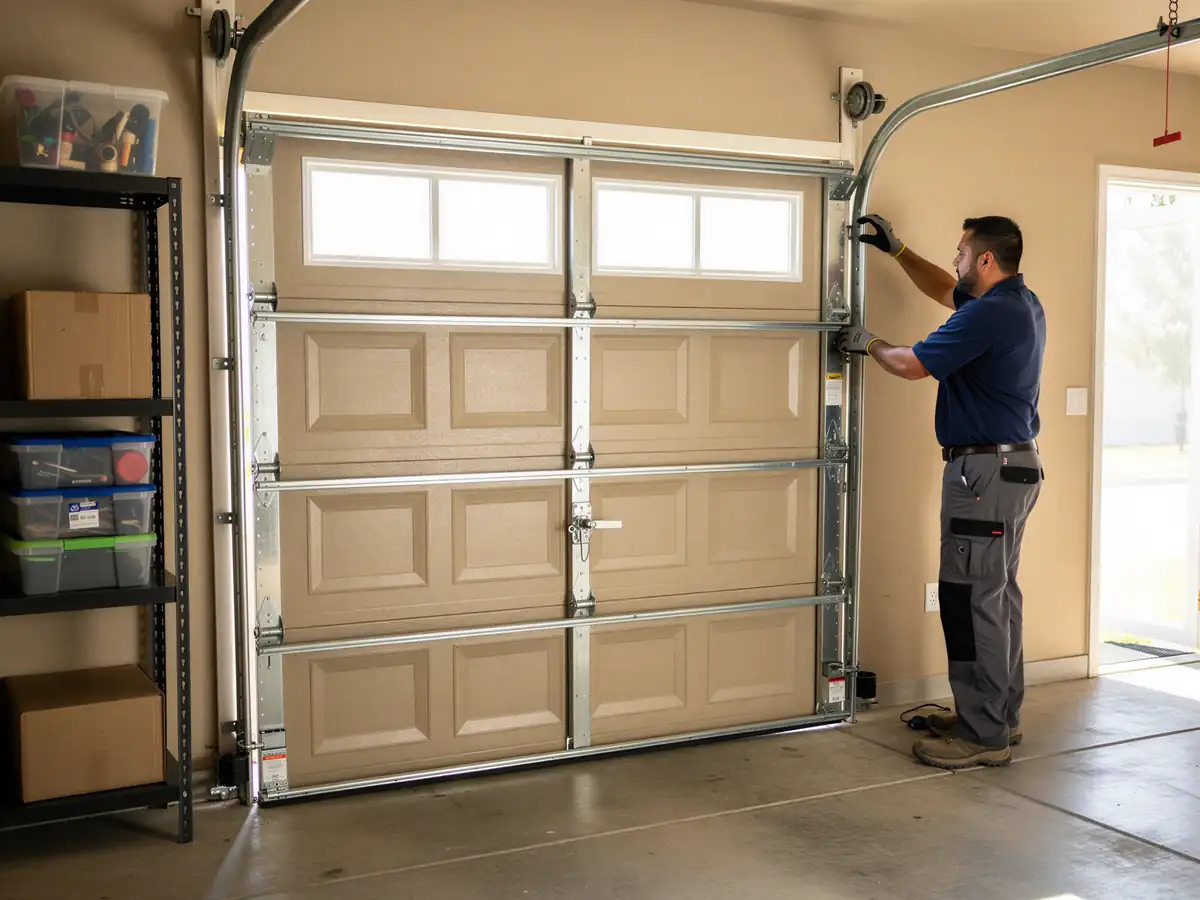
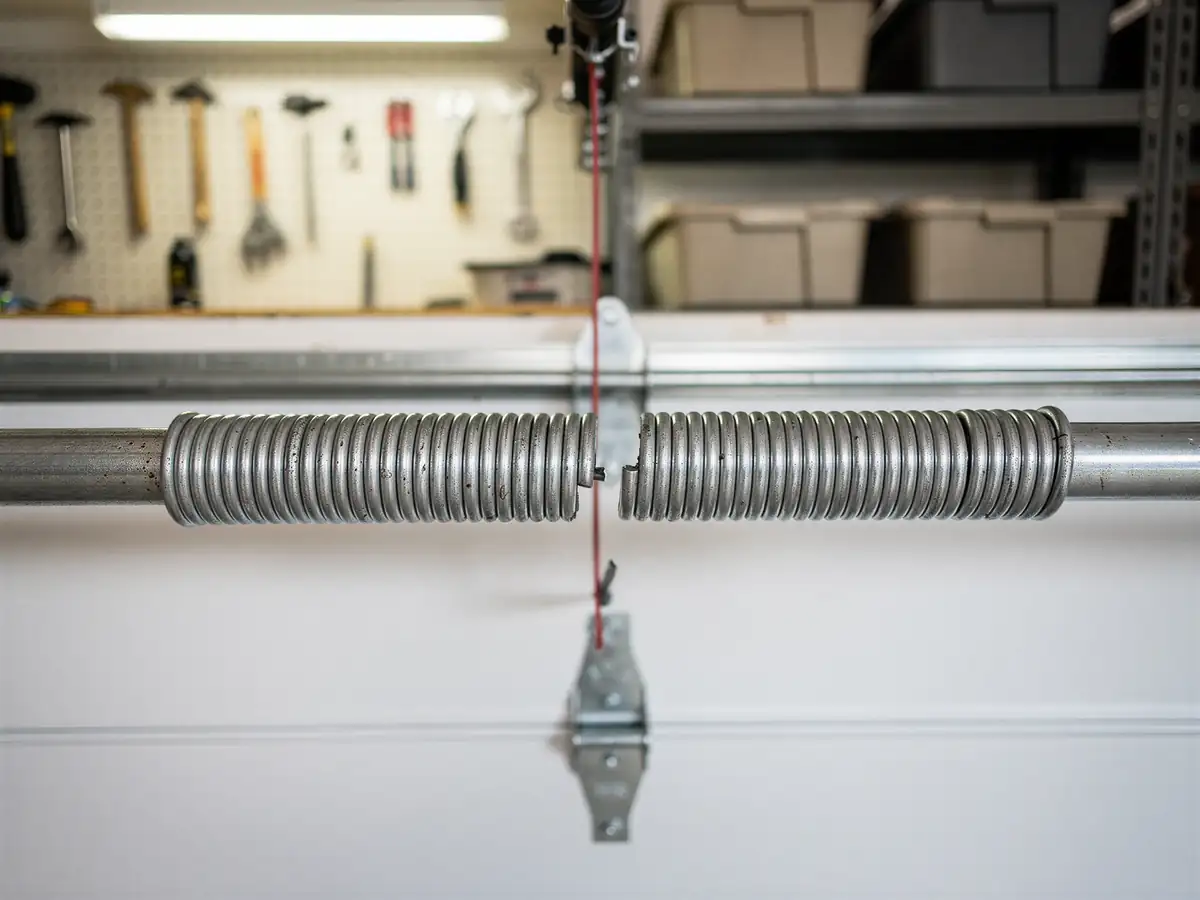
The actual failure point differs by garage type more than most owners expect. On attached garages, the complaint we hear most is heat or cold coming through around the door itself - weatherstripping that's hardened, a bottom seal that's cracked, or a panel that's bowed just enough to break the seal line. Because the garage backs onto living space, that draft gets noticed fast. On detached garages, the complaint is usually mechanical: a spring or cable that's worked harder because the structure has shifted slightly on its foundation over fifty-plus years, throwing the door out of square. Neither problem is rare in a town where most of the housing stock, per F1 and F2, dates to the 1960s and 70s - original hardware on these doors was sized for the openings and the expectations of that era, not for today's heavier insulated panels, and swapping one in without checking the jamb and track alignment is how a quick fix turns into a return call.
Checking It Yourself
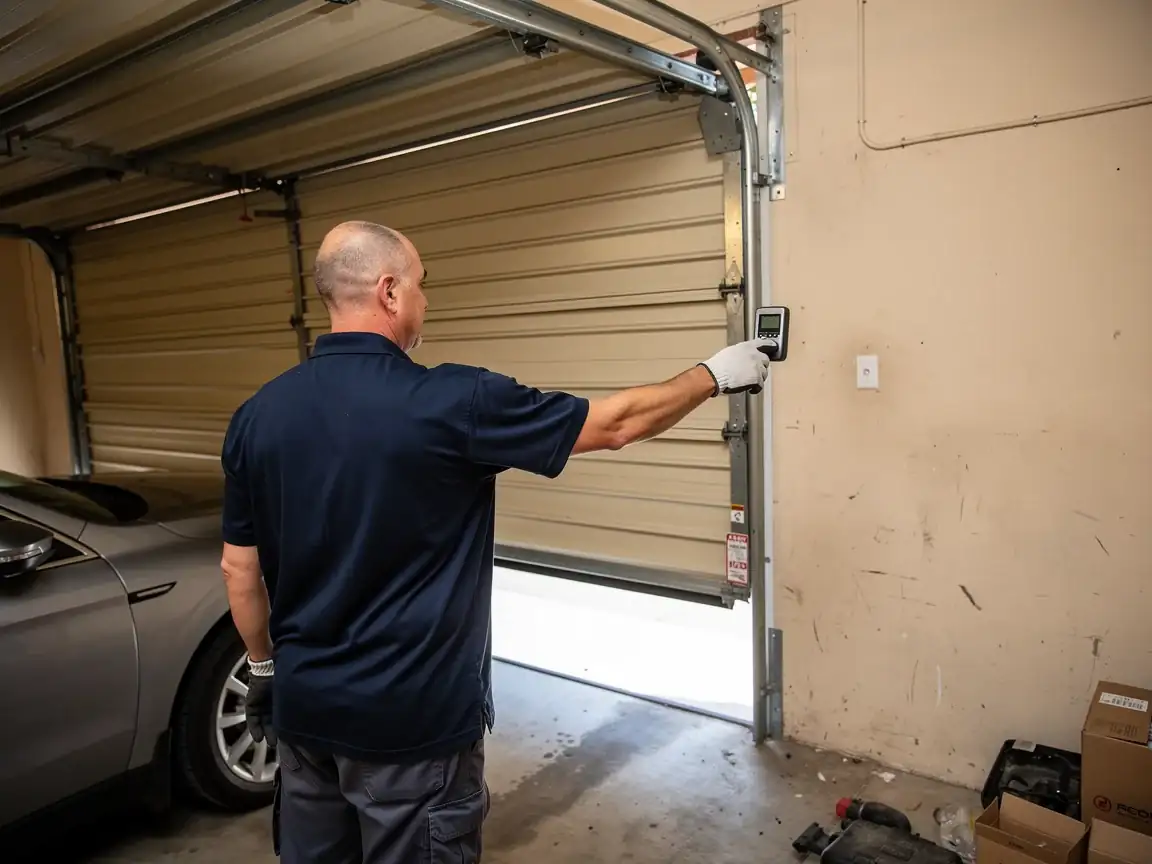
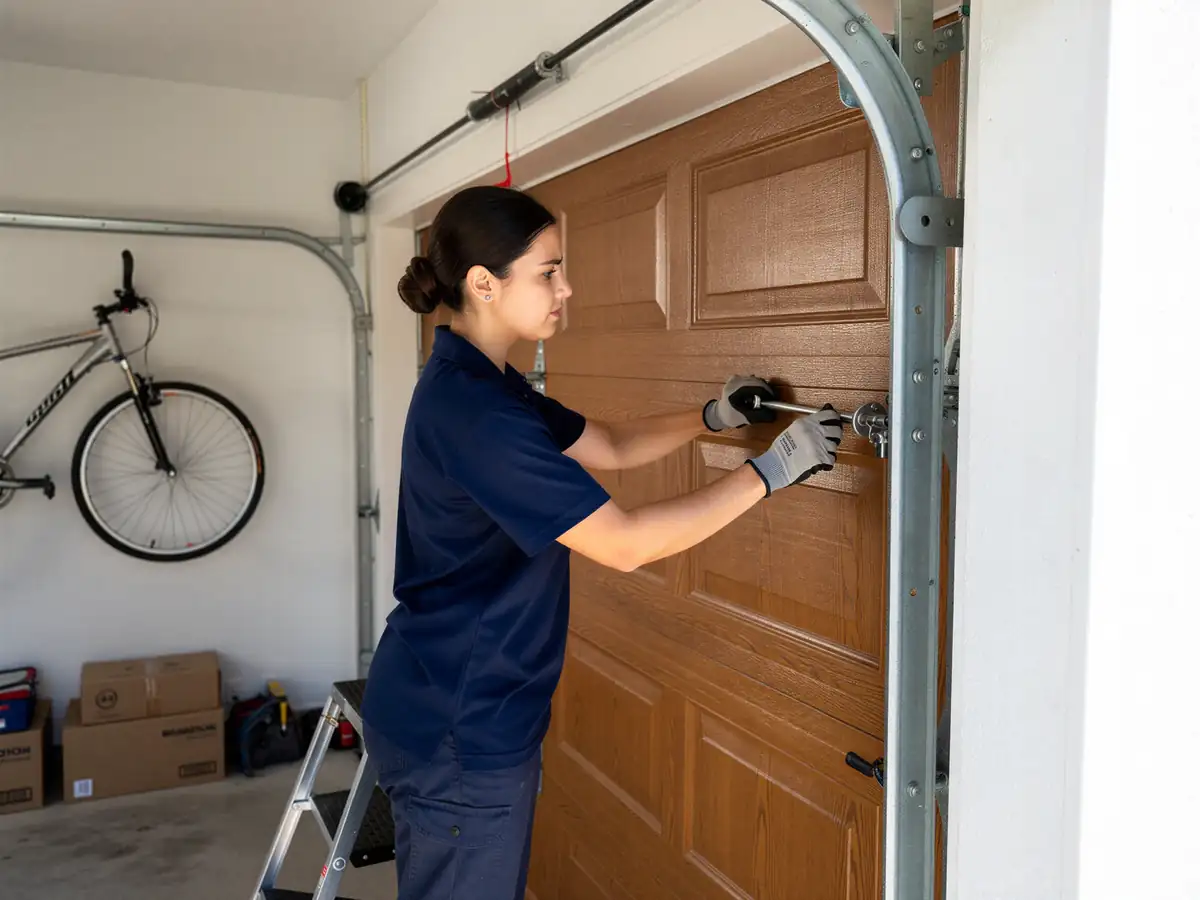
Start at the bottom seal, whether the garage is attached or detached - press a hand along the full width on a cold day and feel for cold air coming through rather than around the door. On an attached garage, check the wall side too; gaps there point to a sealing problem between the garage and the house, not just the door. On a detached garage, walk the slab perimeter and look for daylight under the bottom panel on one side more than the other - that's a settling issue, not a weatherstrip issue, and a new seal won't fix it. Open and close the door by hand with the opener disconnected; if one side drags or the door doesn't stay level partway up, the track or the spring tension is off, and that's not a job to force through with a stronger opener. We're not going to tell you to re-tension a torsion spring yourself - that's the one place where a quick home fix can put someone in the ER, and it's worth the call instead.
Does a detached garage need a different door than an attached one in Orland Park?
Not always a different door, but often different hardware. Detached garages from the area's 1960s-70s building era tend to have narrower openings and less squared foundations after decades of settling, so the track and spring setup sometimes needs adjusting even when the door panel itself is a standard size.
Why does my attached garage feel colder than it should in winter?
In Orland Park's cold-moderate climate, an attached garage that shares a wall with the house will push drafts into whatever room backs onto it if the door seal has hardened or cracked. Check the bottom weatherstrip and the wall-side seal first - that's the usual source.
Is it worth insulating a detached garage door here?
Depends on how you use the space. If it's storage for anything that can't freeze, or a shop you spend time in, insulation pays off in this climate band. If it's just for the car, a sound seal and a squared track matter more than the insulation value of the panel itself.
Ready to get your garage door sorted?
Tell us what it’s doing and where you are in Orland Park - we’ll take it from there.