What Local Conditions Do
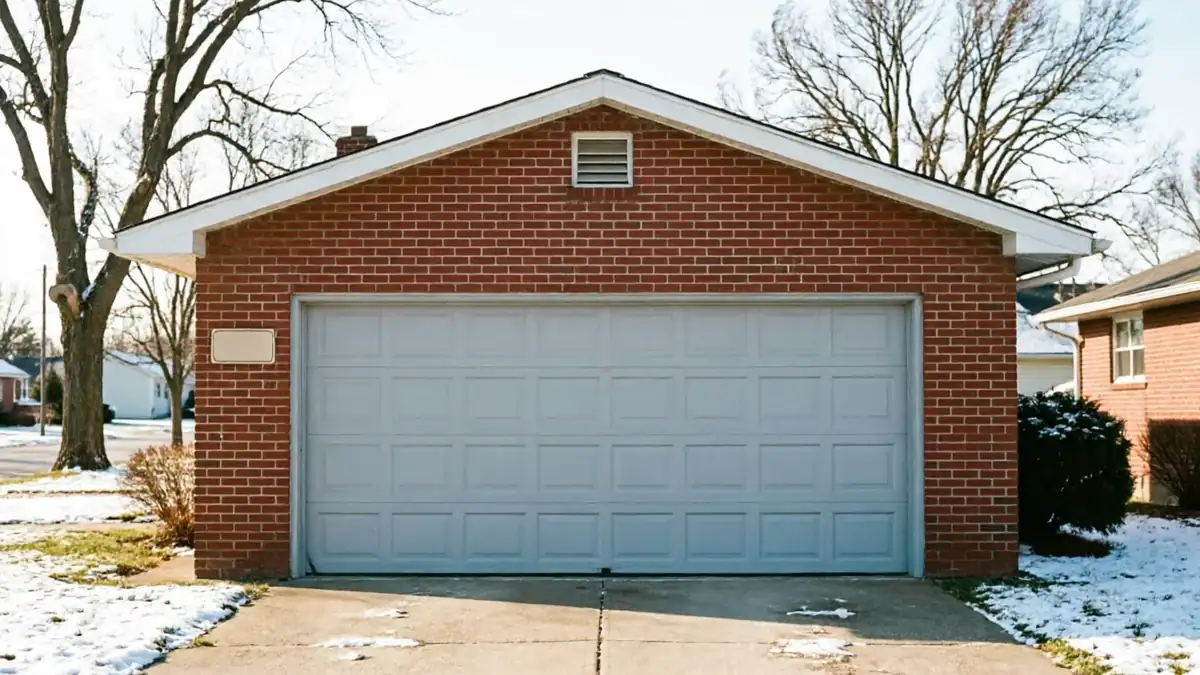
Orland Park sits in a cold-moderate climate band, so a wide door sees both the push of wind and the contraction of steel in the same January week. Cold steel gets stiffer and less forgiving - a panel that would flex and recover in September can crack or dent under the same gust load in February. On a single-car door this barely matters because the surface area is small. On a 16-foot double door, the surface catching that wind is more than twice as large, and the hardware holding it flat has to do more work to keep the whole thing from bowing toward the inside of the garage. Add a freeze-thaw cycle to that - tracks that were aligned in warm weather shifting slightly as the slab and jambs move through winter - and a wide door that was fine in summer can start rattling or binding in cold months without anyone touching it. None of this is dramatic on its own. It's cumulative stress on a bigger panel, and it shows up first as noise, then as a gap at the weatherstrip, long before anything actually breaks.
The Problem
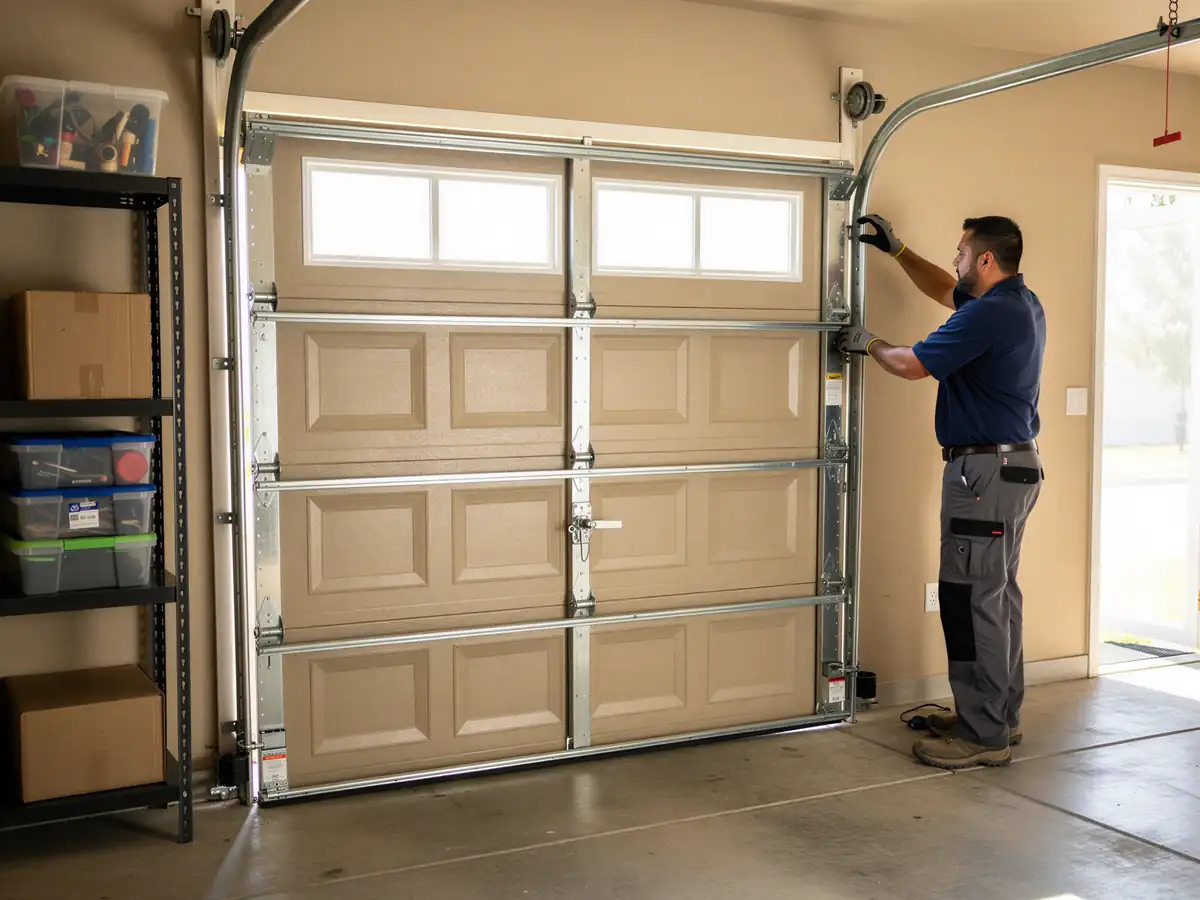
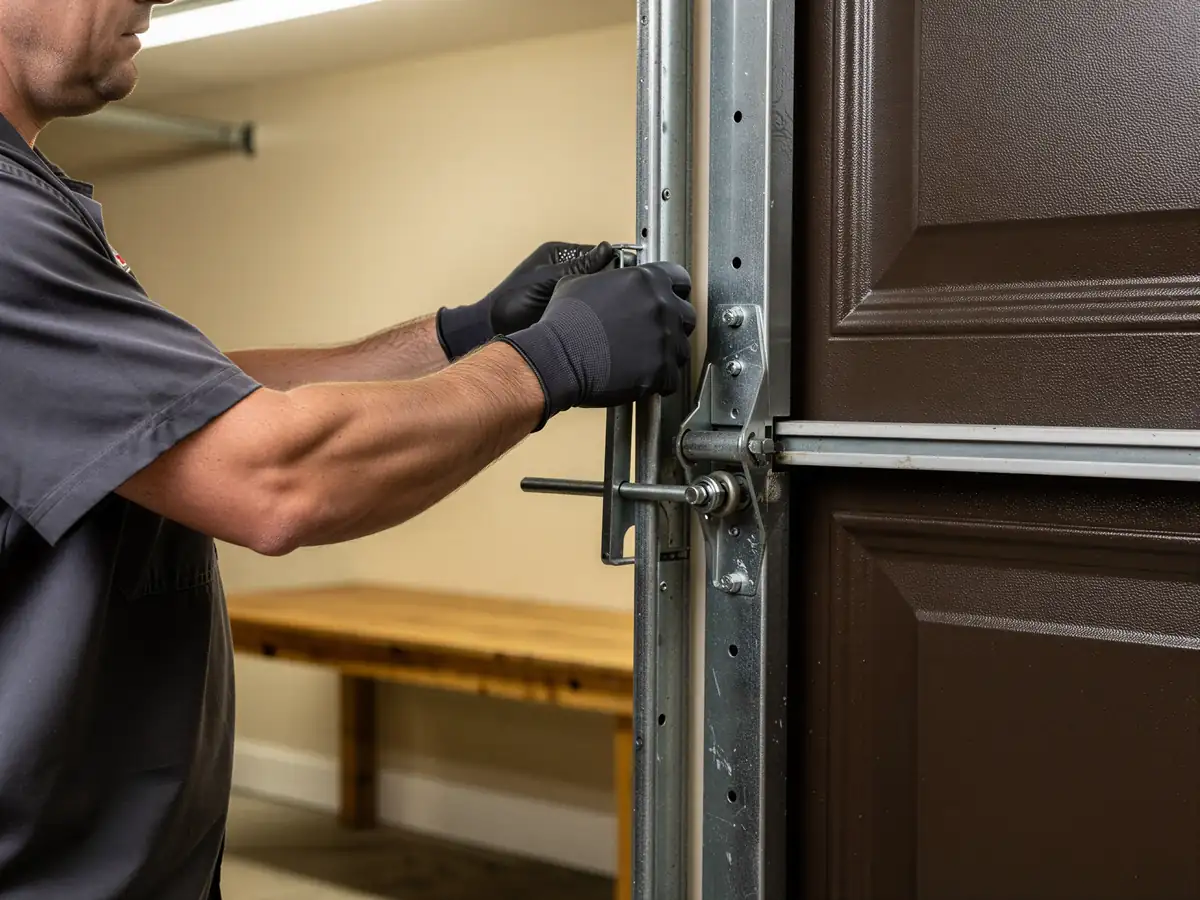
A double-wide door on a home from that same 1960s-70s wave of construction around Orland Park often still runs on the lighter track brackets common to the era, not the reinforced struts installed on newer builds. Wind doesn't hit a garage door evenly - it pushes harder in the middle of the panel than at the edges, and on a wide door that center flex has a lot more panel to work with. Over enough gusty days, that flex can pull the track brackets away from the jamb a few degrees at a time, which you won't notice until the door starts binding on one side or the bottom corner stops sealing. With roughly 252,172 owner-occupied houses across this service area, a good share of them carrying that same mid-century double-door opening, wind racking on a wide door is one of the more common calls we see - not springs, not openers, just a door that's been flexing more than its hardware was built to handle. Left alone, it usually ends with a bent track and a panel that won't sit flush, which is a bigger repair than catching it early.