What a Technician Checks First on an Orland Park Garage Door
Before any repair, Orland Park Garage Door Pros checks the parts that fail on 1960s-70s era homes first, tied to this area's housing stock and cold winters.
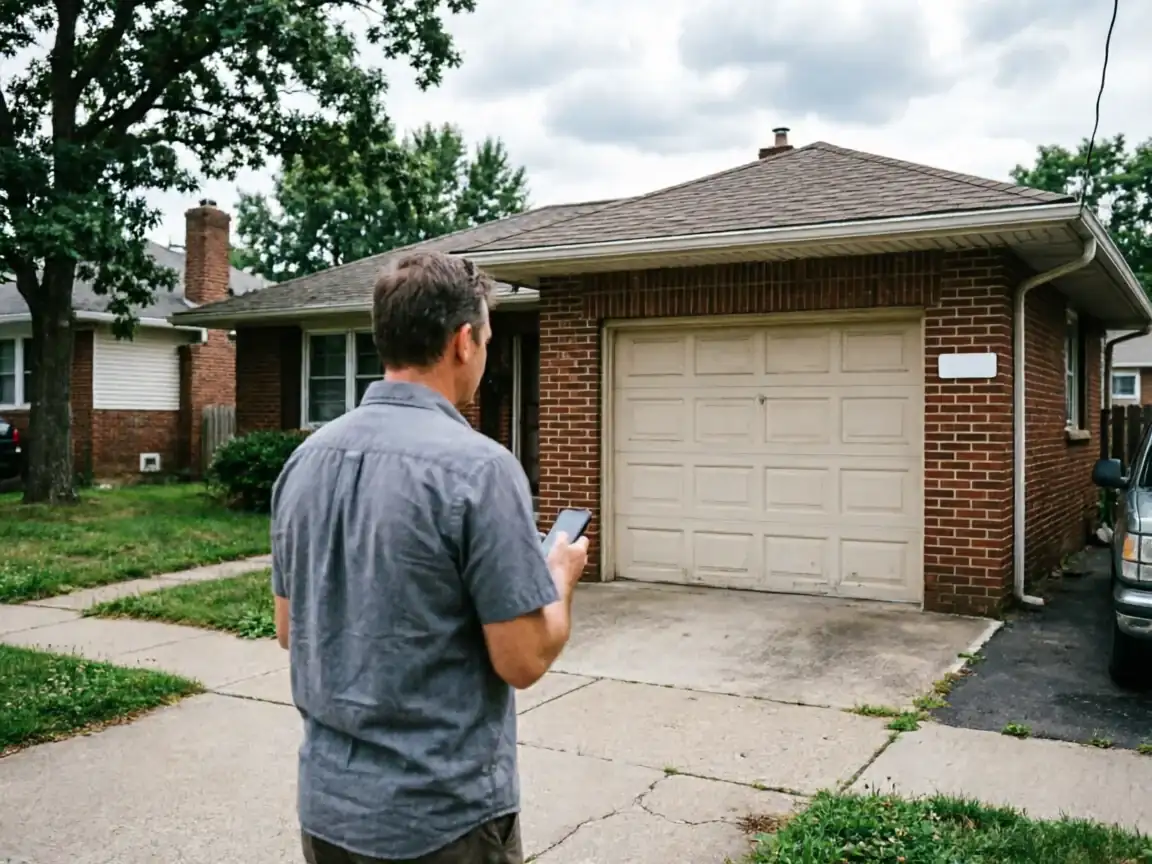
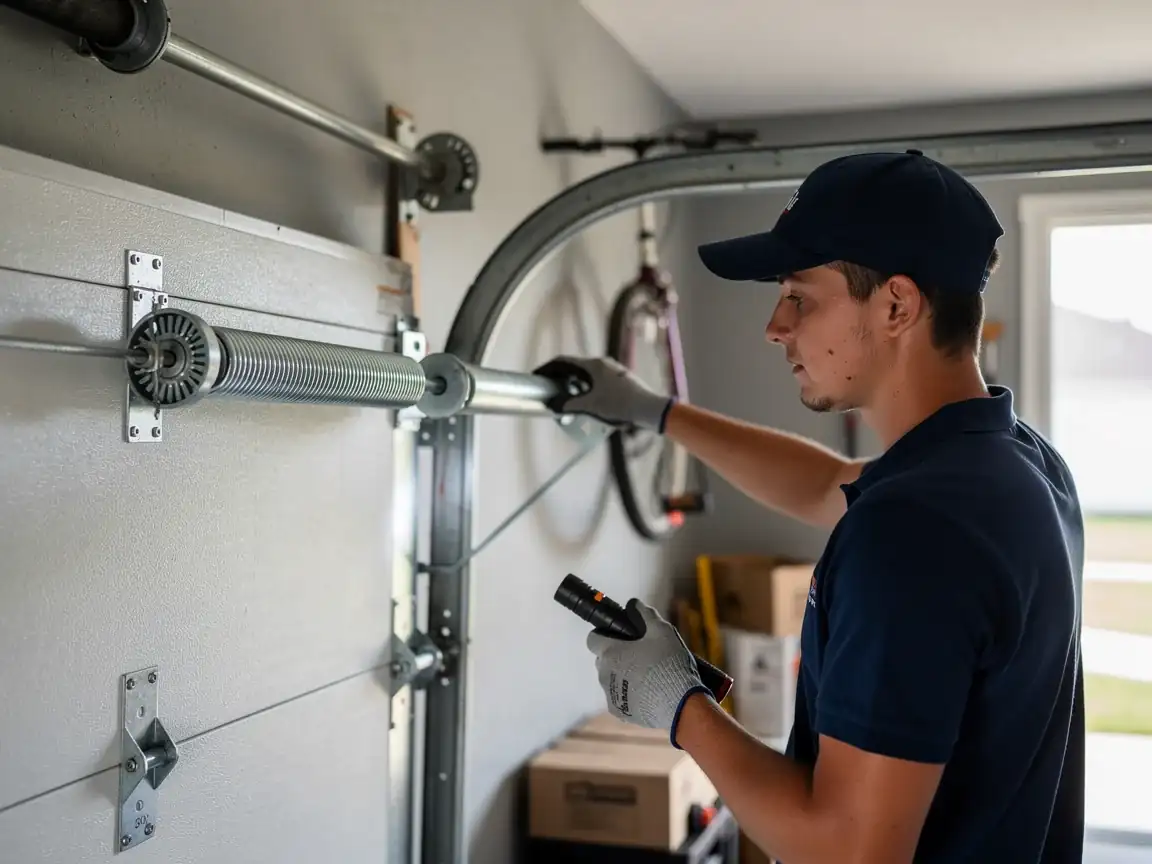
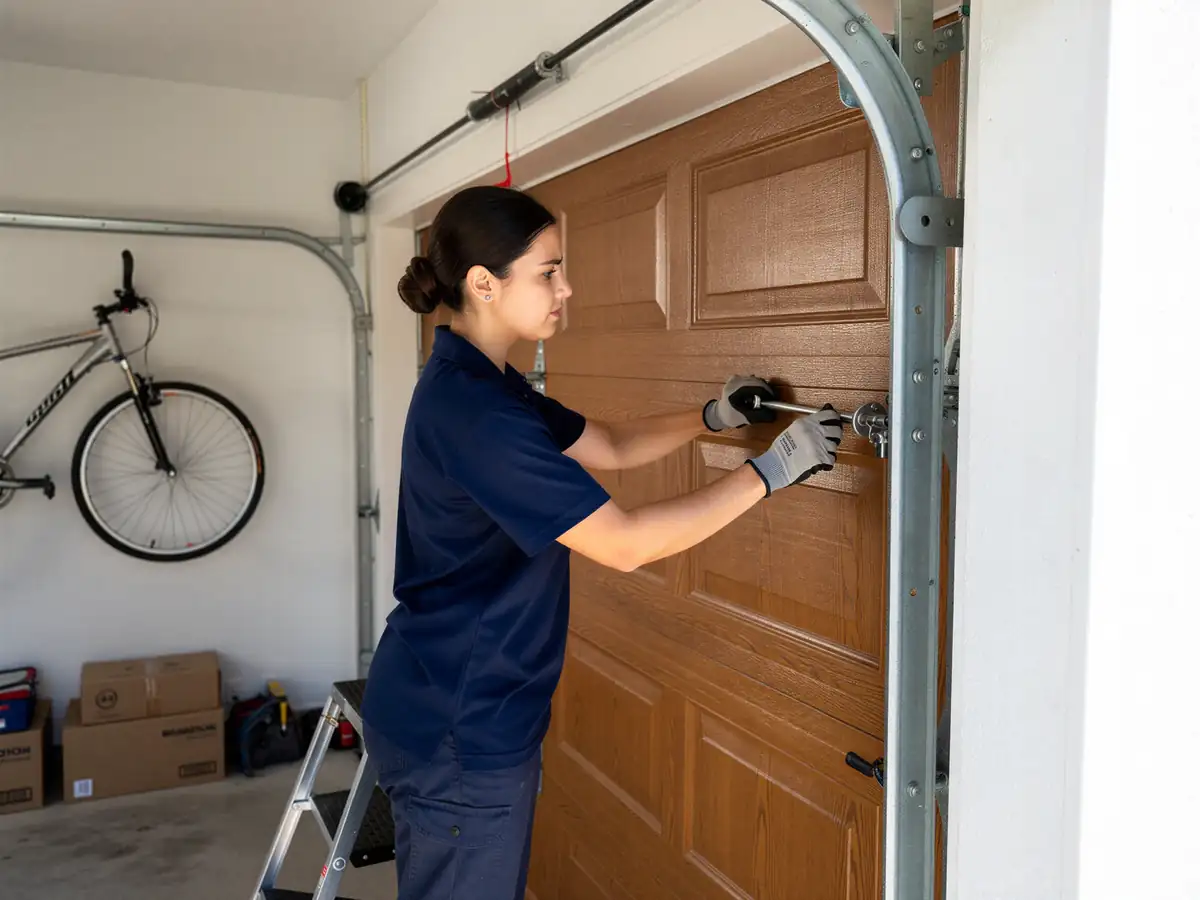
We don't quote a number before we see the door, and we're not going to pretend one price fits every house here. What drives the cost is almost always the spring and the hardware behind it, and that's tied to when the house was built. A lot of the housing stock in this part of the south suburbs went up between 1938 and 2004, with the median landing around 1970. A door on a house from that era usually still has its original torsion tube and center bearing, even if the panels were swapped out later. Replacing a spring on that setup costs more in labor than on a door built in the last fifteen years, because the shaft often has to come down to get the old bearing off. If the opener is original too, we're usually looking at a chain-drive unit with a worn sprocket, not a belt drive. One honest limitation: we can't give you a firm number over the phone for a job like that. We have to see the shaft and the drums before we know if it's a spring swap or a full torsion tube replacement.
What Local Conditions Do
This area sits in a cold moderate climate band, which means the freeze-thaw cycle runs for months, not weeks. That matters for a garage door because every time the slab cracks or heaves even slightly, the bottom panel and the track alignment take the hit. On houses built in the 1960s and 70s - which describes most of the roughly 94 named areas across this service territory - the track brackets were lag-bolted into jamb framing that's now 50-plus years old and has shifted with the seasons. We see tracks that are technically still attached but no longer plumb. Cold also stiffens the lubricant in older ball-bearing rollers and tightens steel cables just enough to make a marginal cable start skipping its drum. None of this is dramatic on its own. It's cumulative, and it's why a door that worked fine in September starts binding or reversing in January.
The Problem
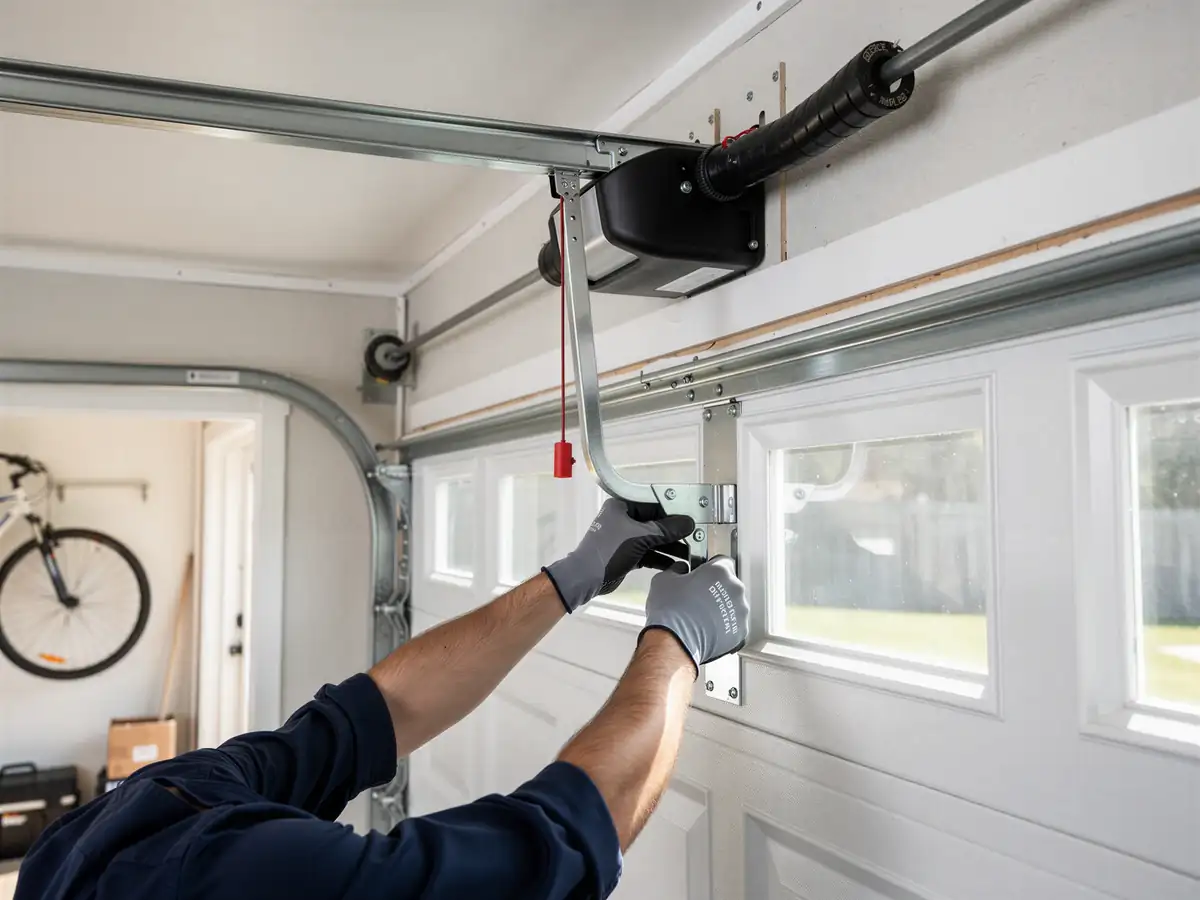
On a house from the 1938-2004 build window, the two things that fail together are the spring and the rollers, because both were installed at the same time and both have the same number of cycles on them. When the spring finally breaks, it's rarely a surprise to us - it's usually been making a different noise for weeks, and the owner just didn't know what they were hearing. The second most common issue on this vintage of door is a bent track from a car bumper tap, which doesn't look serious but throws the roller path off by a few degrees. Over a cold winter, that small misalignment turns into a roller popping out of the track entirely. We don't see much drywall-mounted opener damage here because most garages of this era were framed with exposed joists, so the opener rail is usually bolted straight to a header - which is good, it just means when something fails up there, it's the rail bracket itself, not the ceiling.
Checking It Yourself
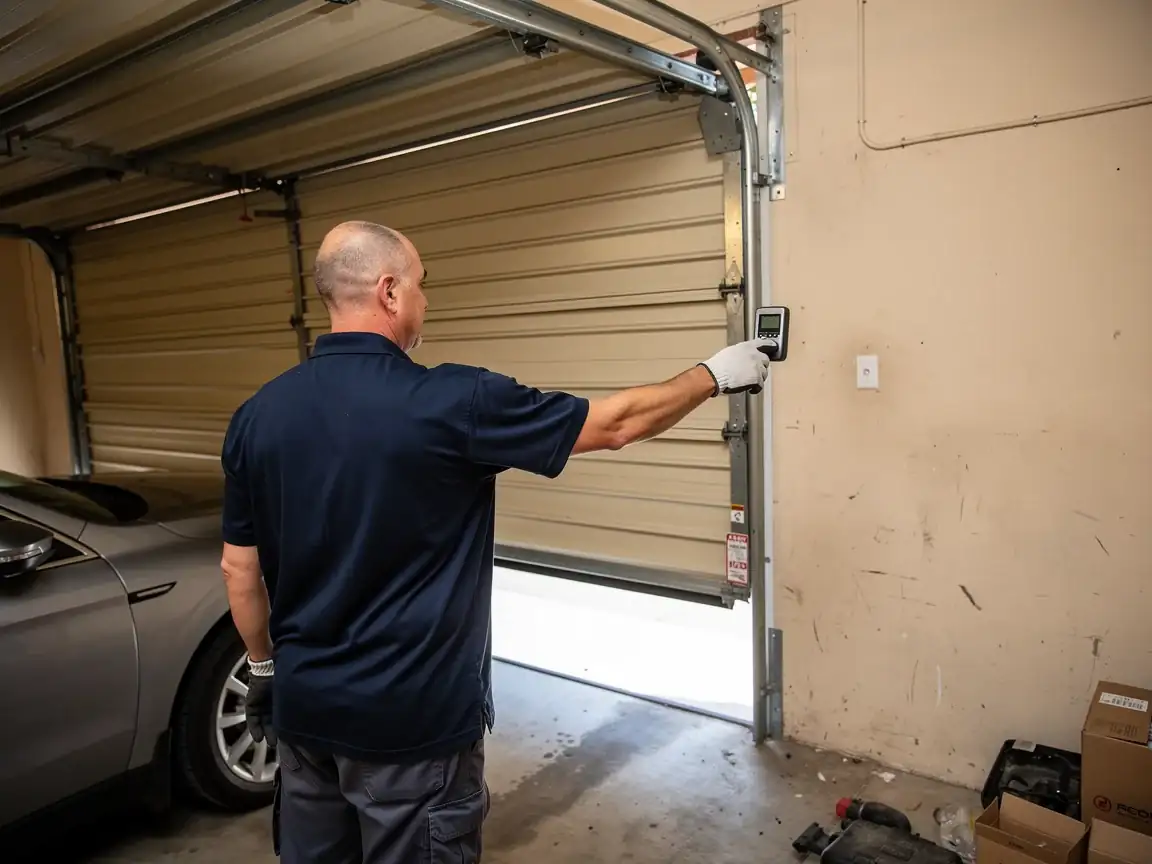
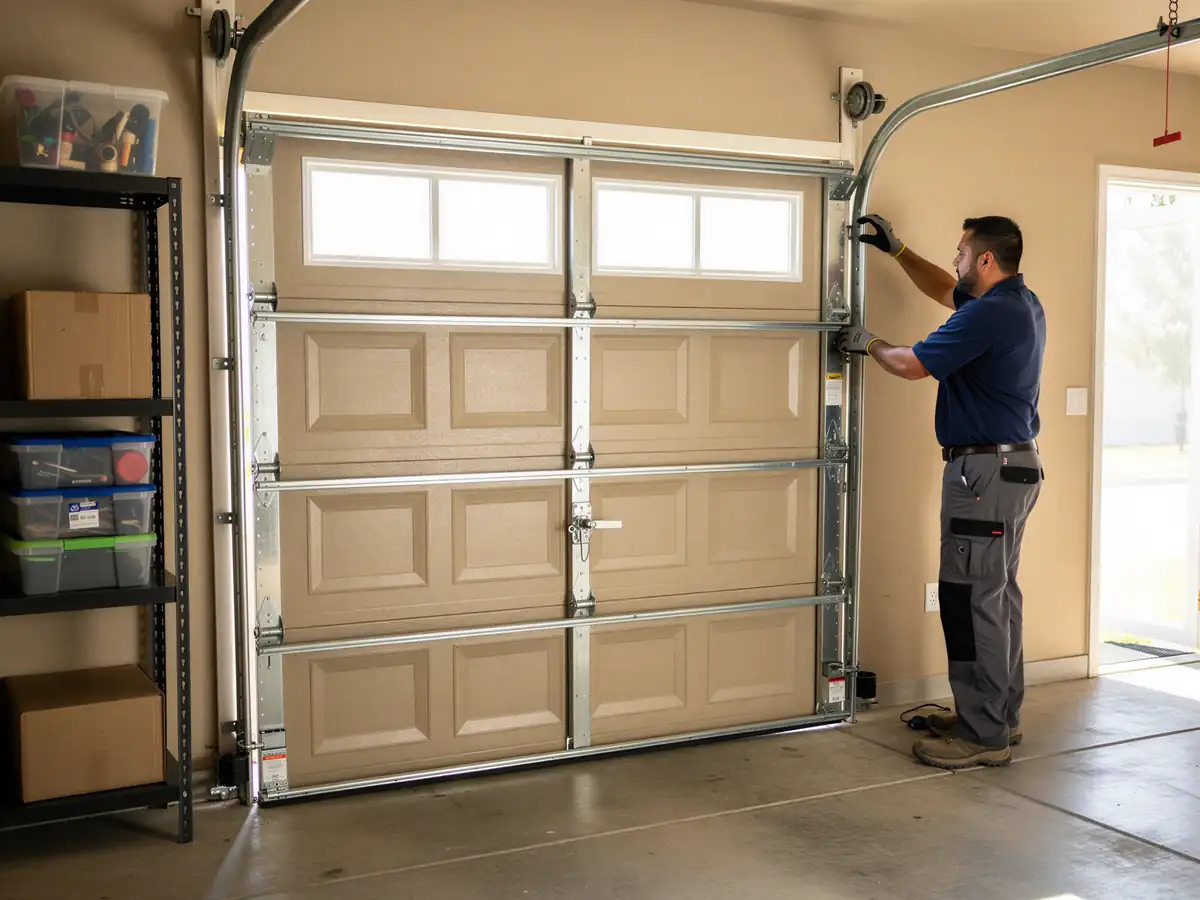
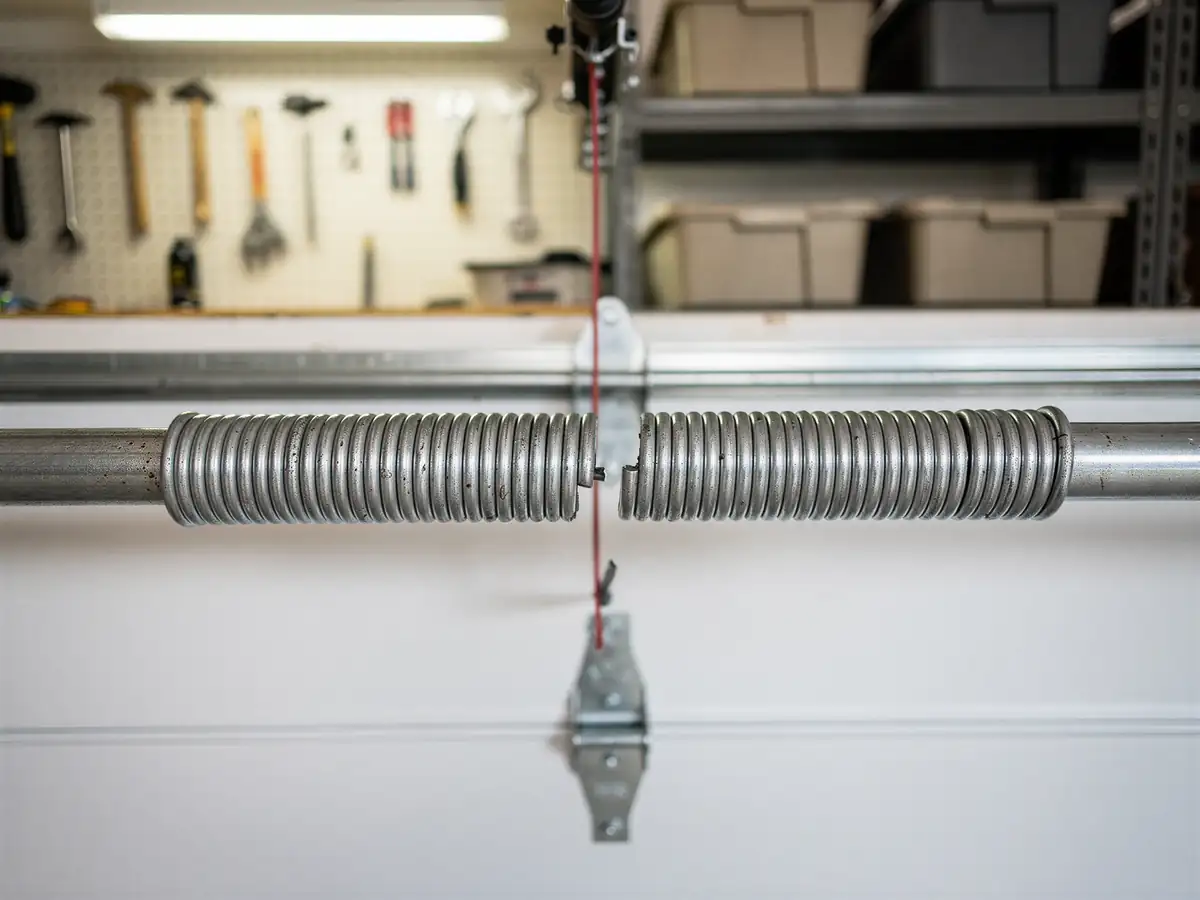
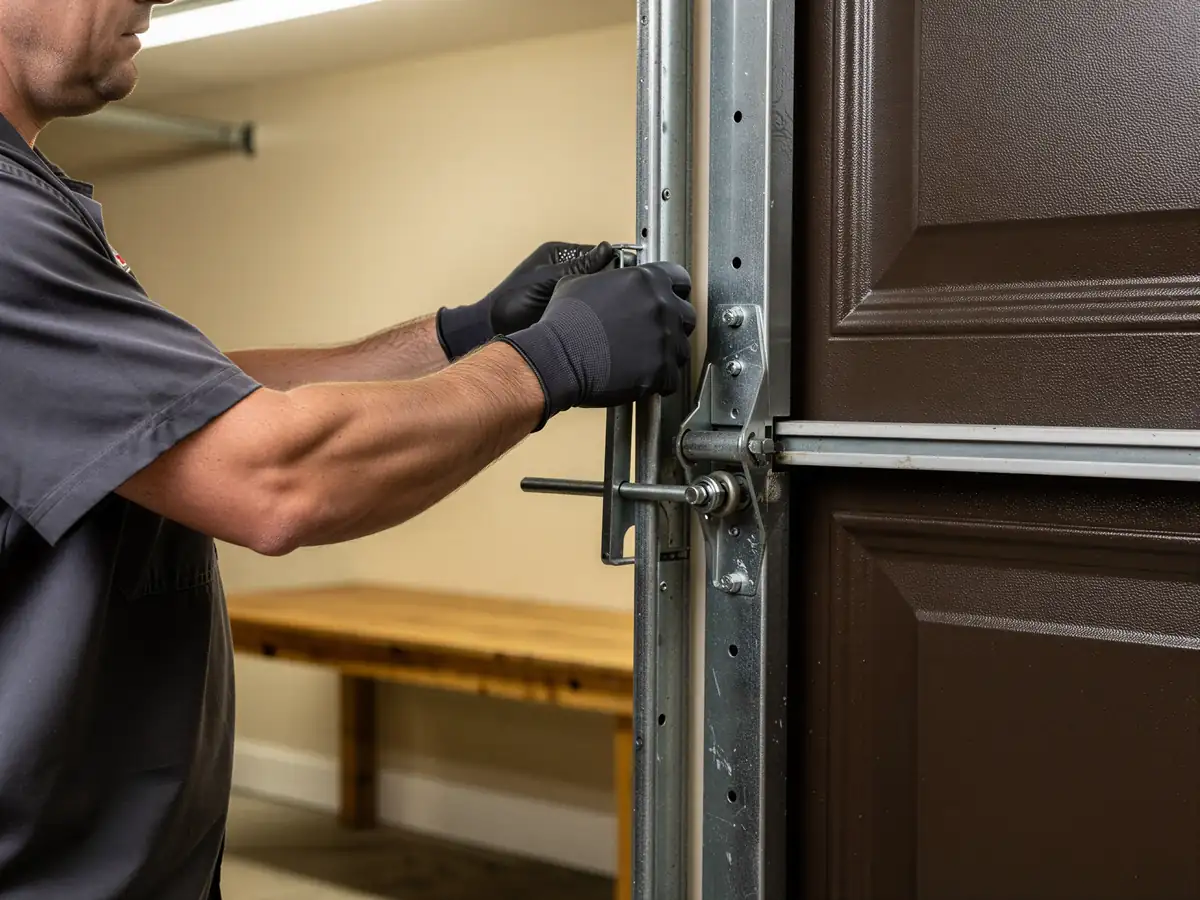
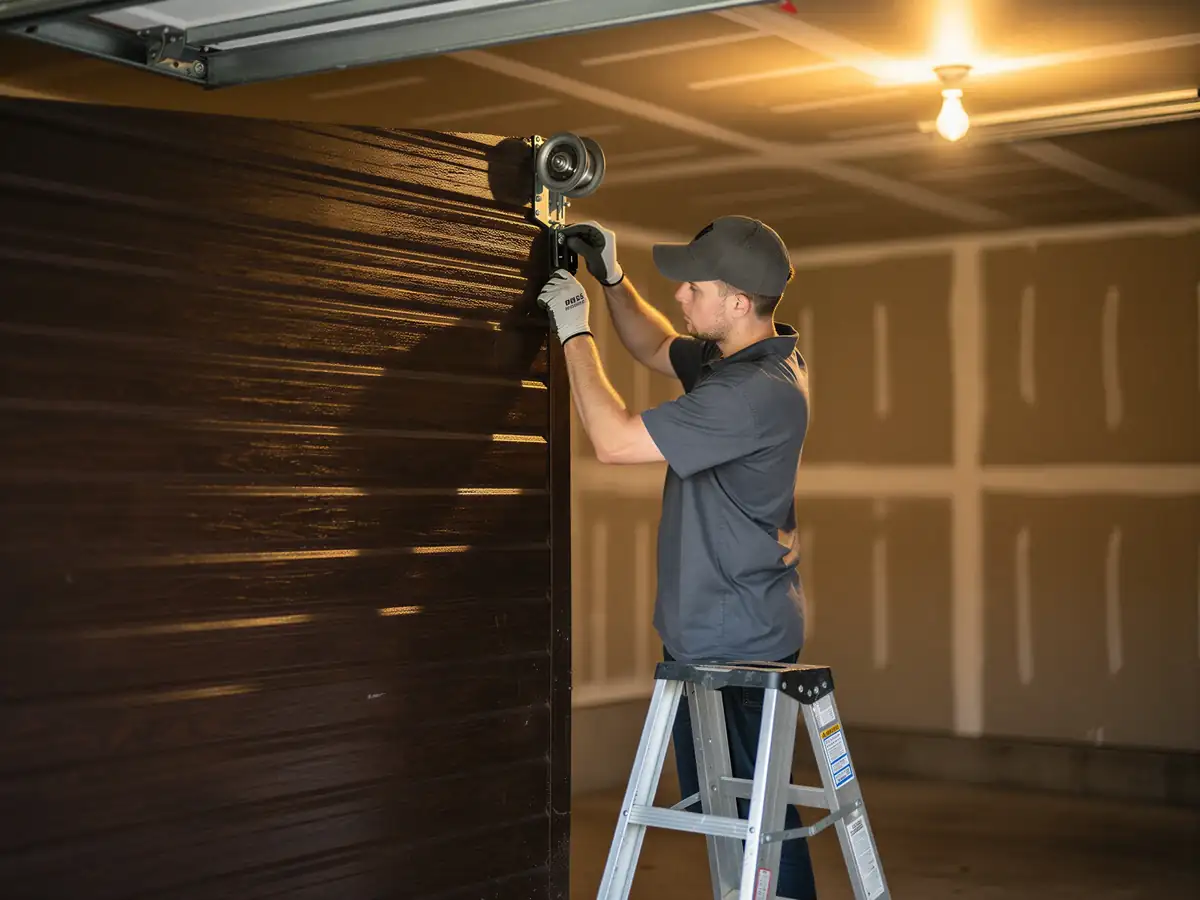
Before you call anyone, here's what to look at. First, stand the door up halfway and let go - if it's balanced, it should hold. If it drops or shoots up, that's spring tension, not an opener problem, and it's not a DIY fix. Second, run a hand along the track where it bolts to the framing; on houses from the 1960s-70s stock common here, that bracket is the first thing to loosen with age. Third, look at the cable drums at the top corners for fraying - cold weather makes brittle strands snap first. Fourth, listen for grinding from the rollers themselves; original steel rollers from an older build get louder over time and that sound means they're close to seizing. If you find a frayed cable or a gap where the spring has visibly separated, stop opening the door by hand or by opener until it's looked at - that's a stored-energy hazard, not a maintenance item.
Cold tightens springs and cables and stiffens old lubricant, and this area's cold moderate climate band means that stress runs for months. On a door with original 1960s-70s hardware, that's often enough to turn a marginal part into a failed one, which is why winter calls are common here.
Is it worth fixing an original door from a 1970s-era house?
Often yes for the door itself, since steel panels from that era usually still function fine. The springs, cables, and rollers are the parts that wear out and are worth replacing on their own schedule, separate from the panel.
Do you serve areas outside Orland Park?
We work across the surrounding communities including Orland Hills, Palos Park, Homer Glen, Palos Heights, and the other nearby towns in this service area.
Ready to get your garage door sorted?
Tell us what it’s doing and where you are in Orland Park - we’ll take it from there.