Serving Orland Park, IL & nearby
(708) 251-9730
Orland Park, IL

Garage Door Maintenance for Romeoville's Newer Housing Stock

Romeoville homes mostly date to the late 1990s, not the 1970s stock common across the service area. That gap changes which parts wear out first on your door.

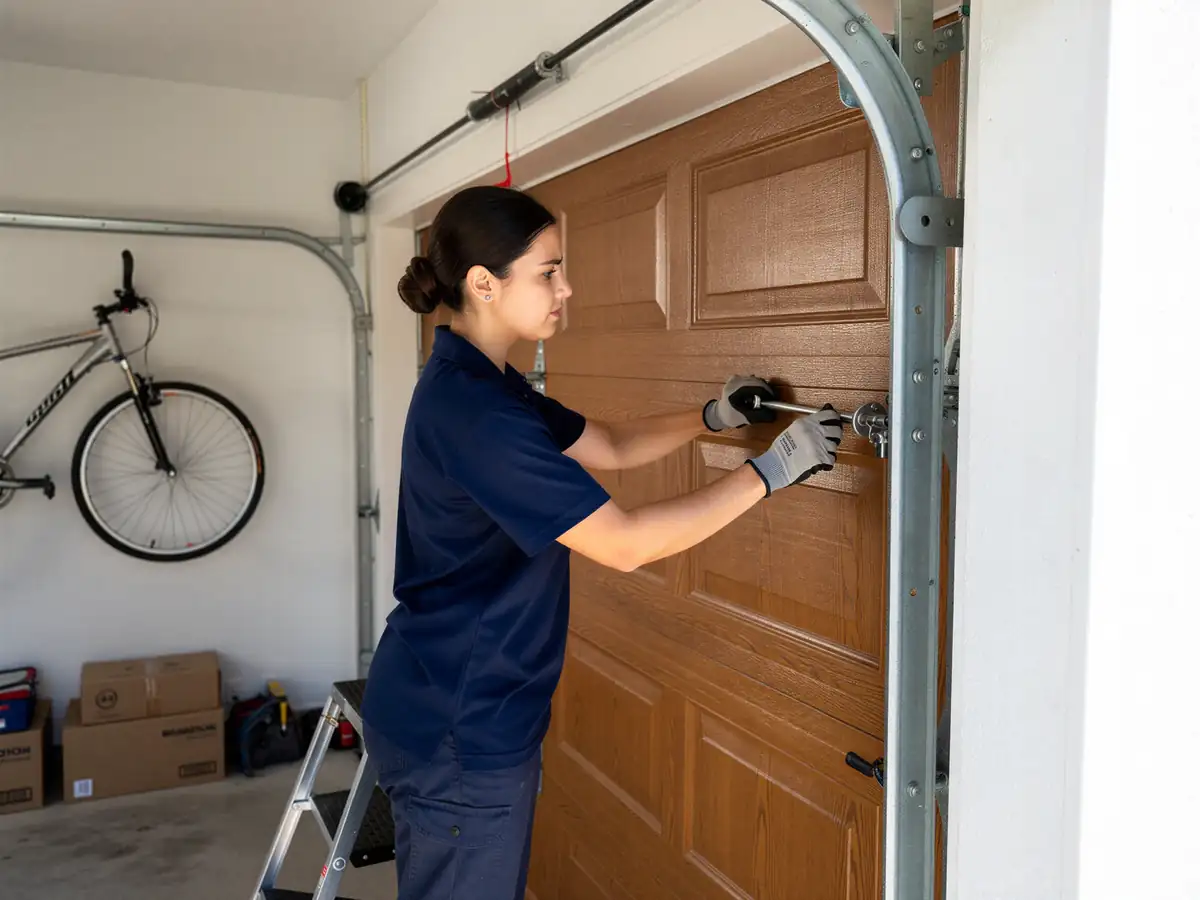
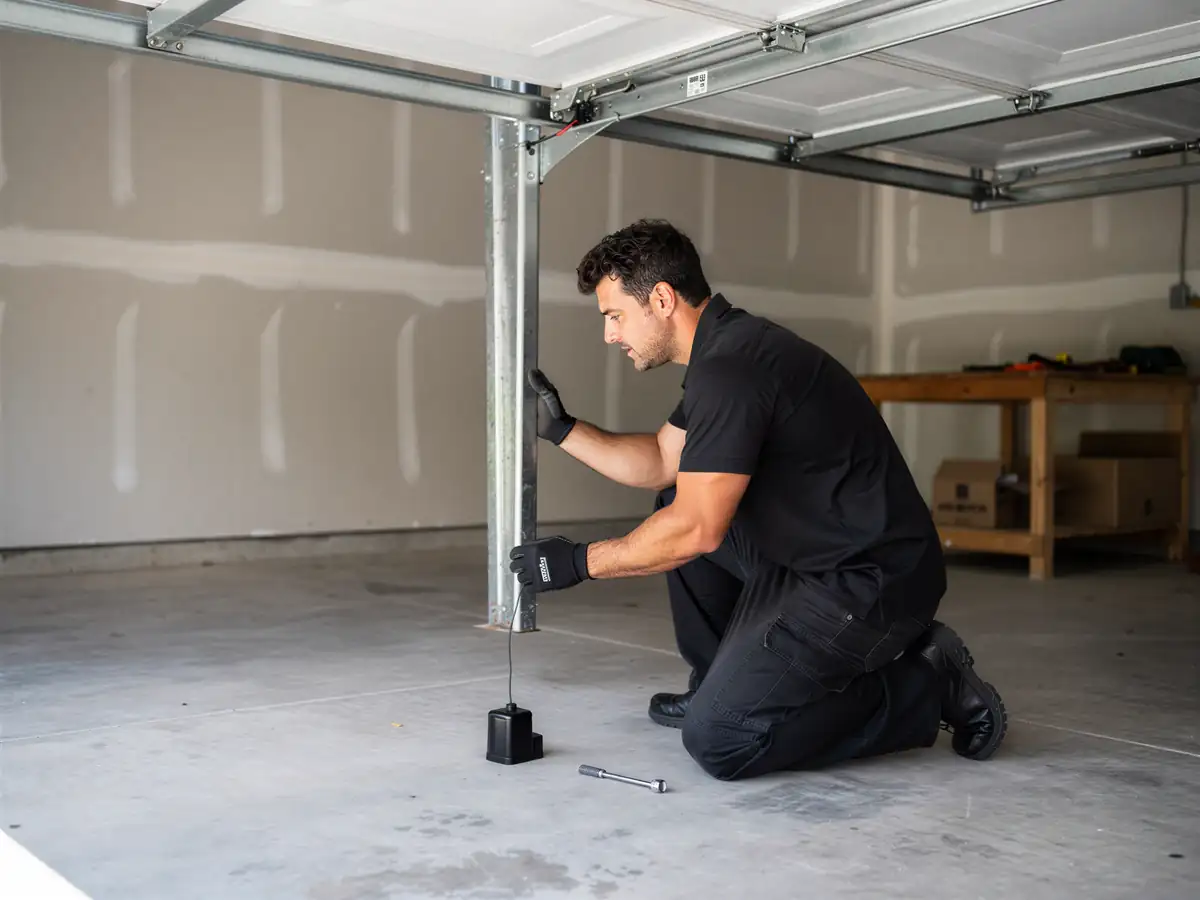
A technician kneels, holding a garage door track with a plumb bob on the floor.
Orland Park, IL
8 services
7 service areas
Diagnosis first, then the fix

Why It Happens Here

Most of the houses we service out of Orland Park were built in the 1960s and 70s, with a median build year around 1970 across the area. Romeoville runs later - the typical house here went up closer to 1998. That's a 28-year gap, and it matters for maintenance because it means different original hardware. A 1998 build almost always shipped with an extension-spring or early torsion-spring opener setup and steel rollers that were considered standard at the time, not the heavier-gauge track and ball-bearing rollers that became common after 2000. At roughly 13 miles from our shop, we're not doing same-day drop-ins here the way we might closer to home base, so when we do come out, we're looking for the wear pattern typical of a door approaching its late 20s: dried-out lubrication, stretched cables, and openers whose logic boards are starting to show their age rather than the spring failures and rotted wood jambs we see on older stock elsewhere in the service area.

The Symptom

On a door this age, the first sign is usually noise - a grinding or rattling that wasn't there a year ago, especially on the first open of the morning when the cold has stiffened the grease. Romeoville's climate sits in the same cold-moderate band as the rest of the area, so winter is when a 1998-era opener's aging capacitor or a dry torsion tube gets exposed. You might also notice the door hesitating partway up, or the garage light blinking before the door engages - both common once an opener logic board hits two and a half decades of service. These aren't emergencies yet. They're the sound a door makes before a cable snaps or a spring goes, and on a house built in the late 90s, that's often still a few years out if it's caught now.

What the Fix Involves

For a door of this vintage, maintenance starts with pulling the panels to check roller wear and re-tensioning or replacing the original springs if they've lost lift - torsion springs from the late 90s are typically rated for a shorter cycle count than what's sold today. We check the opener's safety reversal and force settings, since a unit installed in 1998 may never have had those adjusted since the day it went in. Track alignment gets checked too; houses in Romeoville's build range often have garages framed slightly differently than the older stock closer to Orland Park, which changes how the track sits against the header. We lubricate hinges, rollers, and the torsion tube, and tighten hardware that's worked loose over 25-plus years of thermal cycling in a cold-moderate climate. If the opener's circuit board is failing outright, that's a replacement conversation, not a repair - boards from this era aren't something we stock, and sourcing an exact match isn't always worth the wait when a current opener costs less and runs quieter.
Stocked Parts

We carry the rollers, cables, and standard torsion springs that fit the sizing common to houses built from the late 1980s through 2000s, which covers most of what's on Romeoville garages. What we don't keep on the truck are legacy opener control boards or obsolete extension-spring kits specific to a handful of builders from that era - those get special-ordered if a repair makes more sense than a swap. With roughly 13,064 households in this part of the service area and a median income near $100,022, we see a fair number of owners who'd rather replace an aging opener outright than chase parts for one approaching 30 years old, and for a unit from 1998, that's often the more sensible math.

How it works

From “it’s stuck” to “it’s fixed”

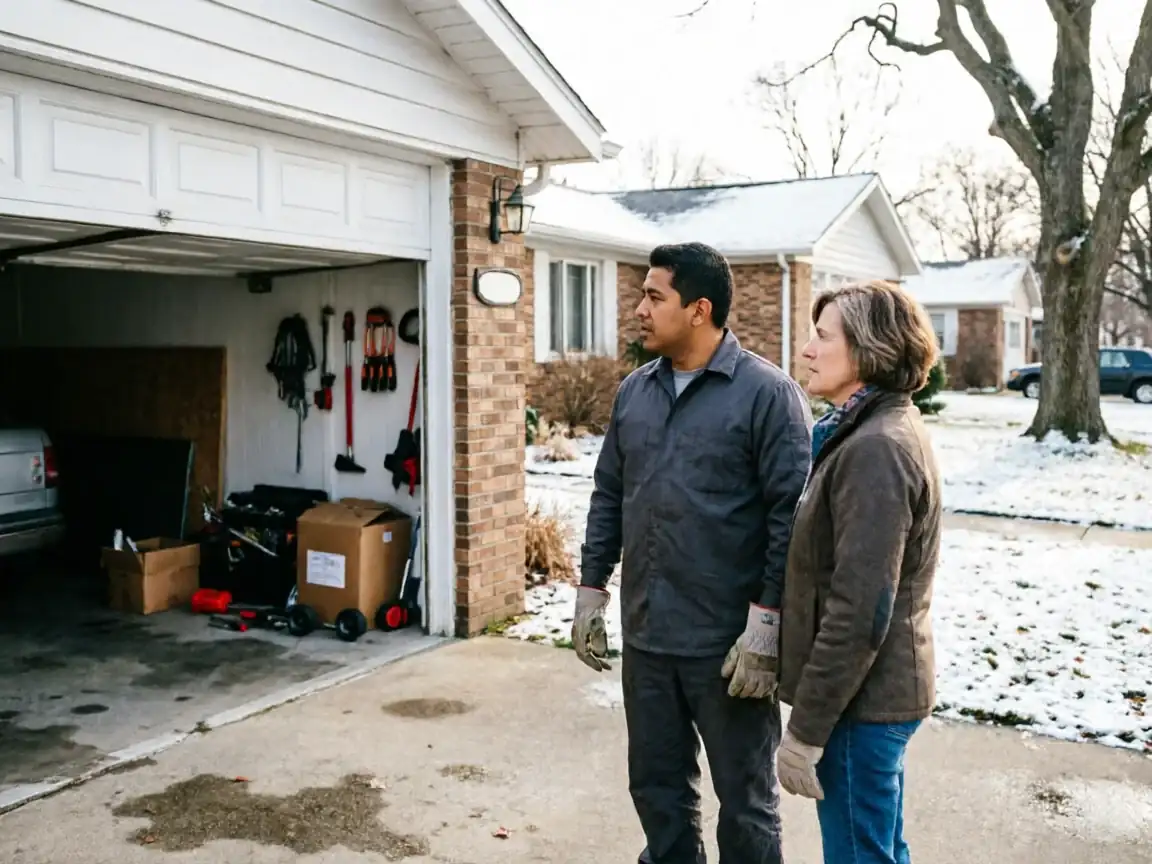
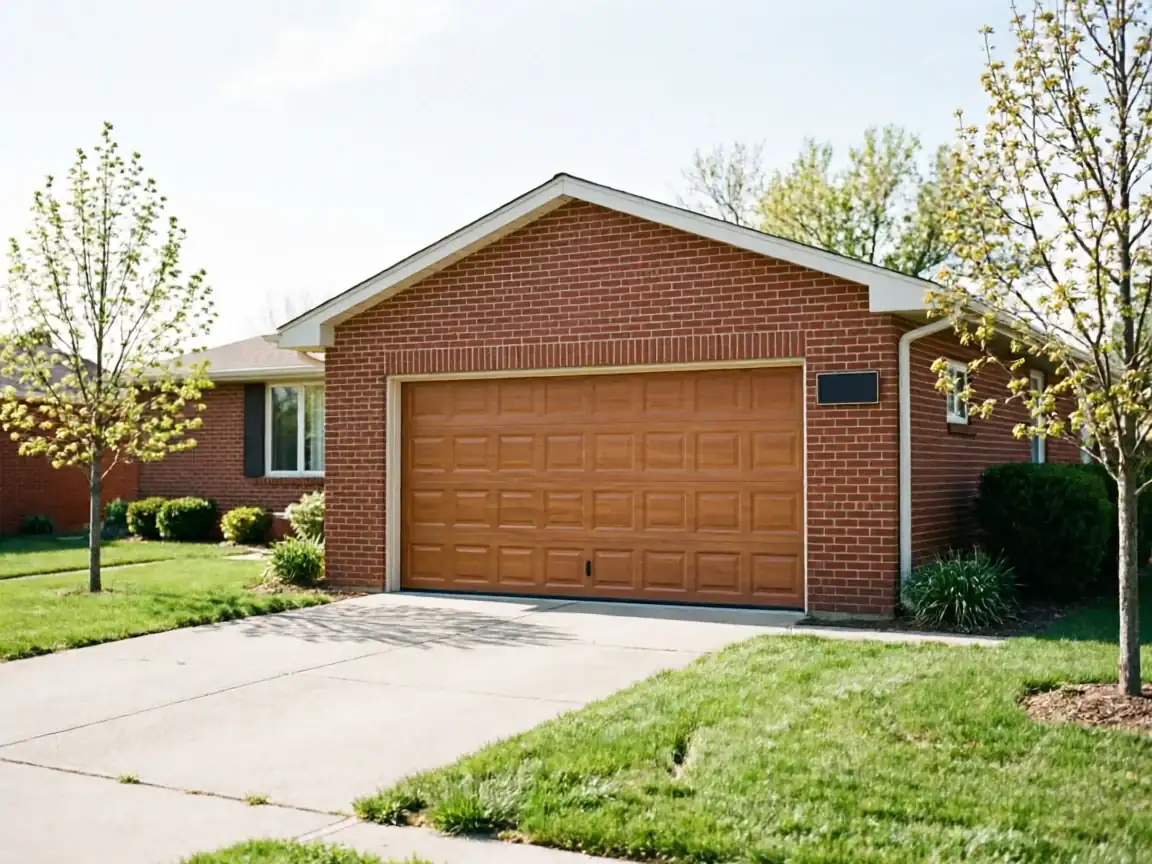
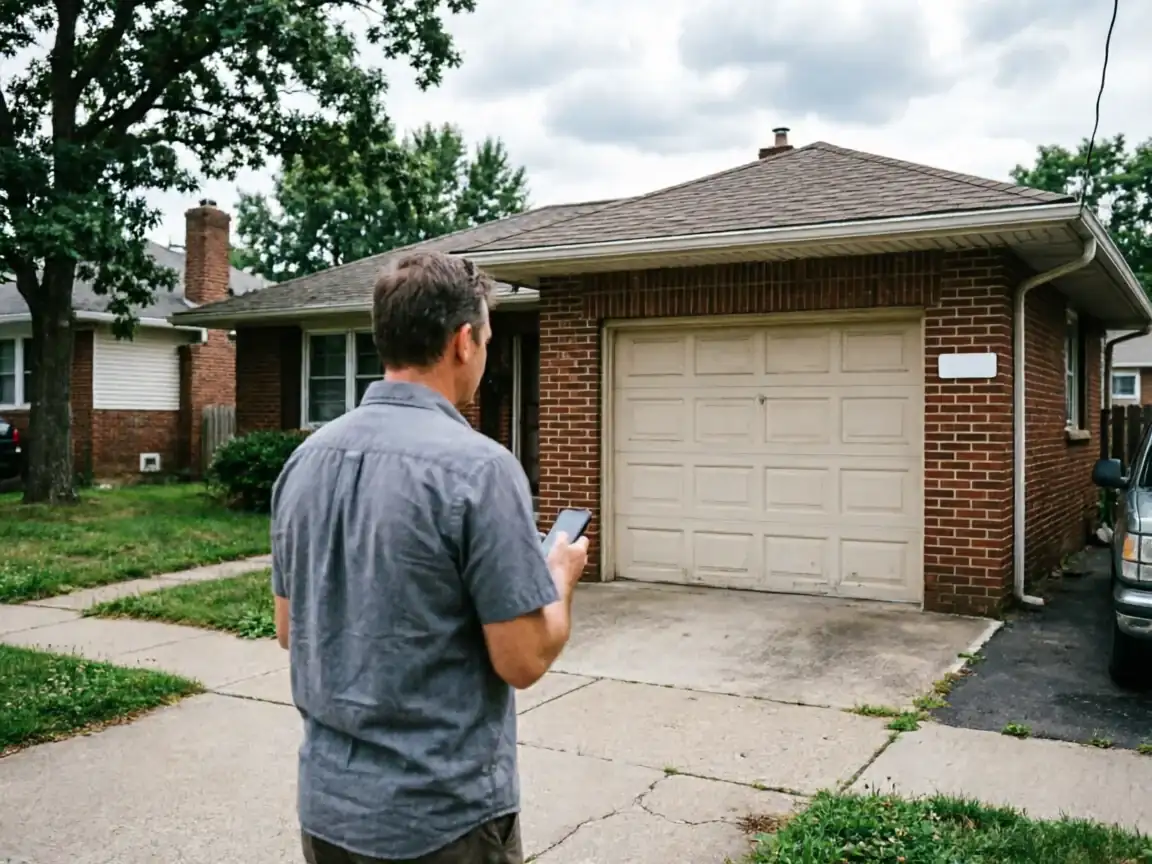
A technician stands on a driveway looking at a closed garage door.

Tell us what’s wrong

Describe the symptom - won’t open, loud bang, opener runs but the door won’t move.

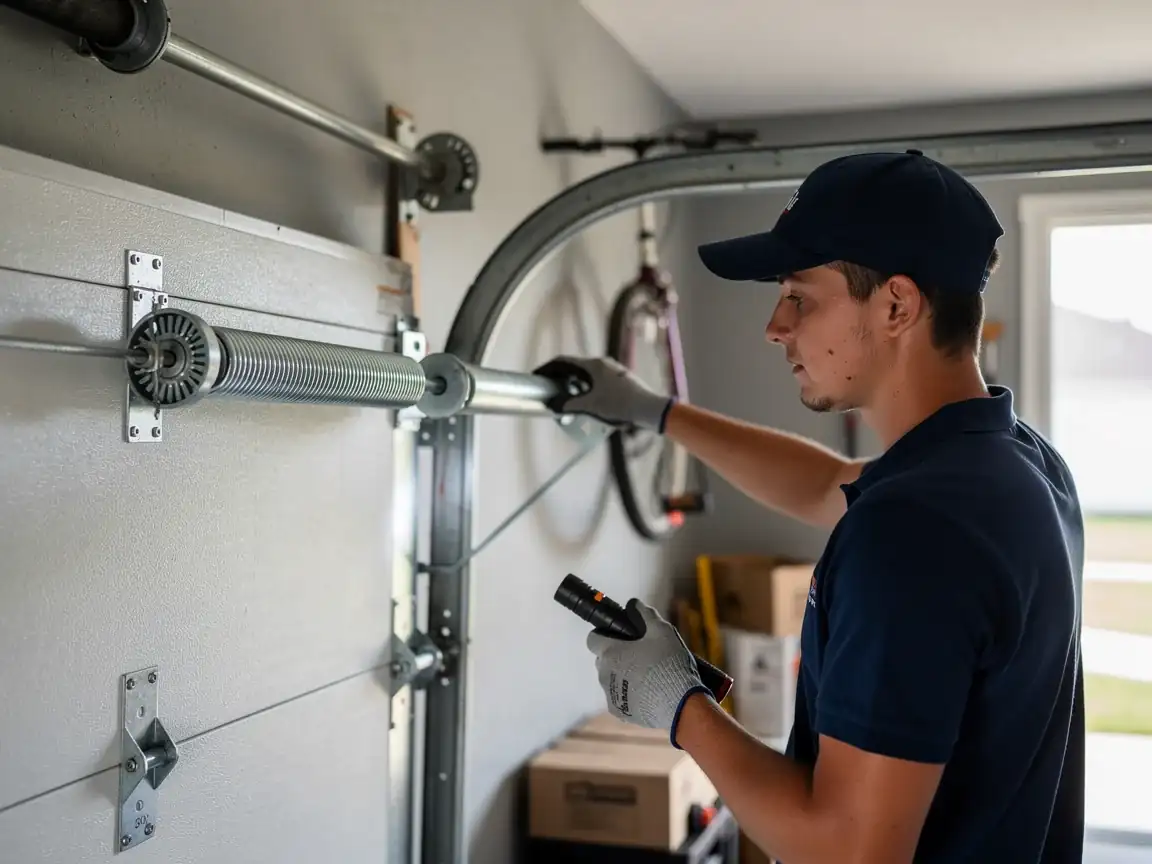
A technician in a blue shirt and cap works on a garage door torsion spring.

On-site diagnosis

A technician tests the door under power and by hand and finds what actually failed.

A technician and a woman stand in a driveway looking at an open garage.

Clear, up-front plan

You get the fix that’s needed and what drives the cost - before any work starts.

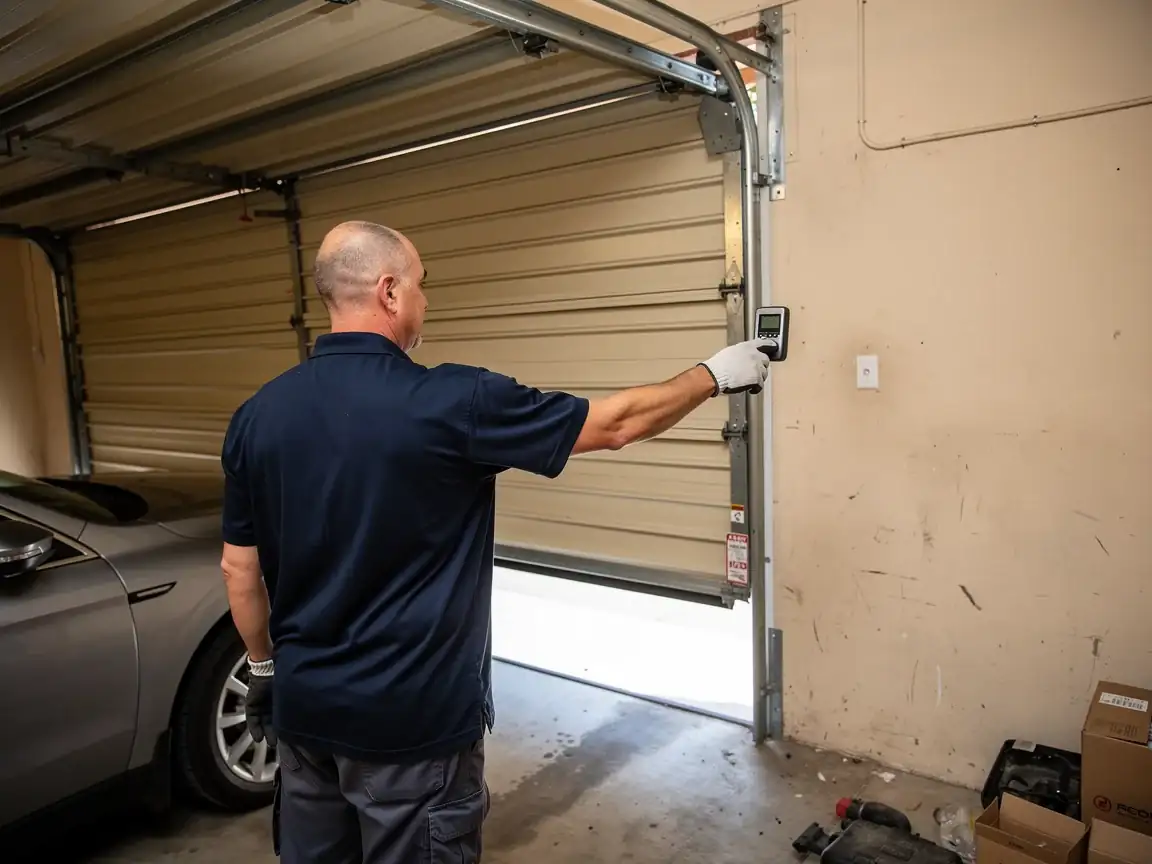
A technician holds a remote control while standing next to an open garage door.

Repaired & tested

The repair is done, the door is set true and tested, and the work area left clean.

Not sure which repair your door needs in Orland Park, IL? Describe what it’s doing - every job starts with a diagnosis.

How we work

What to expect

Diagnosis firstEvery visit starts by finding what actually failed - not a pre-written parts list.
The right part for the doorSprings and openers matched to the door’s weight and age, so the fix holds up.
Straight answersWhen a repair makes more sense than a replacement - or the reverse - you hear it plainly.
Clean, careful workTension released safely, hardware set true, the door tested under power before we leave.
58,619Residents in Orland Park
8Garage door services
7Neighborhoods & suburbs
ILServing Orland Park, IL
Questions

Frequently asked

Straight answers about garage door repair in Orland Park. Still unsure? Ask us directly.

Is my opener too old to repair if it was installed in the late 90s?

Not always, but it depends on the part. Rollers, cables, and springs from that era are still common sizes we stock. Opener logic boards are a different story - those are frequently obsolete, and special-ordering one can cost more than a new opener that also runs quieter and has better safety sensors.

How often should a door from the late 1990s get serviced?

We'd recommend a full check once a year once a door passes the 20-year mark, since springs, cables, and bearings all have a service life and most Romeoville houses are now past that threshold. Catching wear before a cable snaps is cheaper and safer than an emergency call.

Do you have a crew based in Romeoville?

No - we run out of Orland Park, about 13 miles away, and travel to Romeoville for scheduled maintenance and repair work. We don't claim a local branch here, just a truck that comes out on booked appointments.

Why does my door sound worse in winter than summer?

Cold stiffens grease and shrinks metal slightly, which is why aging rollers and dry torsion springs tend to announce themselves in winter first. In this cold-moderate climate band, that seasonal swing is normal and worth a lubrication check before the cold really sets in.

Ready to get your garage door sorted?

Tell us what it’s doing and where you are in Orland Park - we’ll take it from there.

Request a QuoteCall