Why It Happens Here
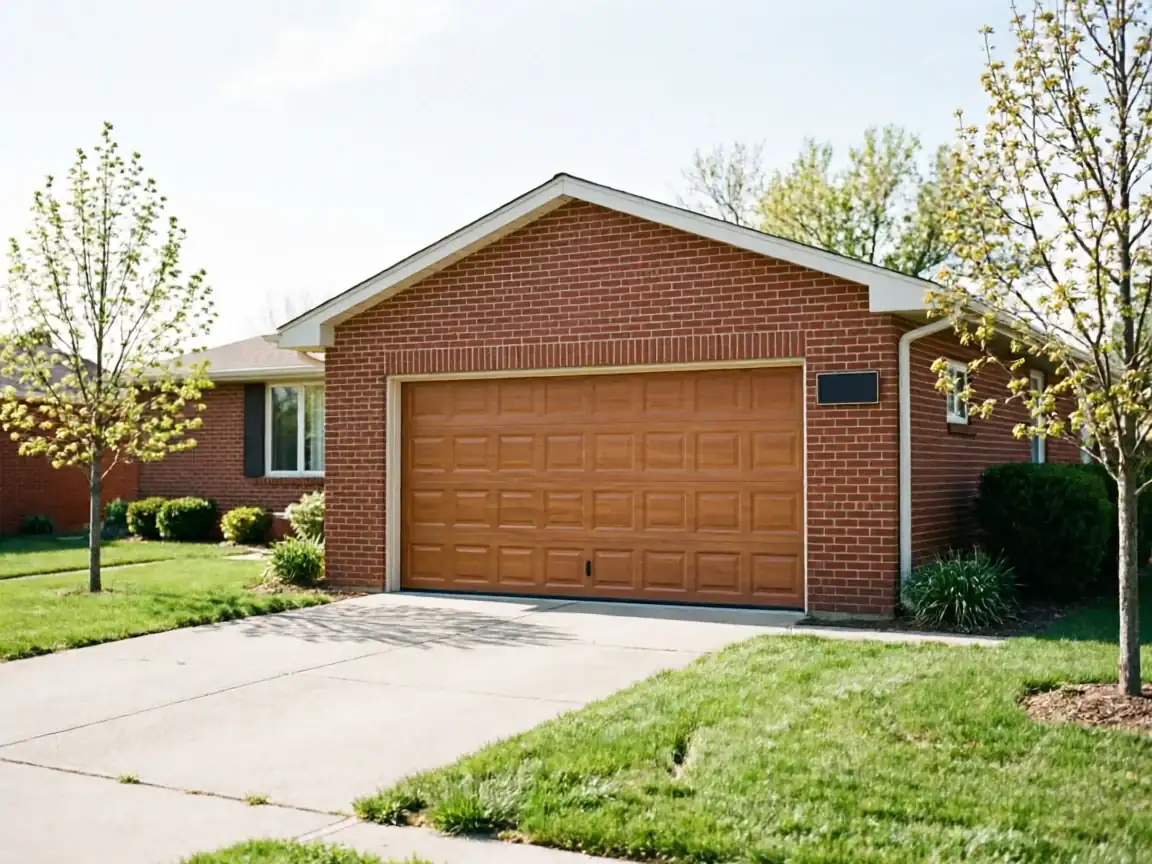
Across the wider service area the median house went up in 1970, but Frankfort's own stock centers on 2000 - three decades newer. That gap matters more for openers than it does for the doors themselves. A door from 2000 is usually still sound; the opener bolted to the ceiling above it is a different story. Builder-grade chain-drive units installed at closing tend to run 15 to 20 years before the gears, capacitor, or drive mechanism give out, which puts a lot of Frankfort garages right at that failure point now, all at roughly the same time their neighbors' are. The region sits in a cold-moderate climate band, and that matters for the choice you make next: openers with a battery backup keep the door working through a winter outage, and the plastic drive gears on older units get brittle and strip faster once temperatures drop. None of that is unique to any one house on the block - it's a function of when this part of Frankfort was built, not of any single street or lot.
The Cost of This Job
Household income here runs well above the wider service area's median of $79,442 - Frankfort's own figure is close to double that - and we mention it because it shapes what we get asked for. More homeowners here want belt-drive units for the quiet, battery backup as standard rather than an add-on, and phone control built in from the start rather than bolted on later. We don't publish a flat price here because the job itself isn't flat: a straight swap onto existing rail and brackets is one job, a wall-console relocation or added backup battery wiring is another, and a bent rail from a door that's been forced closed on a bad sensor is a third. What we can say is that the drive type you pick changes the number more than almost anything else - chain is the cheapest to buy and the loudest to live with, belt costs more up front and you don't hear it from the kitchen.
The Complications
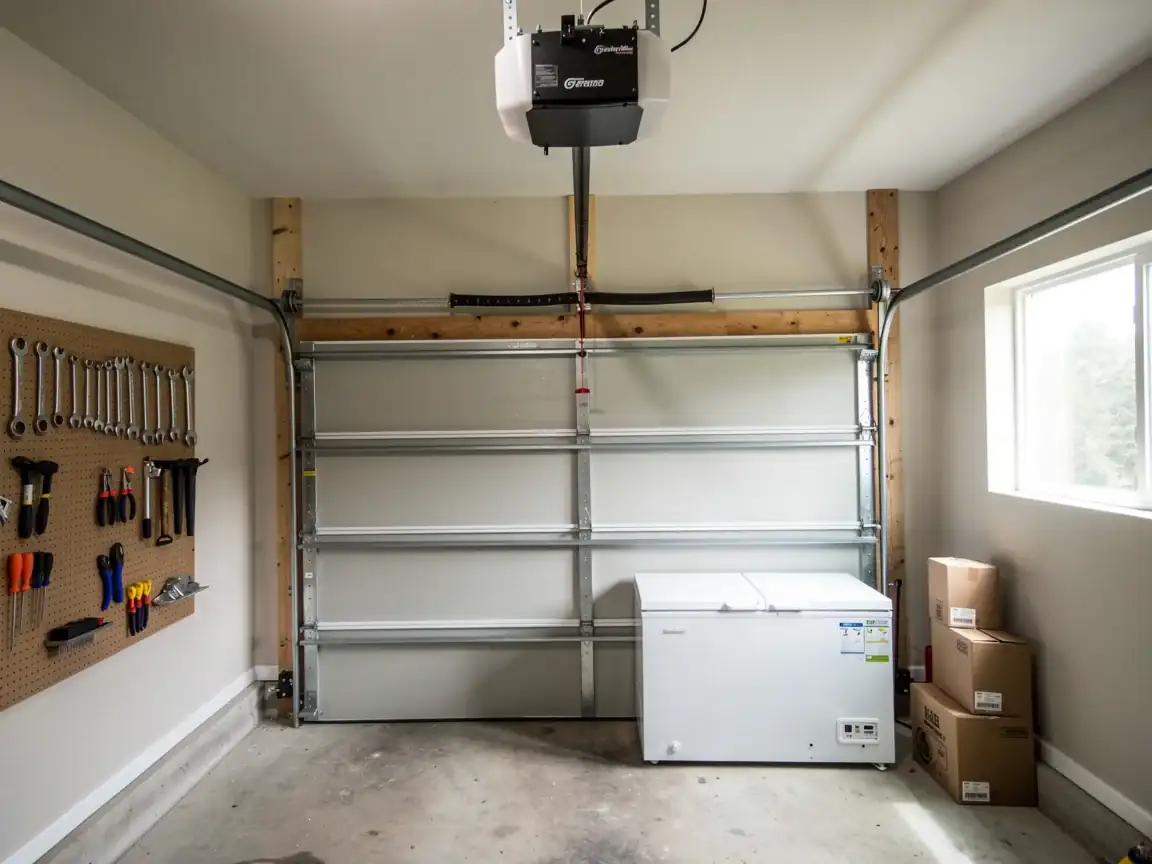
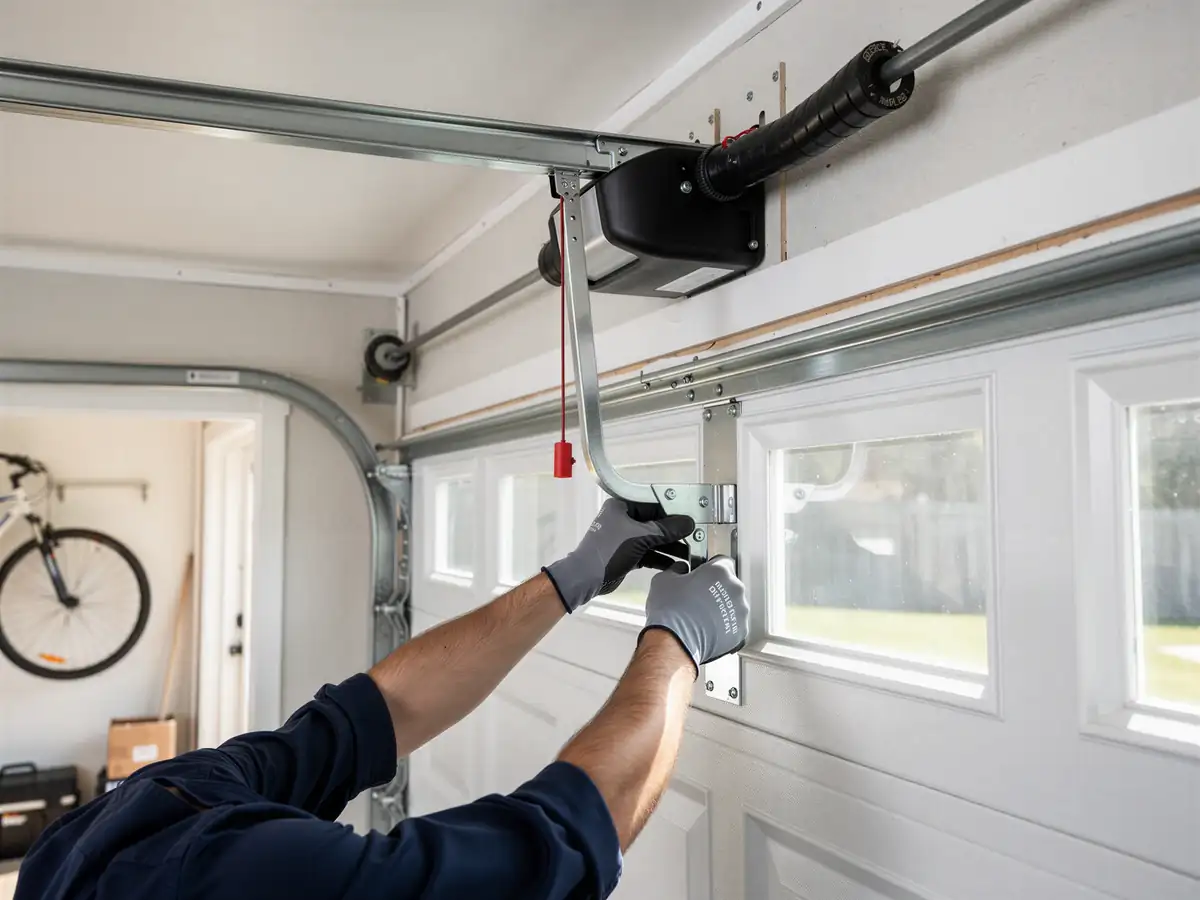
The complication we see most in Frankfort isn't the door, it's the ceiling. Newer construction here often runs a finished garage with drywall and insulation tight to the rafters, which leaves less room to maneuver a standard rail and less clearance for a jackshaft-style opener if that's what a tall door calls for. Insulated doors, common on houses from this build era, run heavier than the old plain steel doors a 1970s opener was sized for, so swapping a tired chain-drive unit for an equal replacement sometimes means upsizing the motor too, not just changing the drive type. Cold-moderate winters add one more wrinkle: a battery backup unit needs its own vented spot, not just open ceiling, so it isn't sitting in an unheated corner where the battery dies early. None of this is unusual for the area - it's just what comes with houses built in the same twenty-year window, and it's worth knowing before you buy a unit online and find out it doesn't fit the ceiling you have.