Can You Do This Yourself
A good chunk of what keeps a door running in Mokena is stuff you can do with a stepladder and twenty minutes
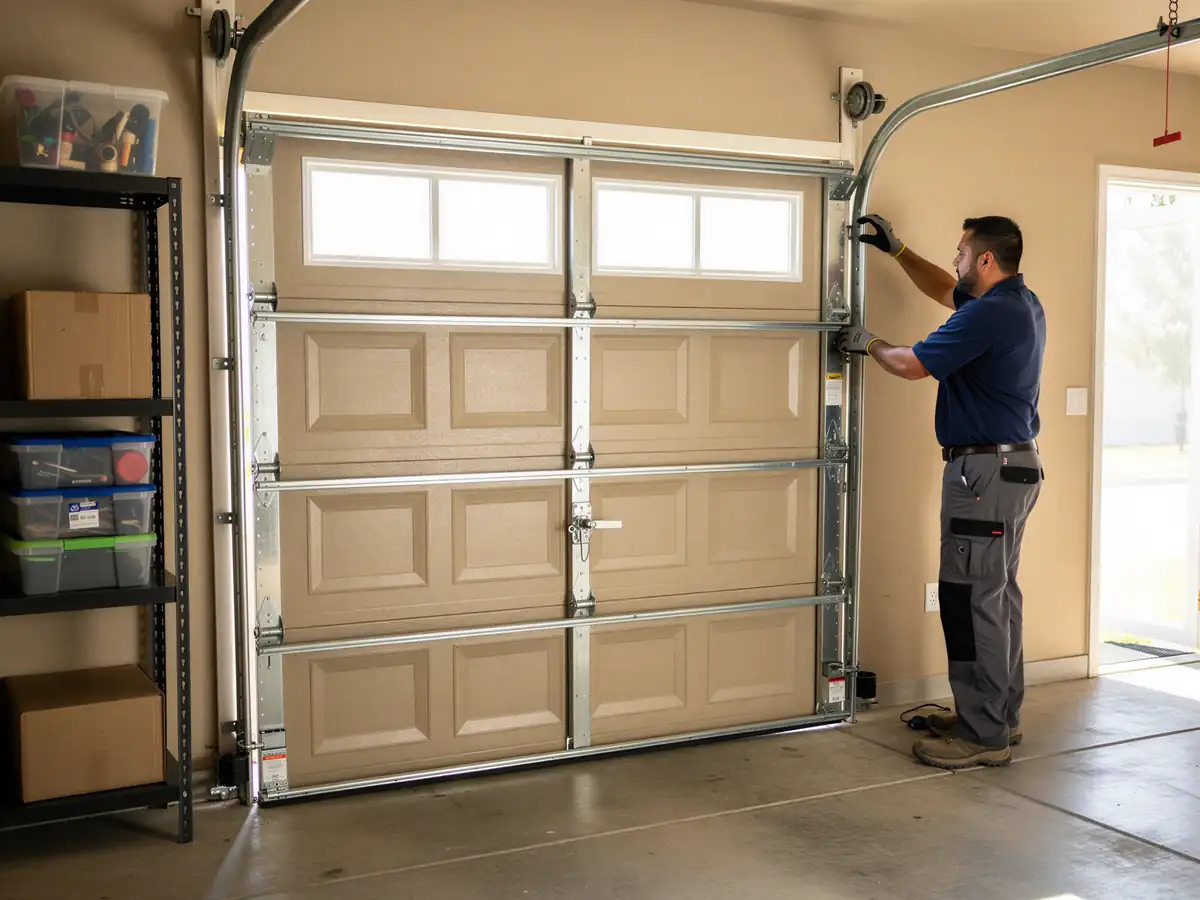
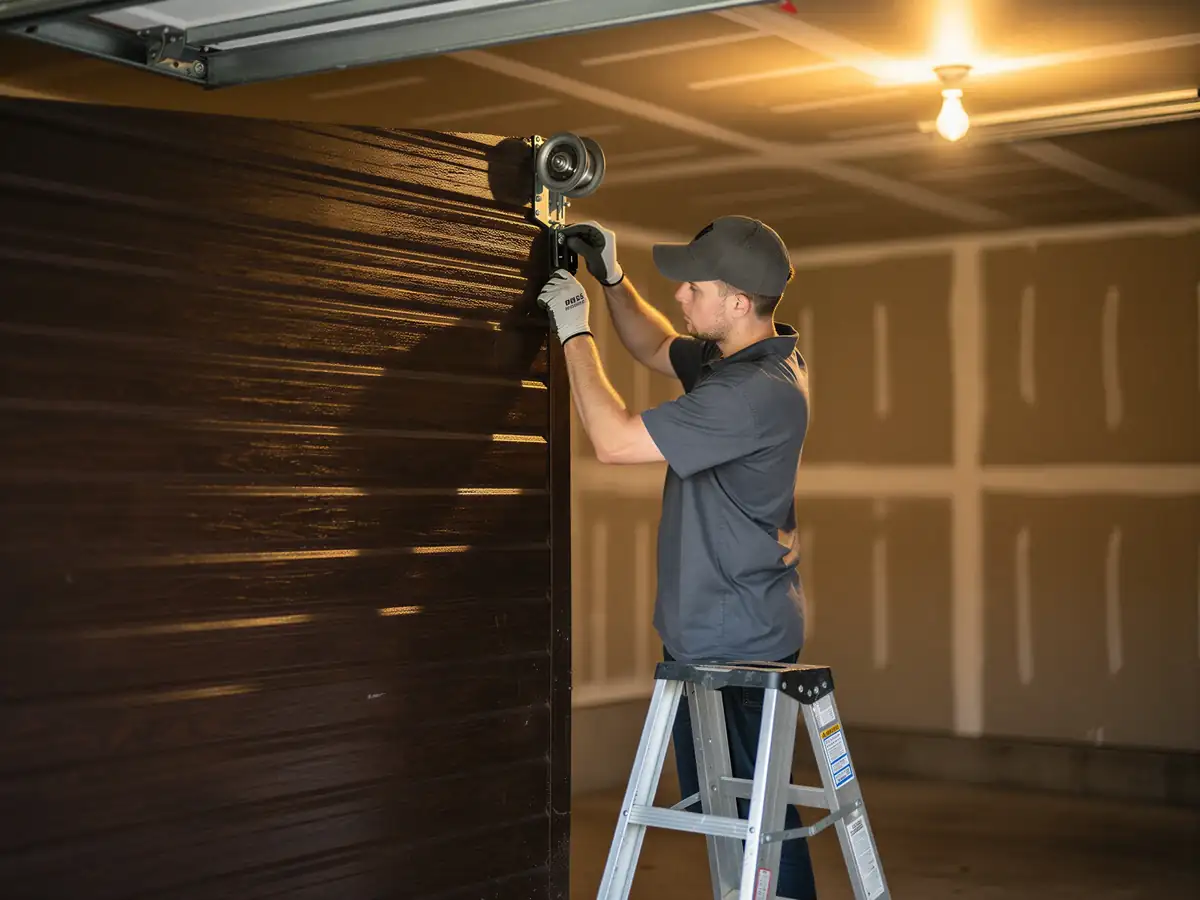
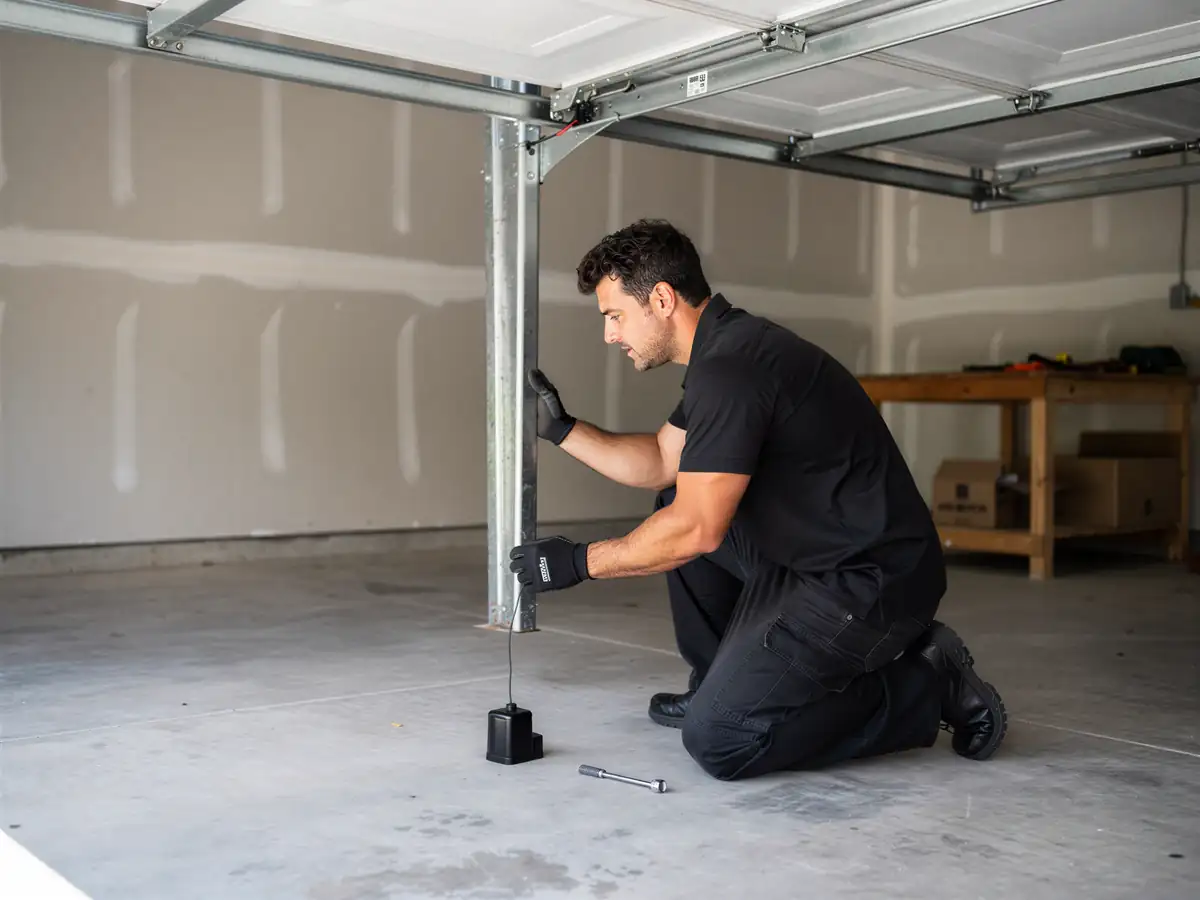
Wipe the tracks, check that the photo-eye sensors near the floor are aligned and clean, and look at the weatherstripping along the bottom panel for cracking. Because the median home here was built around 1996, you're mostly dealing with factory steel doors on galvanized torsion springs and nylon rollers, not the older extension-spring setups you'd find on a 1960s build. That means the parts are more standardized, and lubricating hinges and rollers with a garage-door-specific lube twice a year goes a long way.
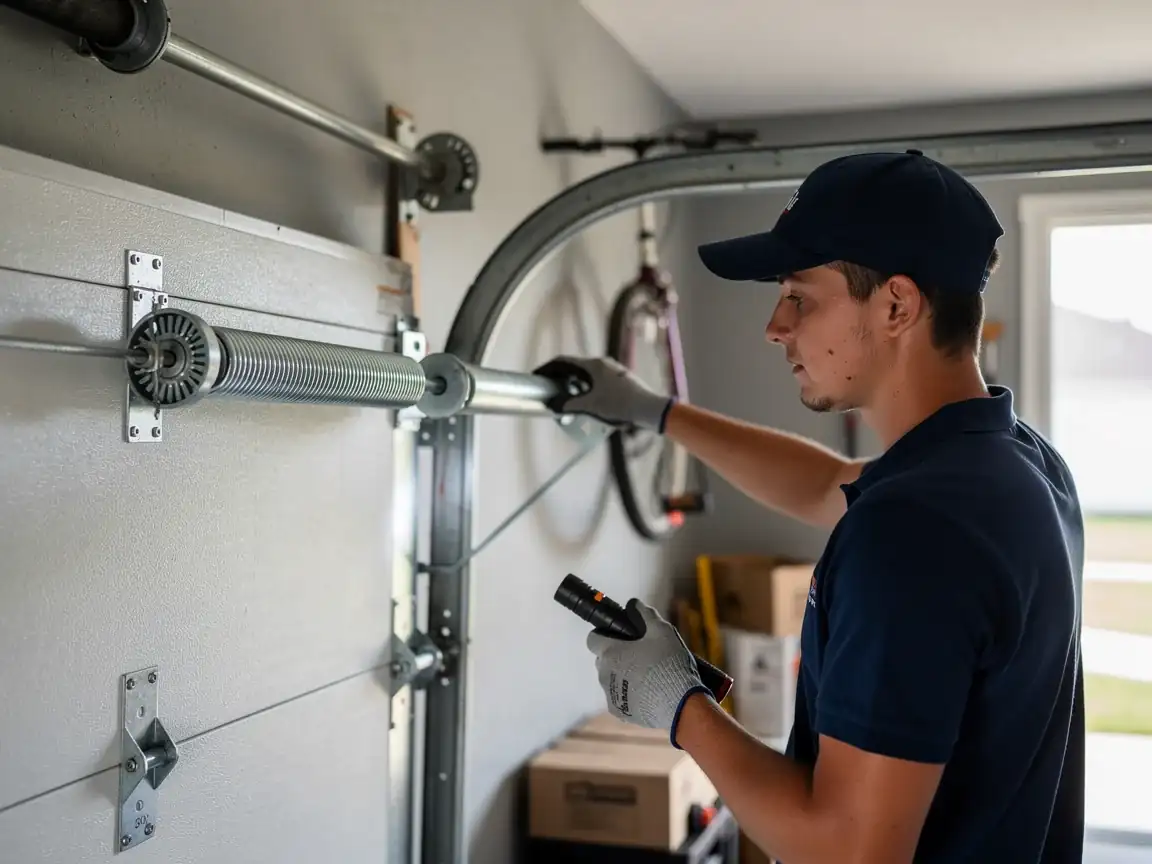
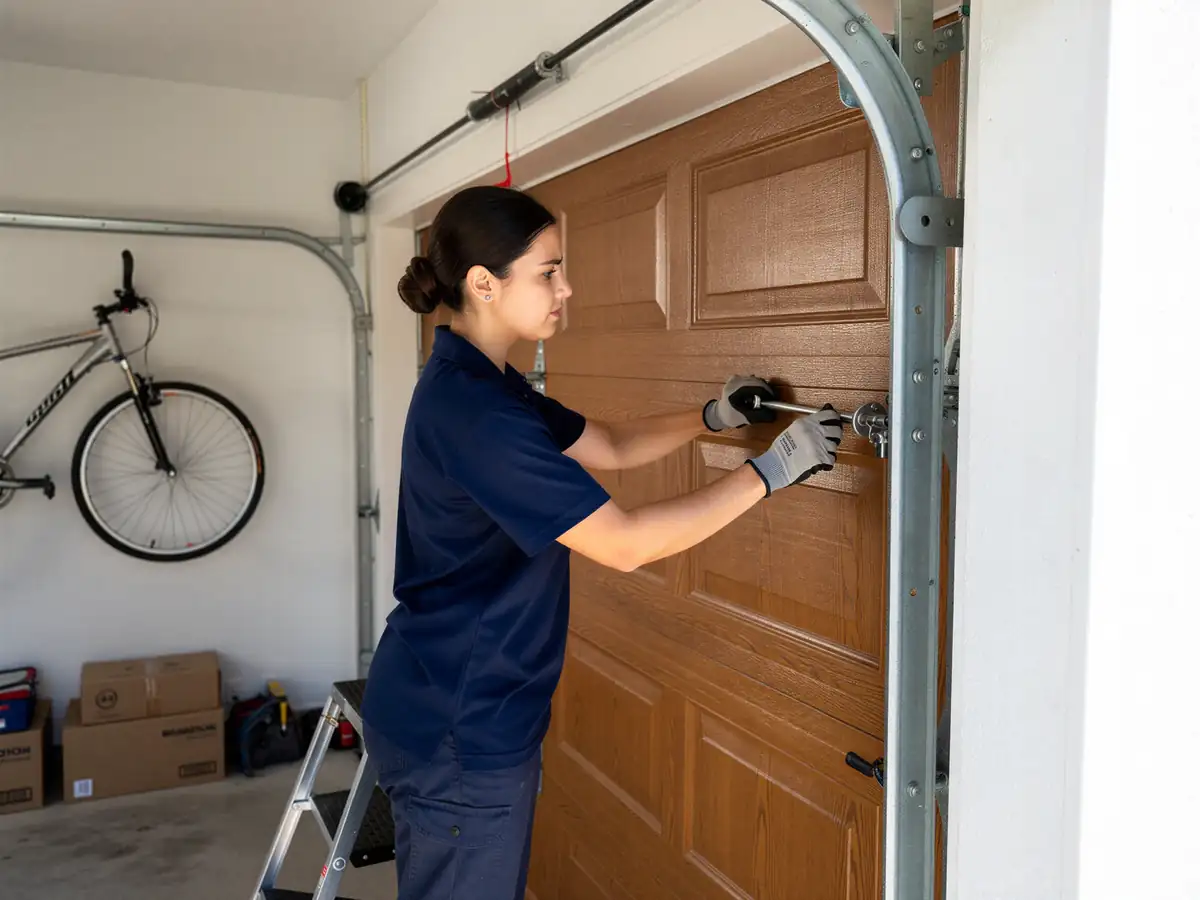
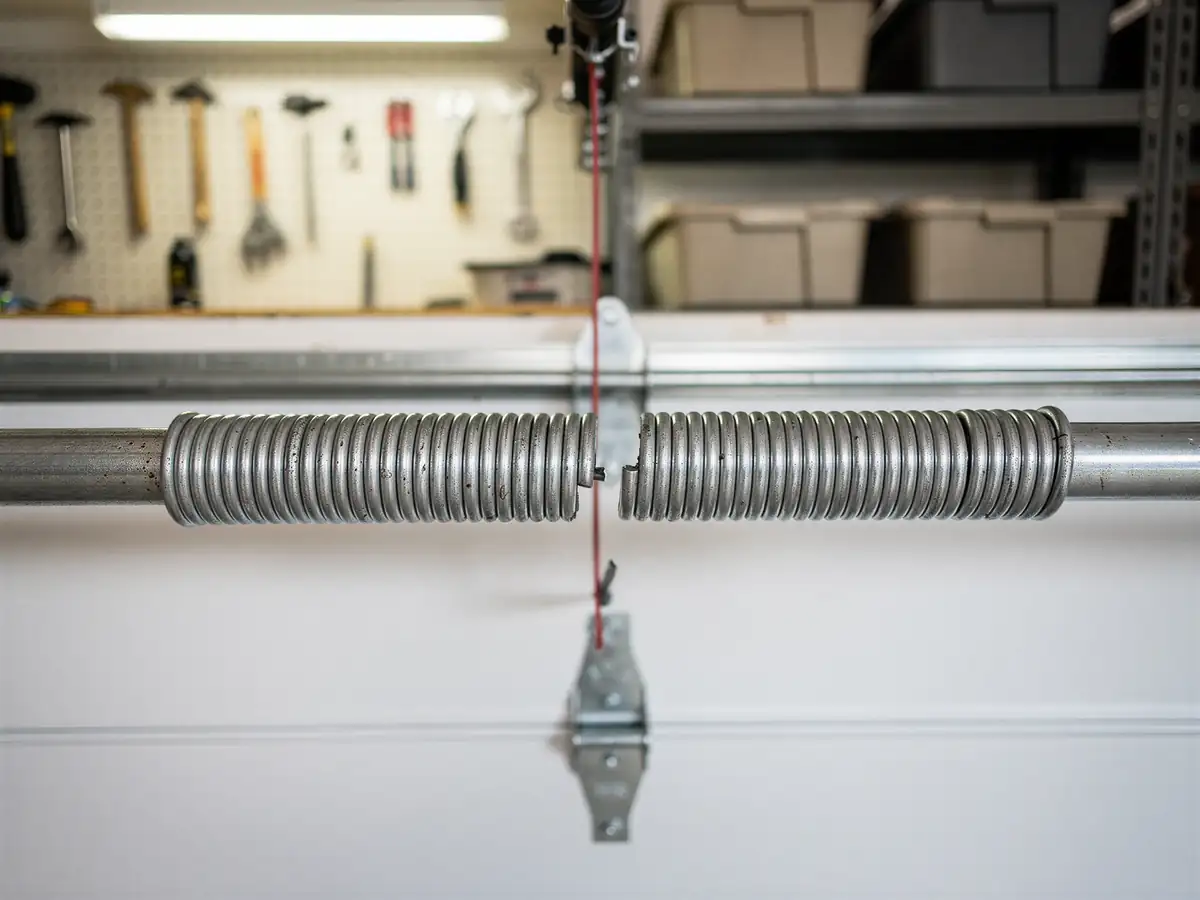
What you shouldn't touch: the torsion spring itself, and anything involving the cable drums
These doors are typically heavier than older wood-panel units because of added insulation, and a spring under tension on a newer high-cycle door can do real damage if it lets go while you're working on it. If the opener's force settings feel off, or the door is slow to respond, that's diagnostic work, not a weekend project. Know the difference between wiping down a track and adjusting spring tension - the first is maintenance, the second is a service call.
How to Book
We run out of Orland Park, about 6 miles from Mokena, and we schedule maintenance visits rather than walk-ins, so the easiest path is to request a date through our Mokena service page and we'll confirm what the visit covers before anyone's on site. Because we're not based in Mokena itself, we don't offer same-day drop-ins - plan maintenance a few days out rather than expecting someone to show up within the hour.
For a household in Mokena's income bracket, a lot of owners treat this as a once-a-year check rather than a reactive call, catching a worn roller or a loosening bracket before it turns into a stuck door. If you've already got a specific symptom - grinding, a door that reverses on its own, a spring that looks stretched - mention it when you book so we bring the right parts instead of diagnosing from scratch on arrival.
The Complications
Newer doesn't always mean simpler. A door installed in the mid-90s is now pushing thirty years old, which is right around when nylon rollers, factory lubrication, and the original opener drive belt or chain start failing together rather than one at a time. We've found that owners in areas with housing from this era often assume the door is 'still new' because the house looks newer than the surrounding region, and put off maintenance that a 1970s-stock neighborhood would have already done twice over.
The other wrinkle is opener electronics. Homes built in the mid-to-late 1990s often got openers with early circuit-board logic rather than today's rolling-code and battery-backup standards. Those boards can still run fine, but parts for them are getting harder to source, and at some point a repair costs more than it's worth. We'll tell you straight when that's the case rather than patching an opener that's near the end of its service life - replacing it is sometimes the more honest answer than another repair visit.
Why It Happens Here
Mokena's housing stock sits apart from most of the rest of the service area
Across the broader region, the median home was built around 1970, with most of the 94 named communities carrying 1960s-70s construction. Mokena's median build year is 1996 - a full generation newer. That difference shows up directly in the hardware: torsion springs instead of the older side-mount extension coils, steel insulated panels instead of single-layer wood or aluminum, and openers with circuit boards instead of simple relay logic.
The cold winters common to this part of the region still matter regardless of build year
Steel contracts in cold, and a door that's slightly out of balance will bind worse at 10 degrees than at 50. But the failure points are different here than in an older neighborhood nearby: you're less likely to be dealing with rotted jamb wood or a rusted-out track, and more likely to be dealing with a spring or opener board that's simply reaching the end of its rated cycle count after about three decades of use.